
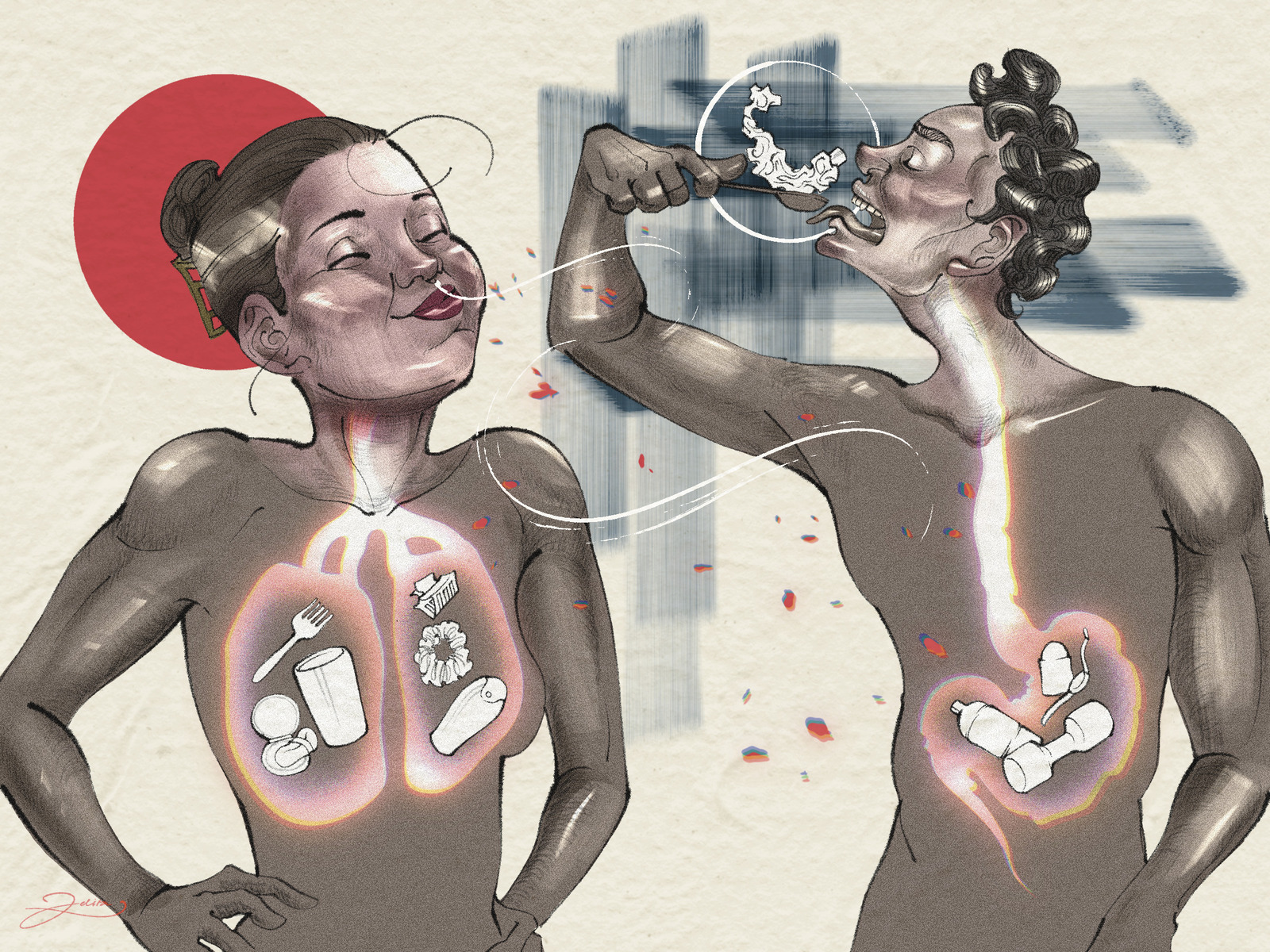
For more than a decade, Meillyssa Chandra has worked as a general practitioner assessing whether people are fit to set sail.
As the health examiner at the Maritime Occupational Health Center under Indonesia’s Transportation Ministry, she conducts medical checks for seafarers. These include eyesight and hearing, blood pressure, urine content, lung function, and even heart activity through an electrocardiogram (EKG).
All seafarers must meet strict standards. If they fall short, their health certificate is withheld, and they are not allowed to ship out.
As a medical professional, Chandra knows that even small irregularities in a person’s physical or mental condition can affect their ability to function. That awareness led her to volunteer for a study on microplastic toxicity conducted by the University of Indonesia and Greenpeace Indonesia.
“I’ve long known about the dangers of plastics. When the invitation came, and I saw that the research went very in-depth, even down to the microscopic level, it became very interesting to me,” Chandra said in an interview in April.
Chandra’s interest in the consequences of the unseen, in how microscopic particles in the environment may be harming her and her patients simply through the air they breathe, has begun to shape how she lives.
What she has since learned worries her, as her health and that of millions of Indonesians may be affected by tiny plastic particles drifting invisibly through the air. Scientists still do not fully understand the consequences of exposure to these fragments, while environmental health experts say policymakers are not taking the issue seriously enough.
The joint study in which Chandra participated ran from January 2023 to December 2024. It surveyed 562 people across Greater Jakarta about their use of single-use and reusable plastics, including refillable water gallons. Of those surveyed, 76 went on to provide biological samples to detect microplastics in their bodies.
Chandra was involved in both phases of the study. She waited months for the results, eager to learn whether microplastics had also been found in her own body.
“For about five months, I kept checking my phone because I was so interested in the research,” she said.
Microplastics are plastic fragments smaller than 5 millimeters. Even smaller are nanoplastics, invisible particles less than 1 micrometer wide that scientists fear may penetrate deeper into human organs and tissues.
These particles can come from the breakdown of plastic waste, wear from vehicle tires, synthetic clothing fibers, or the open burning of waste.
The estimated number of microplastic particles in each sample used in the study ranged from one to five particles per gram. Although the amount detected may appear minuscule, medical research increasingly points to the health risks of foreign particles accumulating in the human body.
Chandra, for her part, did not react with alarm when she heard the findings. She does not rule out the possibility that her own body has been contaminated. As both a doctor and a mother of two, she says avoiding plastic exposure entirely is nearly impossible.
“As consumers, we often don’t have a choice,” she said, pointing to everyday activities such as shopping that make plastic use difficult to avoid.
“We may follow government regulations by bringing our own bags [when shopping] at supermarkets. But in traditional markets, that’s not always the case. I’m not saying the markets are in the wrong, but the problem also lies in unequal access and capacity.”
Meillyssa Chandra, General Practitioner
Spread in the Air, Laced with Toxic Risks
In October 2025, Indonesia’s Research and Innovation Agency (BRIN) released a study concluding that rainwater in Jakarta contains harmful microplastic particles.
Muhammad Reza Cordova, a senior researcher at BRIN’s Center for Oceanography Research, said the study, which began in 2018, initially set out to trace how microplastics from marine waste accumulated along Jakarta’s coast are carried inland.
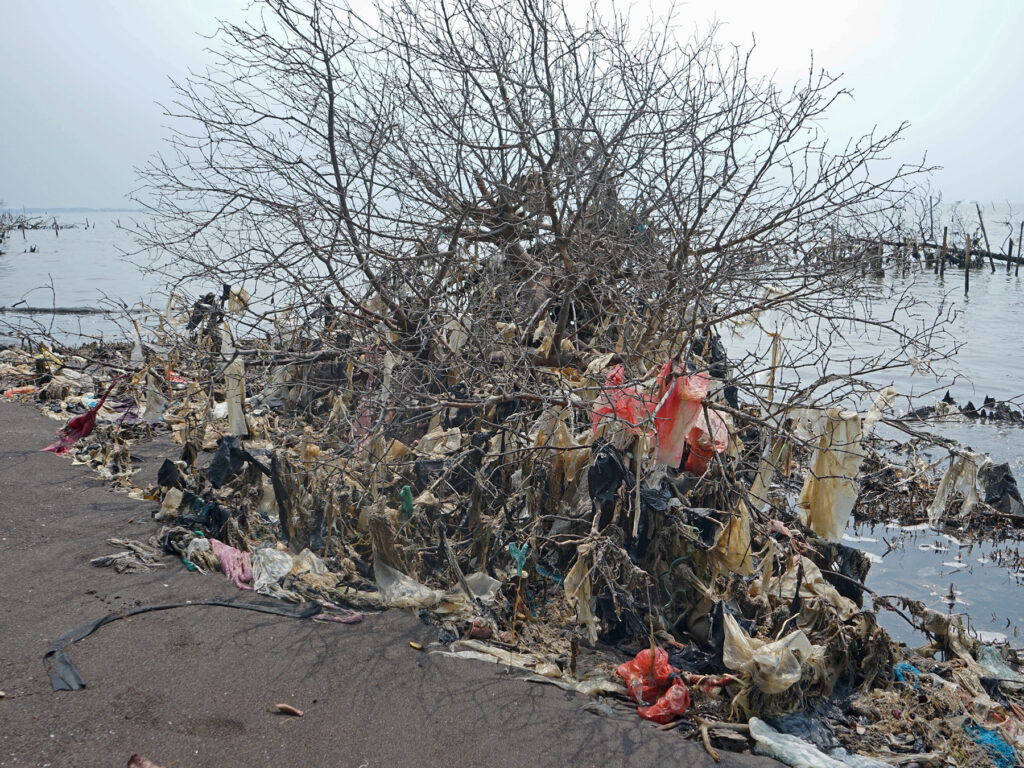
“When plastic waste breaks down, the particles become very light and easily disperse in the air. Rain acts as a carrier, pulling these particles out of the atmosphere. Without rain, they would just keep floating, carried by the wind,” said Cordova in an interview in Jakarta.
“Rain acts as a medium that captures microplastics. But it’s not the rain that’s dangerous. It actually helps clean them out of the air.”
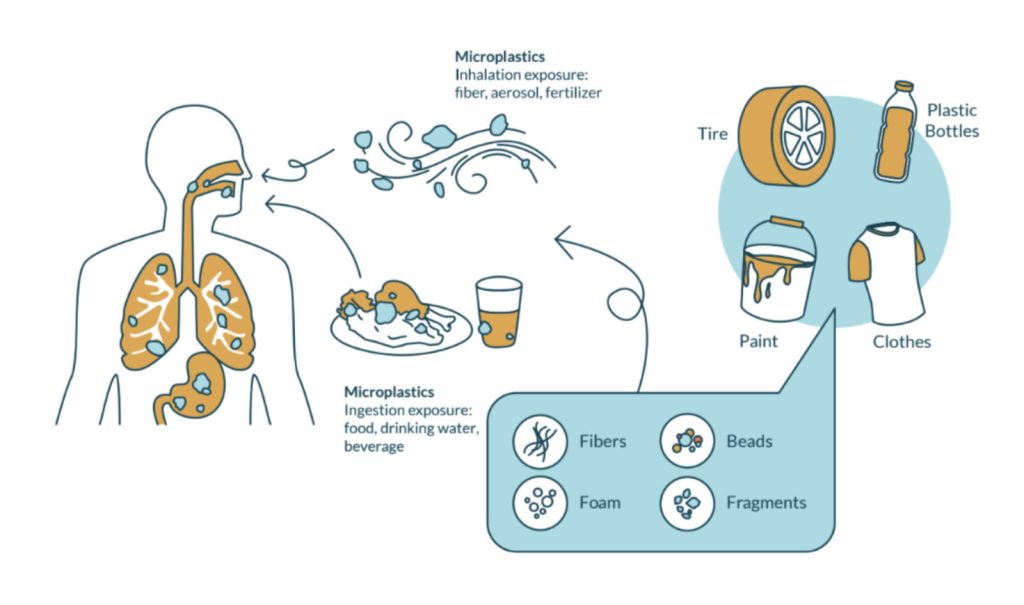
Rafika Aprilianti, a junior researcher at the Ecoton Foundation, a nonprofit organization focused on river conservation and plastic pollution in East Java, said microplastics have become a new component worsening urban air quality. They appear in various forms, including fibers, fragments, and foam.
During the dry season of 2025, Ecoton, together with the University of Indonesia and the Society of Indonesian Environmental Journalists (SIEJ), conducted a study confirming the spread of airborne microplastics. The research covered three districts or cities across 14 provinces in Indonesia.
Researchers placed glass petri dishes on support stands at about chest-to-head height, roughly corresponding to the human breathing zone. Each dish was lined with Whatman paper moistened with sterile distilled water, and then left open for two hours to capture airborne particles through natural deposition.
The results showed the highest concentrations of airborne microplastics in Central Jakarta and South Jakarta, with the lowest concentration found in Malang, East Java.
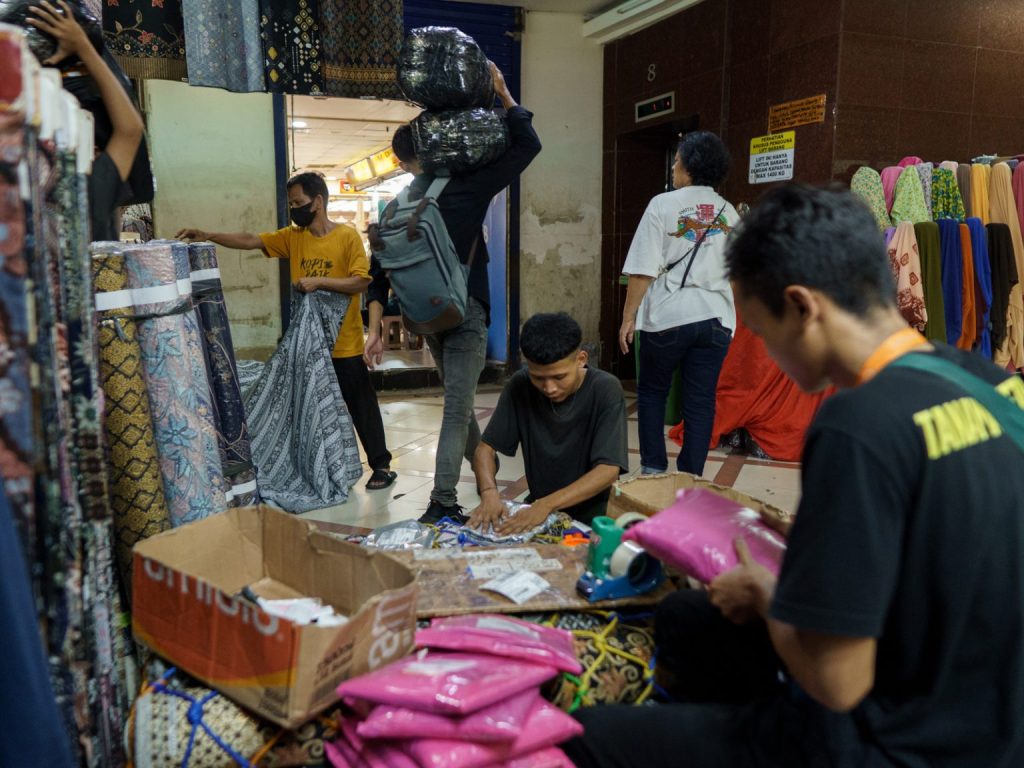
“In Central Jakarta, the highest levels were recorded around Tanah Abang Market. We suspect this is because it is the largest textile market. Microplastics can break down from microfibers in synthetic clothing,” Aprilianti said in an interview in March.
Meanwhile, the study found the second-highest concentration of microplastics at Manggarai Station, one of Jakarta’s busiest commuter rail hubs.
During working hours, both Tanah Abang Market and Manggarai Station are routinely choked with traffic and constant human movement.
Around Tanah Abang Market, the roads are crowded not only with private and public vehicles, but also with trucks transporting garments and textiles, alongside streams of motorcycles weaving through narrow streets. Large sacks filled with clothing and fabric are often left piled along the roadside during loading and unloading.
A similar scene unfolds at Manggarai Station, where dense crowds of commuters pack the station and surrounding roads on weekdays.

Dense human activity creates ideal conditions for releasing microplastics into the air, Aprilianti said.
Ecoton’s findings align with earlier research conducted near an open dumping landfill in Yogyakarta, which found airborne microplastics dominated by black particles. Such particles are often associated with heavily pigmented synthetic materials, including those released through waste burning, tire abrasion, and the shedding of textile fibers.
Plastics used in everyday products are usually made from petrochemical-based synthetic polymers, including polyethylene terephthalate (PET), polyethylene (PE), nylon or polyamide (PA), polypropylene (PP), and polybutadiene (BR).
PET is commonly used in food and cosmetic packaging. It is typically clear and often marked with the resin identification code 1, a category widely used for single-use packaging. Repeated use, especially when the plastic is exposed to heat, wear, or damage, can raise concerns about chemical release.
A study by researchers in Oregon in the United States (US) found anthropogenic particles, including microplastics, in the edible tissue of several seafood species along the US West Coast. Among the particles researchers were able to identify by material, PET was the most commonly found synthetic polymer.
In the University of Indonesia and Greenpeace Indonesia study, PET was also the most dominant polymer detected in participants’ biological samples, with 204 particles found, followed by PA and PP.
PA is commonly associated with synthetic textile fibers, while PP is often used for bottle caps and food containers.
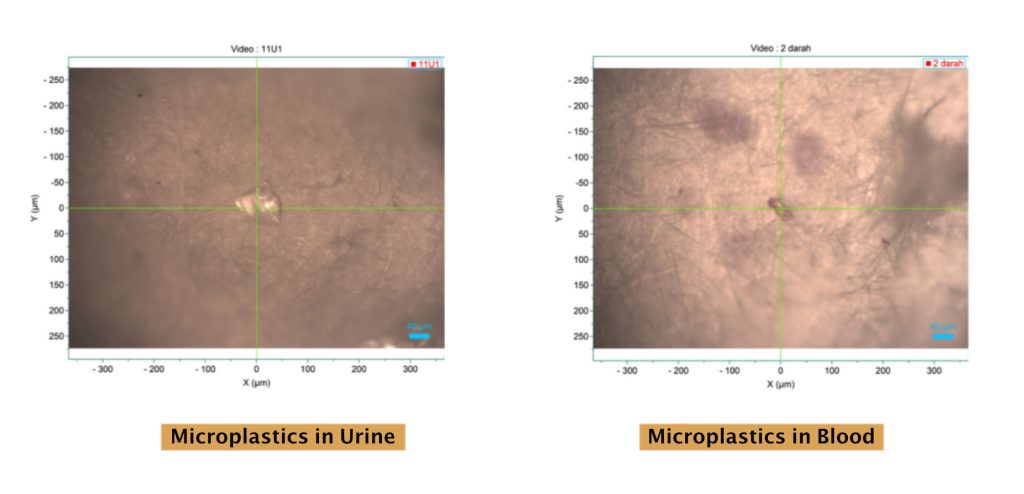
Another study conducted in Cilegon, an industrial hub in Indonesia’s Banten province with a large petrochemical and plastic manufacturing presence, found microplastics containing PE in high concentrations in milkfish and PP in mackerel tuna. The findings raised concerns about potential risks to the digestive system of people who consume contaminated fish.
Together, these findings show how polymers used in everyday products can move through the environment, enter food chains, and eventually be detected in human biological samples.
But the problem is not limited to the plastic particles themselves. Plastics contain more than polymers alone. Before they reach consumers, manufacturers often add chemicals to give them color, flexibility, stability, durability, or resistance to sunlight.
This is why scientists increasingly warn that the risks of plastic pollution lie not only in the particles themselves, but also in the complex mix of chemicals they can carry.
Also Read
A recent study mapped 16,325 known plastic chemicals, including additives, processing aids, starting substances, and non-intentionally added substances. It also identified more than 4,200 chemicals of concern, substances considered potentially hazardous because they are persistent, bioaccumulative, mobile, or toxic.
The risks do not end there.
“The next problem is that once plastic enters the environment and persists as long-term waste, it can serve as a surface for other pollutants to attach to: alien species such as bacteria, microbes, pathogens, viruses, and more,” Cordova said.
Importing Waste: From Trash to Fashion
Plastic’s share of Indonesia’s annual waste has continued to rise over the past five years. Data from the government’s National Waste Management Information Systems shows that in 2025, of the country’s 28 million tons of waste, about roughly 20 percent was plastic.
The country is able to recycle only about 11 percent of the waste it collects each year. For plastic alone, the Indonesian Plastic Recycling Association reported that only around 7.69 million tons of plastic waste were recycled between 2014 and 2024, equal to an average recycling rate of just 13 percent annually.
At the same time, Indonesia continues to import plastic waste from abroad. This volume surged after China imposed a ban on waste imports in 2018.
Although the Environment Ministry said in January 2025 that it would stop issuing new import permits, data from the UN Commodity Trade Statistics Database (Comtrade) show that Indonesia still received about 271,000 tons of plastic waste in 2025, up from 262,000 tons in the previous year.
Imports from countries such as Germany and the US also rose in 2025 compared with the previous year. From 2014 to 2025, the Netherlands was the largest exporter of plastic waste to Indonesia, followed by the US, Germany, Belgium, and Australia.
Only a small portion of these imported plastics is processed by recycling industries in East Java and Batam.
Our World in Data estimates that about 1.7 million tons of plastic waste enters the world’s oceans each year. Of that total, roughly 88 percent remains near coastlines, about 10 percent sinks to the seabed, and the rest drifts offshore on the ocean surface. Some of this waste can persist in the environment for more than 15 years.
But plastic waste is not the only imported material raising concern. Indonesia also receives large volumes of used clothing, driven in part by the rise of thrifting. UN Comtrade data show that imports of secondhand clothing reached 5,750 tons between 2021 and 2025, with a sharp spike in 2024.
Major exporters include China, Singapore, Saudi Arabia, Malaysia, United Arab Emirates (UAE), the United Kingdom (UK), and Japan.
Imports of new clothing, particularly non-cotton garments made from synthetic fibers such as polyester, also remain significant. In 2023 alone, Indonesia imported about 2,300 tons of such garments, mainly from China, Vietnam, Cambodia, Thailand, and Bangladesh.
At the same time, Indonesia is an important player in the global textile industry. In 2024, the country exported 299,900 tons of ready-made garments, with the US as the largest destination at 155,200 tons, followed by Japan and Germany. According to the Observatory of Economic Complexity, Indonesia ranked 13th among textile-exporting countries, accounting for 1.66 percent of global textile exports.
“The issue is not the trend of thrifting itself, but the consumption and production of fast fashion,” said Cordova of BRIN.
“The more synthetic clothing we have, the greater the potential for microfiber pollution. This is a serious problem. It affects not only people in cities who can afford to buy clothes, but also poorer communities who cannot.”
As synthetic clothing ages, its polyester fibers loosen, making microfibers more likely to shed during use and washing.
“Since the pandemic, researchers have observed a sharp increase in airborne microfibers. Initially, they suspected disposable masks as the source, but data later pointed to large volumes of discarded clothing,” Cordova added.
Indonesia’s Trade Ministry has formally banned imports of secondhand clothing under a 2022 regulation, citing risks to public health and the domestic textile industry. Yet enforcement has been uneven, allowing the trade to persist.
Aprilianti from Ecoton, however, argued that focusing only on secondhand clothing misses the larger issue.
“Whether the clothes are used or new, it is actually the same problem: fast fashion as a whole, especially garments made from cheap synthetic materials such as polyester,” Aprilianti said.
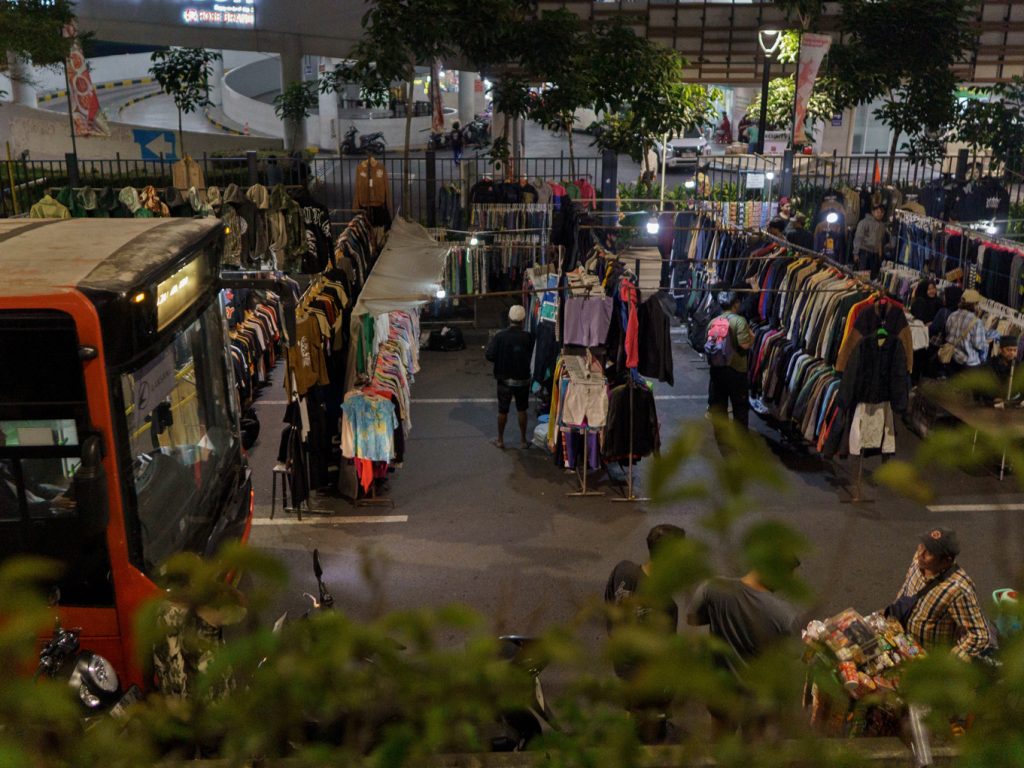
The government, she said, should not only tighten restrictions on imports of used clothing, but also reconsider the broader flood of synthetic-based garments entering and circulating in the Indonesian market.
She then called for more innovation and support for affordable cotton-based textiles, arguing that environmentally safer clothing options often remain inaccessible to ordinary consumers because of their higher prices.
Pressuring Producers, Pushing Recycled Packaging
For the past few months, Indonesia has faced rising plastic packaging prices as the war involving the US, Israel, and Iran disrupts energy shipments, pushing up oil and petrochemical feedstock costs.
The pressure has exposed how deeply the packaging industry depends on fossil-fuel-based feedstocks, the raw materials behind most plastics.
Reynaldi Sarijowan, secretary general of the Indonesian Market Traders Association, urged the government to seek alternative sources of plastic raw materials beyond West Asian suppliers. Still, he added, the price spike could also be used as momentum to limit plastic use in traditional markets and support a circular economy.
But not all sellers agree. Idah, a vendor at a market in South Jakarta, said the burden should not fall on small sellers.
“Producers should be the ones to stop first. Regulation should start from the top,” she said. “We still provide plastic bags because our customers often forget to bring their own. Sometimes they ask for them and we can’t bring ourselves to refuse.”
Indonesia has recognized extended producer responsibility (EPR) in law since 2008, requiring manufacturers to take responsibility for waste generated by their products, including through recycling. The government has also set a 2029 target for producers to expand waste reduction, take-back, and recycling efforts.
The Environment Ministry said enforcement will be tightened, particularly for plastic packaging, with more detailed regulations expected.
Plastic production, however, is embedded in a complex supply chain that runs from upstream oil and gas extraction to downstream manufacturing. Market research firm Mordor Intelligence estimates that Indonesia’s plastics market reached 7.42 million tons in 2025. But the domestic supply of raw materials can meet only about half of demand, leaving the rest dependent on imports.
Upstream in the supply chain, state-owned companies such as Pertamina Hulu Energi and other global energy firms supply oil and gas feedstocks that are later processed into petrochemicals such as olefins.
Indonesia’s largest olefins producer is PT Chandra Asri Pacific, part of the Barito Pacific Group, controlled by tycoon Prajogo Pangestu. Olefins such as ethylene and propylene are key building blocks for plastics.
In 2025, the company’s olefins production capacity reached about 2 million tons per year, while its broader downstream chemical capacity totaled around 4.7 million tons annually.
Other key players include PT Kilang Pertamina Internasional, which works with PT Trans-Pacific Petrochemical Indotama to process naphtha into raw materials for polyester fibers and PET plastic packaging.
In the midstream sector, PT Polychem Indonesia produces ethylene glycol and polyester chips, while PT Asahimas Chemical manufactures vinyl chloride monomer and PVC resin at large scale. The latter is a joint venture involving Japan’s AGC Inc. and Mitsubishi Corporation, Indonesia’s PT Rodamas, and local businessman Benny Suherman.
Further downstream, companies such as PT Asia Pacific Fibers convert PET into polyester fibers for textiles and packaging. Meanwhile, PT Polytama Propindo and PT Lotte Chemical Titan Nusantara, part of South Korea’s Lotte Group, produce PP and PE plastics.
There are also producers of purified terephthalic acid (PTA), a key raw material used to make PET plastic and polyester fibers. These include PT Merak Chemicals Indonesia with a capacity of 720,000 tons per year, PT Indorama Petrochemical with 456,000 tons per year, and PT INEOS Aromatics Indonesia with 575,000 tons per year.
At the final stage, these materials are used in consumer goods by major companies such as PT Unilever Indonesia, PT Indofood CBP Sukses Makmur, PT Mayora Indah, PT Kalbe Farma, and others.
Yet despite the scale of production, Indonesia still lacks a comprehensive EPR framework that requires companies to take full responsibility for the plastic waste generated by their products. Existing regulations remain largely focused on downstream recycling and packaging collection, while upstream plastic production continues to expand.
“Producer responsibility in Indonesia is still mostly project-based and has not yet been fully integrated into companies’ business systems,” said Ibar Akbar, a zero waste campaigner at Greenpeace Indonesia.
Akbar added that transparency also remains weak, with little publicly available data showing how much plastic companies place into circulation and how much they actually recover after consumption. Existing take-back programs, he said, are often not brand-specific and tend to focus only on collecting waste with economic value.
“Recycling alone will never be enough to solve the crisis if there is no reduction in upstream plastic production, especially from the petrochemical and packaging industries,” he said.
Tumor, Cognition, and Reproductive Health
Chandra had another question that made her even more curious about the findings of microplastics in biological samples from the joint study she was involved in. She wondered whether microplastic contamination could be linked to diseases involving abnormal cell growth.
Chandra has a giant cell tumor, a rare condition that developed in the bone of her wrist. Since her diagnosis, she has searched for information about the disease, but its rarity has left many gaps.
From what she has learned, her tumor is associated with cell mutations involving the premature shortening of telomeres, the ends of chromosomes. Under normal conditions, this shortening is part of aging and cell regeneration, but in certain cases, the process can become uncontrolled.
But the cause remains classified as idiopathic, meaning unknown or uncertain, she added.
“That’s why I was interested in joining the study, to see whether there might be any link to microplastics,” Chandra said.
However, Afifah Rahmi Andini, the lead researcher from Greenpeace Indonesia, said the study was not designed to examine a causal relationship between microplastic exposure and tumors or cancer in humans.
Certain serious illnesses, including diseases involving abnormal cell growth experienced by some participants, were excluded from the analysis because their causes can be highly multifactorial and risk biasing the interpretation of the findings.
Chandra’s experience, she added, should be understood more as a personal reflection on environmental exposure that is increasingly difficult to avoid, rather than as evidence of cause and effect.
“So far, human studies are still insufficient to conclude a causal relationship between microplastics and tumors or cancer,” she said.
The University of Indonesia and Greenpeace Indonesia study found that airborne contamination from PET, PE, and PP may be associated with reduced cognitive abilities, as these particles are capable of reaching blood vessels in the brain.
Microplastics may act as free radicals in the human body, triggering oxidative stress that can damage cells and tissues. Still, such conclusions require further, more rigorous medical research.
Matthew Campen, a professor at the University of New Mexico College of Pharmacy, has published research in recent years on the presence of microplastics and nanoplastics in patients with clinical dementia.
Campen’s study found microplastics in the brains of patients with dementia, but he stressed that this does not mean microplastics cause the disease. It could also be that dementia makes the brain more vulnerable to plastics crossing the blood-brain barrier.
In other words, he emphasized, the relationship could work in either direction: microplastics may contribute to disease, or disease may make it easier for microplastics to accumulate.
“We need more research on humans as well as in controlled exposure studies in rodent models of dementia in order to confirm a ‘causal link’ between plastics and dementia.”
He pointed to two key concerns. First, the accumulation of microplastics in the human body appears to increase over time. Second, higher concentrations have been found in patients with dementia.
Also Read
A growing number of studies worldwide have found microplastics not only in human biological samples but also in reproductive organs.
Researchers in Italy in 2021 reported the presence of microplastics in the placenta. A follow up study in 2022 detected microplastic in breast milk. Other studies at the University of New Mexico have also identified the particles in human sperm.
Meanwhile, researchers at Yangzhou University in China found polystyrene (PS) microplastics accumulating in various parts of bone mass, though the study was limited to animals.
For people like Chandra, the questions linger even as the science remains unsettled. Living with a rare tumor and no clear explanation for why it developed, she has come to see the invisible spread of microplastics less as an abstract environmental issue than as part of the uncertainty surrounding modern life itself.
“When we talk about plastic waste, people have discussed it for years and keep hoping for more serious action,” Chandra said. “But when plastic pollution may eventually affect our health, waste management should become far more progressive.”
Still, she said, she has tried to make peace with her diagnosis.
“I see it as a kind of blessing from God, something for me to learn from, being given a rare tumor.”