
In recent decades, the crisp mornings of winter have become a myth in South Asian cities like Lahore and Delhi. Instead, the season begins with smog-laden skies and headlines warning of air unfit to breathe. This makes us wonder if it is even humanely possible to breathe in the air that has plunged to such alarming levels. What is more alarming is that, according to the World Bank’s report, nine out of the world’s 10 cities with the worst air quality are in South Asia.
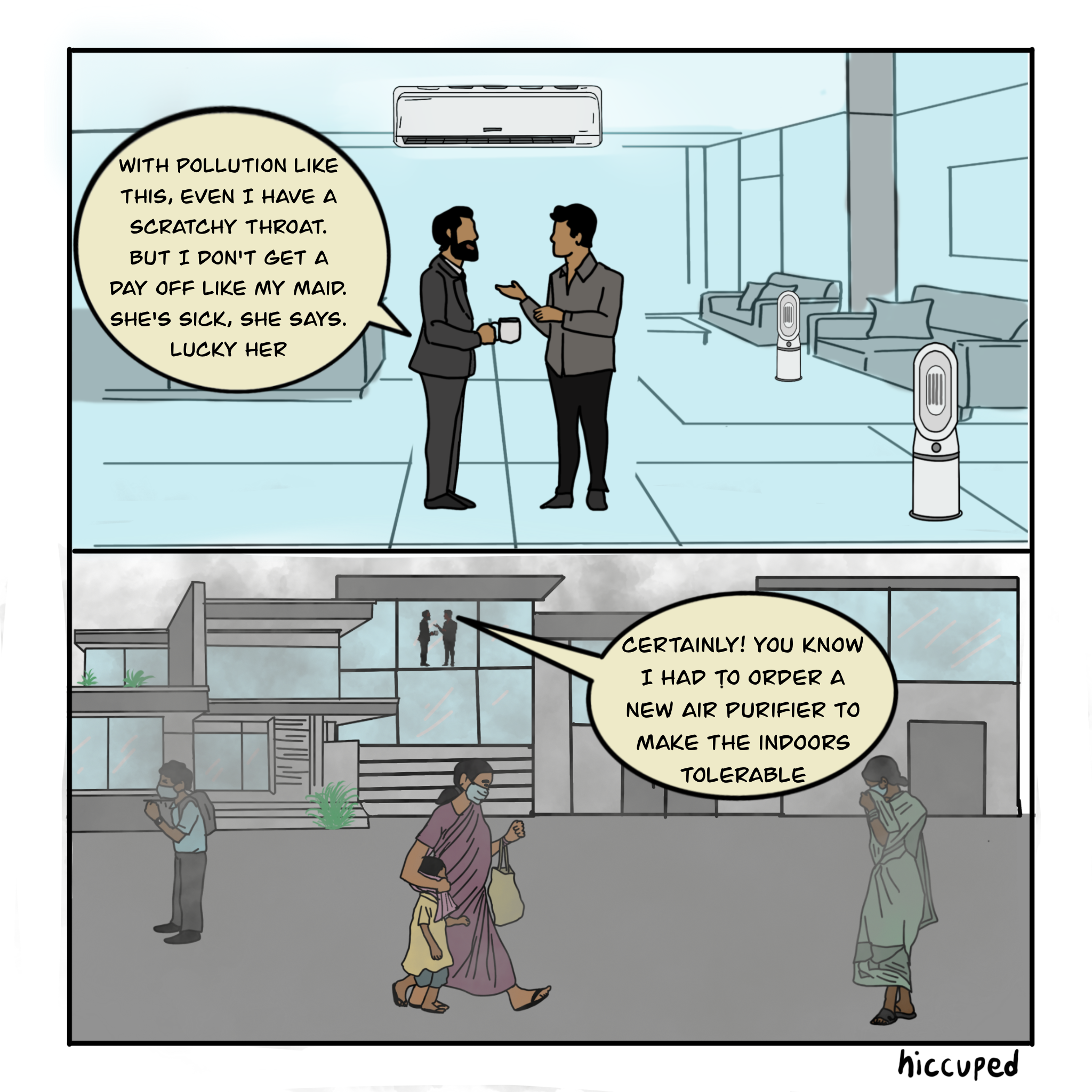
The situation usually calls for schools shutting their gates, offices going remote, and masks becoming a daily accessory. Working remotely via a Zoom call from home is a privilege that not everyone has. There are daily wage labourers, street vendors, delivery personnel and domestic workers who have no other choice but to brave the smog. Their livelihoods depend on working outdoors.
The toxic air doesn’t just linger; it spreads unequally.
Studies show that women are biologically more susceptible to the effects of air pollution, with higher risks of respiratory issues that don’t respond to treatments. And then there are the children, whose developing lungs are far more vulnerable to the toxic air they breathe. Prolonged exposure to high pollution levels increases respiratory illnesses like asthma and bronchitis. During these months, hospitals see increased pediatric cases of respiratory distress. This makes us realise that this isn’t just an environmental crisis; it’s a public health emergency affecting millions of lives, especially the most vulnerable.
READ: Justice Denied, Without Trial: How Draconian Laws in Asia Are Weaponised Against Free Speech
The question in the air is: What are governments across Asia doing to combat this crisis? While India rolls out emergency measures like complete ban on non-essential diesel trucks entering the city and a suspension of all construction and demolition activities, these are often too little, too late. China, by contrast, has shown success through long-term policies such as aggressive emissions control which led to a notable decline in pollution levels over the last decade. However, South and Southeast Asian nations like Indonesia and Thailand continue to grapple with cross-border haze.
While policy and lawmakers debate and delay, we are heading towards a future where generations of children grow up with compromised health. Workers continue to toil in toxic clouds of smog, while the privileged hide behind their purifiers. While we demand accountability from the government, we should also hold industrial capitalists and ourselves responsible.
Perhaps it’s not about waiting for the air to clear, but about realising that the longer we wait, the less we leave for those who come after us.