
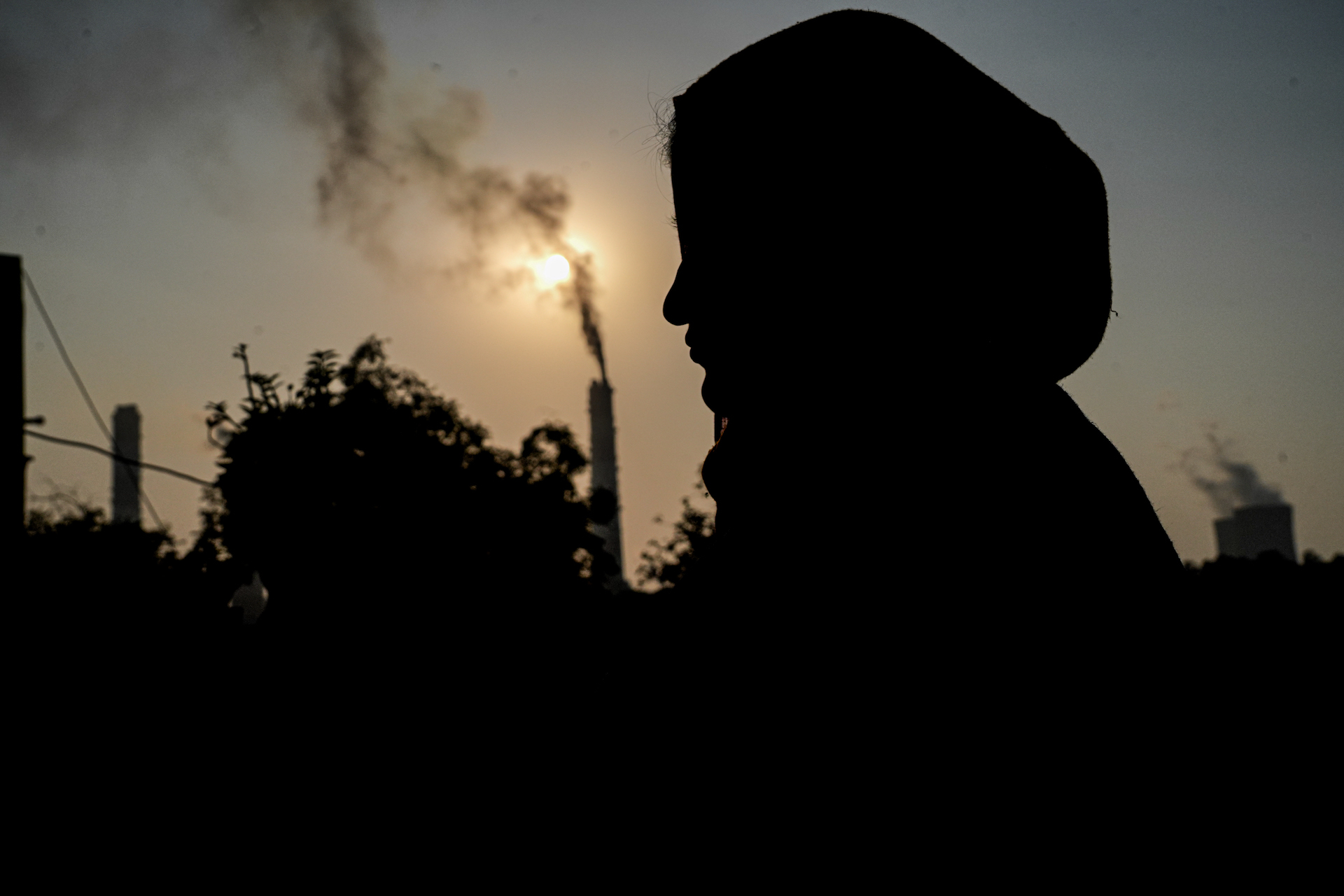
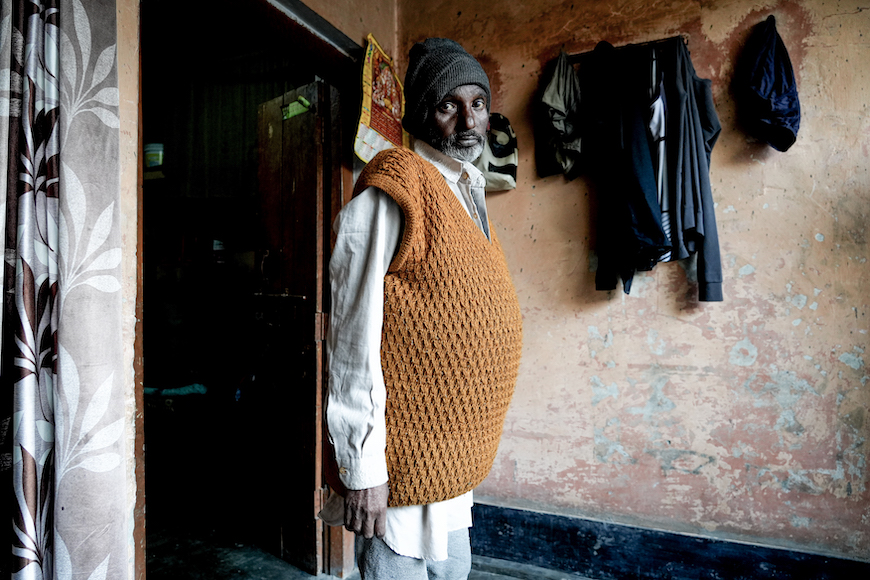
Harinder Singh lies on a charpai in a small room with no windows, coughing and struggling for breath. The 64 year old gets up, wraps a shawl around himself and ventures out, ruing the day he was born in Uncha Amirpur, a village of 3,264 people located in the Indian state of Uttar Pradesh, just 48 kilometers from the country’s national capital.
Singh has been battling liver cancer for the last two years. He blames the nearby thermal power station for his condition.
“I only have a few months left to live,” Singh told Asian Dispatch. “Taking every breath feels like a struggle here and I can’t escape it.”
Singh’s single storey two-room house is merely 300 meters away from one of India’s largest coal and gas-fired thermal power plants. It is run by the government-owned National Thermal Power Corporation Limited (NTPC), India’s largest integrated power company that claims to light every fourth bulb in the South Asian nation.
Thick black smoke, full of toxic pollutants, constantly billows out of its chimneys. “It’s not just the cancer that’s killing me but the toxic air that’s slowly stealing away whatever hope I had left,” he said.
Singh used to work as a truck driver and is the lone breadwinner for his family comprising his wife and two children. Seven years ago, he stopped working after his body started trembling and his eyes turned yellow due to Hepatitis C. Every 10 days, he visits a hospital, which is almost four kilometers away, to have fluids removed from his abdomen.
“I don’t know who will take care of my wife and kids after my death,” said Singh with tears in his eyes.
The Cost of Power
There are 285 thermal power plants like the one in Uncha Amirpur across India, the world’s second highest in number next to only China, which has 1,161 coal-fired power plants. Unlike China’s momentous energy transition journey, India presents a complex picture, where the possibility of a coal phase-out is pitted against its booming population’s power needs. Seventy-five percent of India’s power comes from its thermal utilities. These, in turn, account for 80 percent of industrial emissions of sulphur- and nitrous-oxides, which are responsible for lung diseases, acid rain and smog.
These emissions are increasing.
Official data shows that the country consumed approximately 1,155.3 million tonnes of coal in 2023, of which 826.64 million tonnes were accounted for by thermal power plants. This is an uptick from the 1072.81 million tonnes of coal consumed in 2023. In 2024, India consumed 1,267.58 million tonnes of coal. During combustion, the sulphur in coal combines with oxygen, forming sulfur dioxide, which contributes to an increase in particulate matter, or PM2.5, unless effective capture mechanisms are in place.
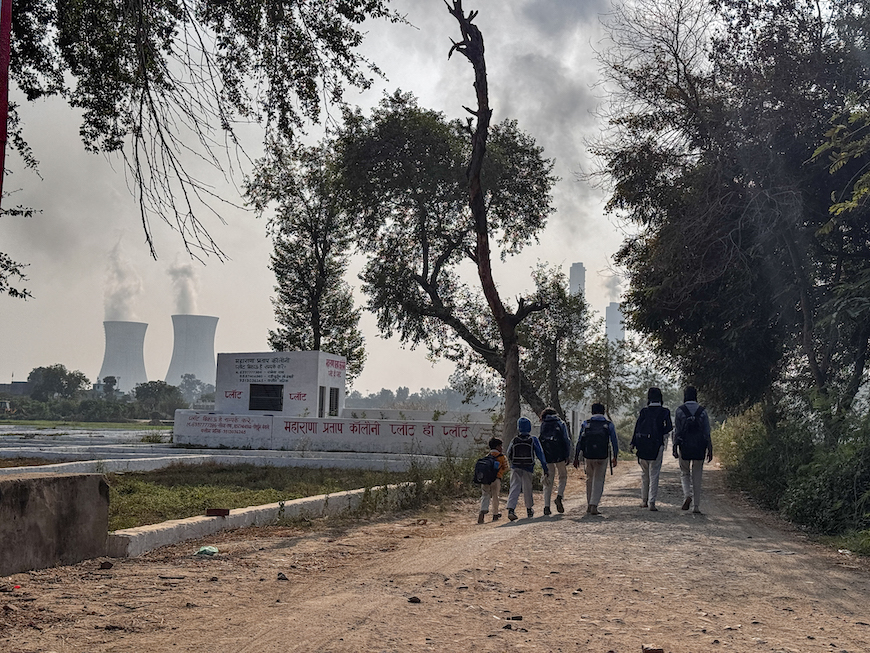
The impact of these emissions is brazen: Indian cities continue to be some of the most polluted cities in the world. New Delhi, which was the most polluted capital city in the world in 2023, has 11 thermal power stations in its radius of 300 kilometers. They emit 281 kilotonnes of sulphur dioxide every year, which is 16 times more than the 17.8 kilotonnes produced by burning 8.9 million tonnes of paddy straw, which is often blamed as a primary contributor to air pollution. The concentration of PM2.5 in New Delhi is nearly 10 times higher than the WHO guidelines. Air pollution causes more than 2 million deaths a year in India.
Cities like Singrauli (Madhya Pradesh), home to the Vindhyachal Super Thermal Power Station (4,760 MW), Korba (Chhattisgarh), with multiple thermal plants, and Chandrapur (Maharashtra), housing the Chandrapur Super Thermal Power Station (2,920 MW), have a similar stories too.
India currently imposes regulations on the emissions levels and environmental impact of these plants. There is, however, no specific mandate requiring them to generate 40 percent of their power from renewable sources. India’s goal is to achieve 50 percent of installed capacity from non-fossil fuel sources by 2030, which includes both renewable energy and nuclear power.
Over the years, the country directed the thermal plants to install flue gas desulphurisation (FGD) units at thermal plants, which use absorbants to cut sulphur emissions, thereby controlling the ambient PM 2.5 levels and improving air quality. The first deadline to install them was 2017, which has been extended multiple times since.
Experts say the FGD technology works.
Shreya Verma, programme manager for the Industrial Pollution Team at the Centre for Science and Environment, told Asian Dispatch that timely FGD implementation for Category A, B and C is crucial to combat air pollution effectively. The A, B and C categorisation is based on the location of thermal power plants that allows for a phased compliance. Category A comprises plants in cities with populations over 1 million, which had to comply by December 31, 2024. Category B’s compliance deadline is end of year in 2025, and Category C plants must comply by the end of 2026.
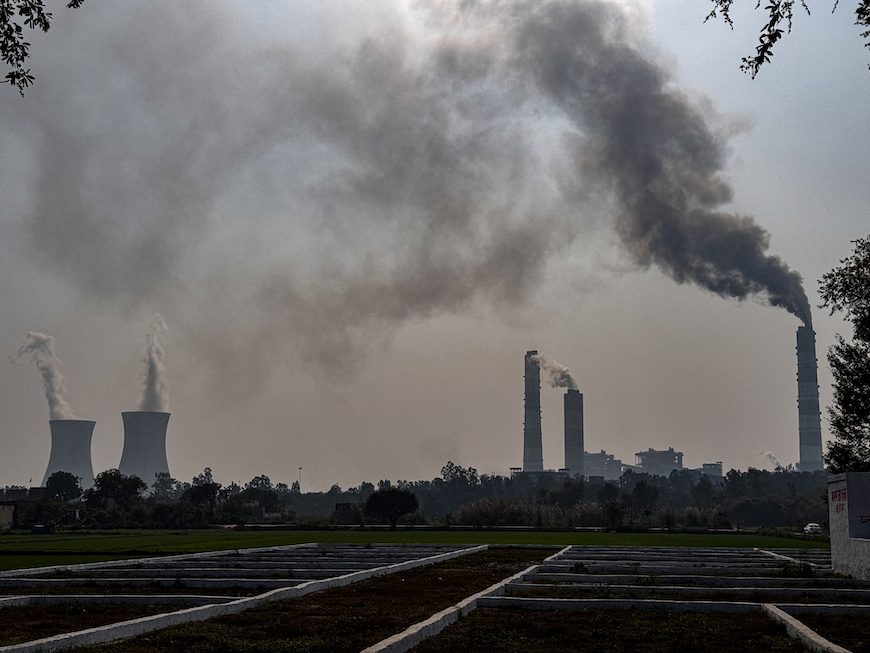
In a written reply at the Lok Sabha, Shripad Naik, the Minister of State for Power said that 39 thermal power plants have successfully installed FGD, while 238 plants have had contracts awarded or are under implementation. Some 139 plants are in various stages of the tendering process.
“We urge all stakeholders to focus on execution and hold non-compliant plants accountable with strict penalties,” Verma said, adding: “The repeated extensions of SO2 compliance deadlines are a grave concern, especially given the severe health impacts on millions in Delhi-NCR.”
A 2024 report by Helsinki-based Centre for Research on Energy and Clean Air found significant emissions reductions post-FGD implementation, of 65 percent, 69 percent, and 60 percent in the state, central, and private sectors respectively. Significant as this might be, Dr Yasmeen Abdullah, a gynecologist at Delhi’s Jamia Hamdard Hospital, told Asian Dispatch that it’s perhaps too little and too late for those exposed to years of toxic air from thermal plants.
“The damage to their health is substantial and cannot be easily reversed,” Abdullah said.
Asian Dispatch contacted the Central Pollution Control Board and the Ministry of Environment, Forest, and Climate Change for comments, but received no response. This reporter also reached out to NTPC and several of its officials. There is no response yet. The NTPC’s 2023-2024 annual report lists several measures to enhance environmental compliance, including in Dadri, where Uncha Amirpur village is located. However, these measures are not yet scaled to the level required for a company of NTPC’s size. Key technologies like FGD and biomass co-firing are limited to a fraction of its fleet, leaving significant gaps in achieving broader environmental targets.
A Timeline of FGD Compliance
2015: The Union Ministry of Environment, Forest and Climate Change introduces emission norms for coal-fired thermal power plants. The first deadline is set for 2017.
2017: The Union Ministry of Power requests an extension of another 7 years. The Supreme Court grants five more years on top of that – up until 2022 – with the Delhi-National Capital Region plants to comply by 2019.
2021: A task force comprising representatives from the environment and power ministries is formed, whose job is to disaggregate 596 coal-fired thermal power plants based on location, resulting in Categories A, B and C with varying compliance deadlines.
2022: New deadlines set for sulphur dioxide compliance for non-retiring thermal power plants. Category A has a deadline of December 31, 2024; Category B of December 31, 2025 and Category C of December 31, 2026.
2024: A notification in December announces another extension for sulphur dioxide compliance for non-retiring thermal power plants. Category A now has a deadline of December 31, 2027; Category B of December 31, 2028; and Category C of December 31, 2029.
“No One will Survive”
In Uncha Amirpur, rooftops of homes are covered in dust. The air is filled with smoke. The leaves on trees and crops are coated with a whitish layer of residue, giving an unnatural appearance to the greenery.
Many villagers suffer from Hepatitis, cancer, asthma, and various skin and bone diseases. Their eyes are watery or yellowing due to the heavy air pollution. Most women in the area have bloated stomachs, often caused by Hepatitis C.
Sarla, who goes by single name, is battling Hepatitis C, asthma, kidney diseases and severe bone disease. The 60-year-old woman’s left hand is severely fractured and she is unable to do any work.
“I can’t stand for more than 10 minutes or even take a long walk due to my weak bones and asthma,” she says. “I’m so helpless. I pray to God for relief through death now.”
Whether it is summer or winter, residents say their struggle remains the same.
It’s not just the air that’s contaminated with pollutants but the water, too, which is contaminated and severely harmful to health. Ninety percent of the people in the village rely on groundwater for drinking, which has a Total Dissolved Solids level – a measure of anything dissolved in water that is not an H2O molecule – above 1,000. A TDS level of over 600 is considered not fit for drinking, according to WHO guidelines.
Skin infections due to contaminated water is a common sight in the village.

“The water in the mornings often appears yellow,” Pradeep Kumar, the village sarpanch, told Asian Dispatch. “It’s not just health. The pollution has also damaged agricultural production. The vegetables are coated with dust and the yield is less than before.”
Kumar adds that almost 20 percent of the population has permanently shifted from the village, leaving their properties behind. Shuttered homes, in the narrow lanes of the village, present a desolate look.
“The economically well-off have left, while the rest of the population continues to suffer,” Kumar says, adding that they protested against the power plant in the past and requested the government to close it. Their pleas went unheard.
“We have lost seven people in the past week due to Hepatitis B and C, and several others are suffering from liver damage and cancer,” Kumar said.
This reporter visited Dr Rizwan Sofi, who has been operating a clinic in Uncha Amirpur for several years. He confirmed the prevalence of Hepatitis, asthma, eye diseases, and many other pollution-related diseases.
He said: “If the pollution continues at this rate, I fear no one will survive here.”

Inhaling Poison
Research shows that air pollution contributes to nearly six million premature births globally. Pregnant women living in polluted areas are more likely to go into preterm labor, which increases the risk of low birth weight, underdeveloped lungs, and infant death during or after birth.
Anjeeli, 23, from Bulandshahr, recently moved to Uncha Amirpur after marrying a resident called Raghav. The couple live just 300-meters away from the power plant. Anjeeli is eight months pregnant and is worried about her unborn baby. “I feel anxious. Every day of my pregnancy is a challenge to survive,” says Anjeeli. She recalls being able to breathe freely in her parental home in Bulandshahr. “Since I moved here, every breath feels like we’re inhaling poison,” Anjeeli says.
Many pregnant women in villages around Dadri are experiencing similar issues.
“When pregnant women breathe polluted air, sooty particles reach the placenta through the bloodstream, disrupting fetal lung development,” said Abdullah, the gynecologist from Jamia Hamdard Hospital. “This toxic exposure can lead to long-term respiratory issues, such as asthma and allergies.”
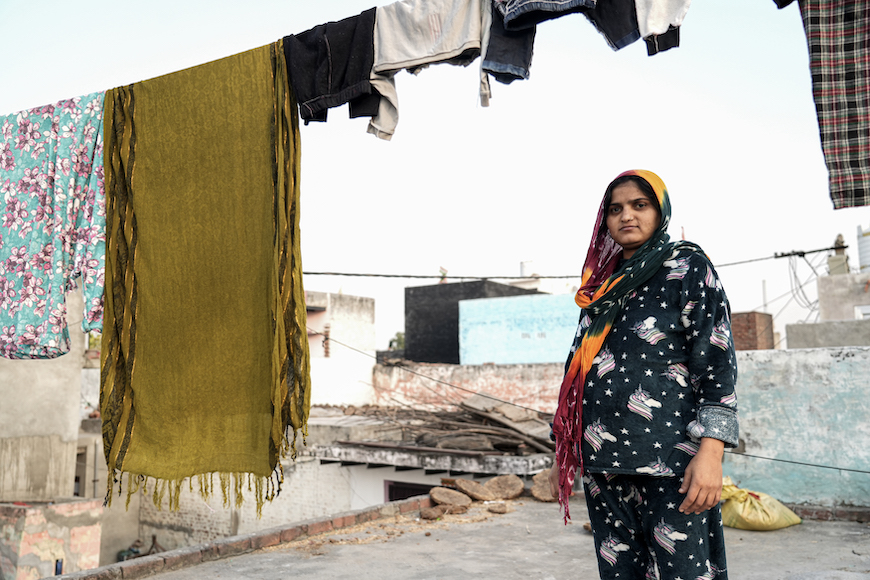
Another side effect of high levels of pollution is damage to the eyes, which can, over time, result in partial or complete loss of vision.
Rupwati, 65, lives alone in her single-room house which acts as a kitchen, a living room and bedroom. A few years ago, she started experiencing a burning sensation in her eyes, as if something is stuck inside. Soon, she lost vision in one of her eyes.
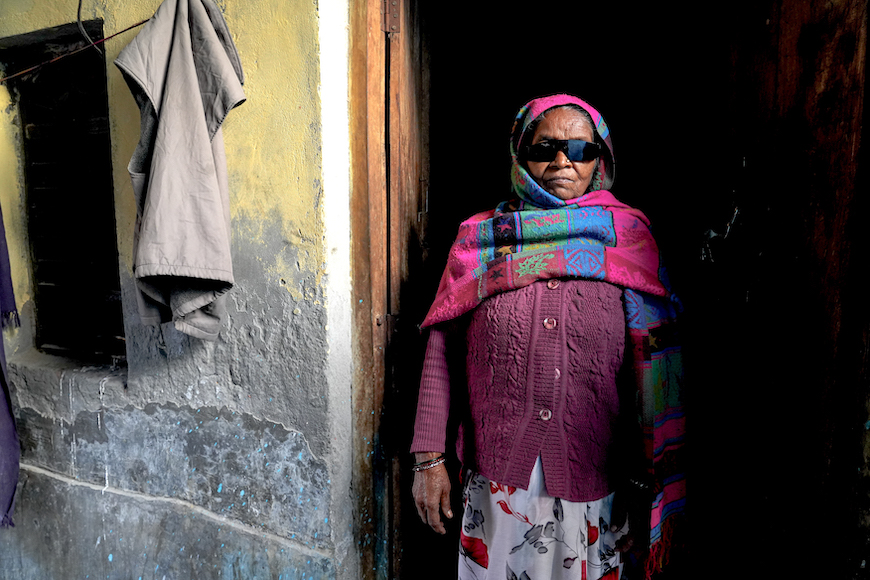
“Now, my other eye is starting to have the same issues,” she wails, her voice filled with pain and frustration. “I live alone, and now I am unable to work properly.” Echoing the sentiments of her fellow residents, she says: “This power plant has taken everything from us.”