
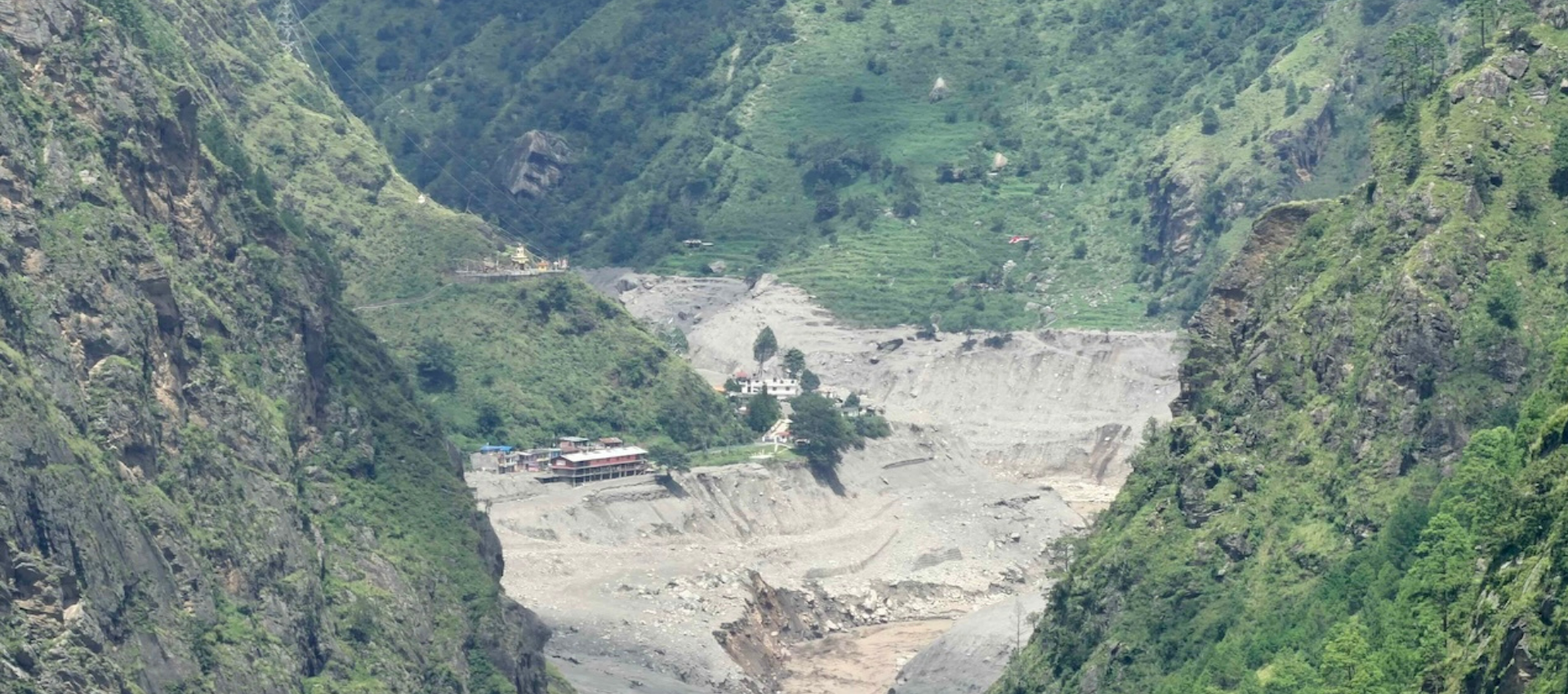
Upon reaching Nuwakot and Rasuwa right after the floods, I realised that the reality was far deeper and more painful than what was reported in the news.
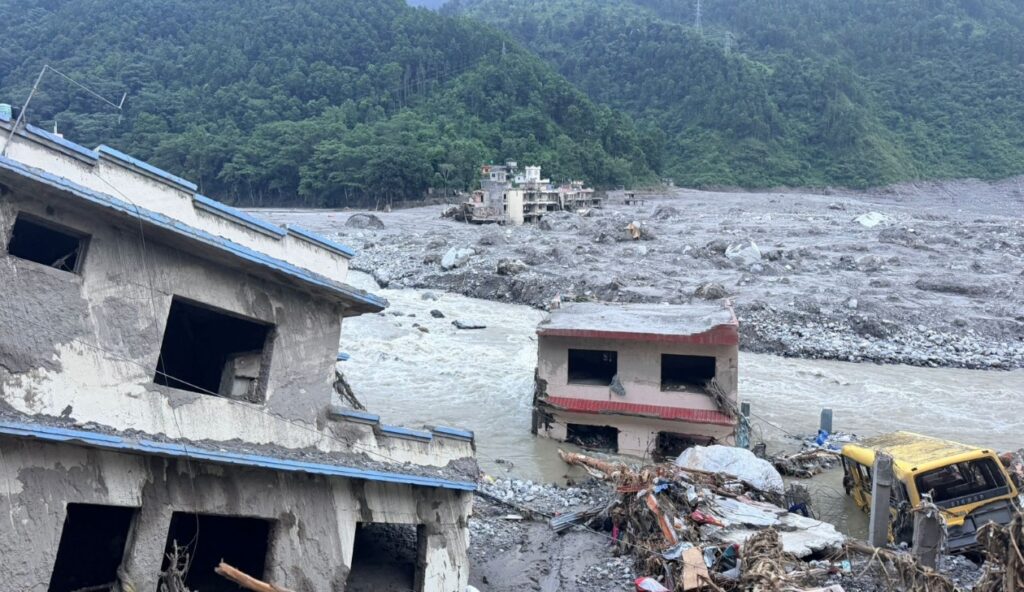
When I arrived at Trishuli Bazaar, located along the route connecting Nuwakot’s Bidur to the Rasuwagadhi-Kerung border, on Thursday morning, the town was destroyed beyond recognition. Houses had been swept away or buried. It was not just Bidur. Villages from Nuwakot to Rasuwagadhi were engulfed in grief. There was a sense of utter silence. No one was speaking. Tears simply streamed from their eyes.
On Wednesday, the day of the disaster, I had reported on it while staying in Kathmandu. Since the news had to be dispatched immediately, I headed to Bidur early Thursday morning. The ground reality was far more terrifying than imagined.
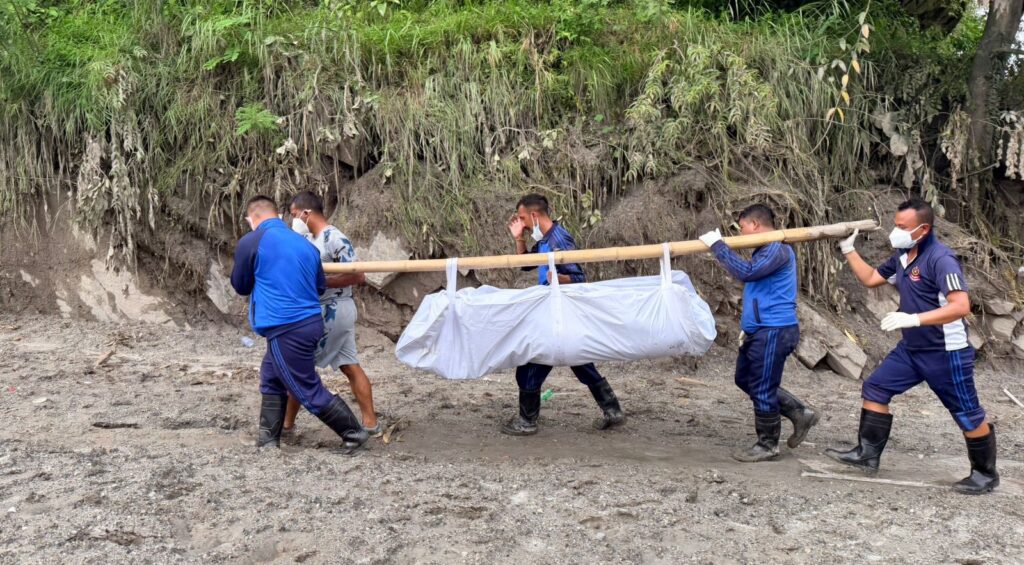
The army had intensified rescue operations in the flood-affected areas. The Nepal Police, Armed Police Force, and the Army were rescuing the injured via both air and land routes. Dead bodies were being pulled out of the Trishuli River, while relatives arrived in search of the missing.
There was no electricity and the internet barely worked. Since I had to produce multimedia and video content, figuring out how to send the day’s coverage was a challenge right from the start. I also had to go live but the lack of power, battery backups, and internet connection made live broadcasting extremely difficult.
That night, we stayed in Trishuli Bazaar. The next morning, we walked for two hours to reach Gerkhutar.
There, too, I gathered news on the rescue of the injured, spoke with flood victims, and assessed the ground reality. We traveled by vehicle as far as the road permitted and then set off on foot from Gerkhutar toward Betrawati. However, we could not press forward due to the risk of further flash floods from upstream. Since it was impossible to cross the forest after dark, we returned to Bidur. That night, we had to stay in Bidur once again.
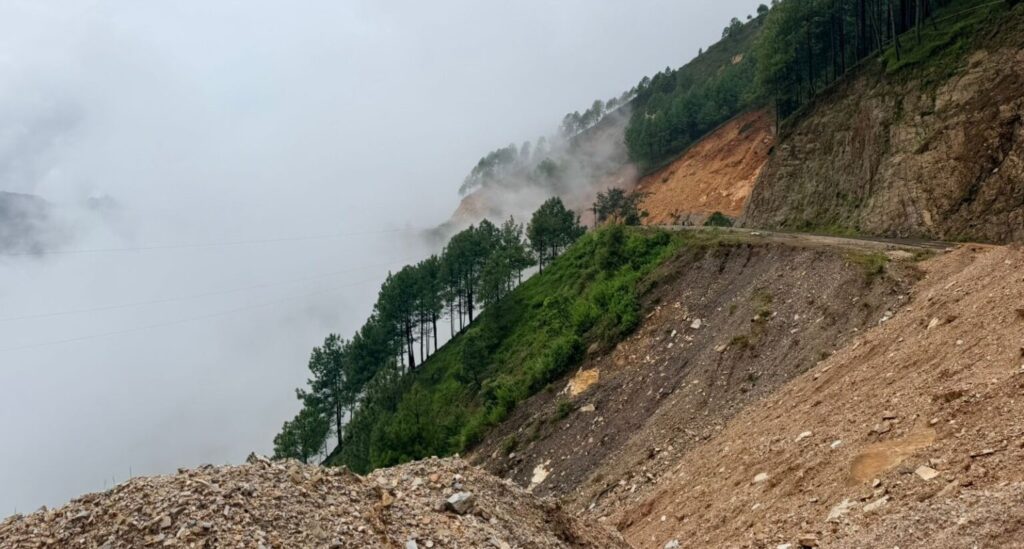
The following day, we headed toward Betrawati, following the road that connects to Rasuwa. Locals advised us to go via Nuwakot Durbar. But after passing Nuwakot Durbar, we discovered that the road connecting it to Lachyang had collapsed due to a landslide.
Because we lost our way heading toward Bahunbesi, reaching our destination that day proved to be extremely difficult. Having set out at 7:00 am, we only managed to reach Betrawati at 3:30 pm, passing through Lachyang and Samarathali.
On our way to Betrawati, two people flagged down our vehicle. After giving them a lift, we learned that they had fled to escape the flood and were returning to check on their homes. One of them was Madan Lal Lawat. Five members of his family were still missing.
In Betrawati Bazaar, which had been completely devastated by the flood, Lawat pointed toward the ruined structures and told me, “This house in the middle is mine. That one belongs to my elder brother. And that over there is the home of my eldest sister, Santamaya.”
His home used to house a microfinance office, while his brother’s home housed an agriculture office.
“Office belongings are scattered all around outside. We haven’t recovered a single item from here,” Lawat said.
Since the flood, Lawat’s younger brother, sister-in-law, eldest aunt, eldest brother and youngest aunt, five people in total, remain missing.
“We are just waiting, hoping they might be somewhere or that someone might share any news,” he said.
Betrawati was not merely a market town. It was both a tourist destination and a religious site.
“This is the sacred pilgrimage site of Uttargaya. It is a place where a major fair is held during Puse Aunsi (new moon of Poush),” Lawat said.
When asked how many people used to live there, he had no exact answer.
He replied, “There is no certainty at all. We have no idea how many people passed through here.”
His wife, Gita Maya Dangol, was standing right there. Pointing toward their home, she said, “All of this has turned into something like a cremation ground.”
Her body was trembling as she spoke.
Lack of Equipment in Rescue Operations
In Betrawati, bodies were visible in the open. Locals were complaining that the dead bodies were not being managed properly. Nearby, police officers were pulling out a body.
Many bodies were yet to be recovered and a foul odor was spreading.
We met an animal rescue team led by Sneha Shrestha there. They were walking around searching for trapped domestic animals.
“I saw dead cattle. They probably couldn’t escape and many were likely kept tied up,” Shrestha said.
While engaged in animal rescue, her concern seemed focused more on the potential epidemic that could spread due to unmanaged corpses.
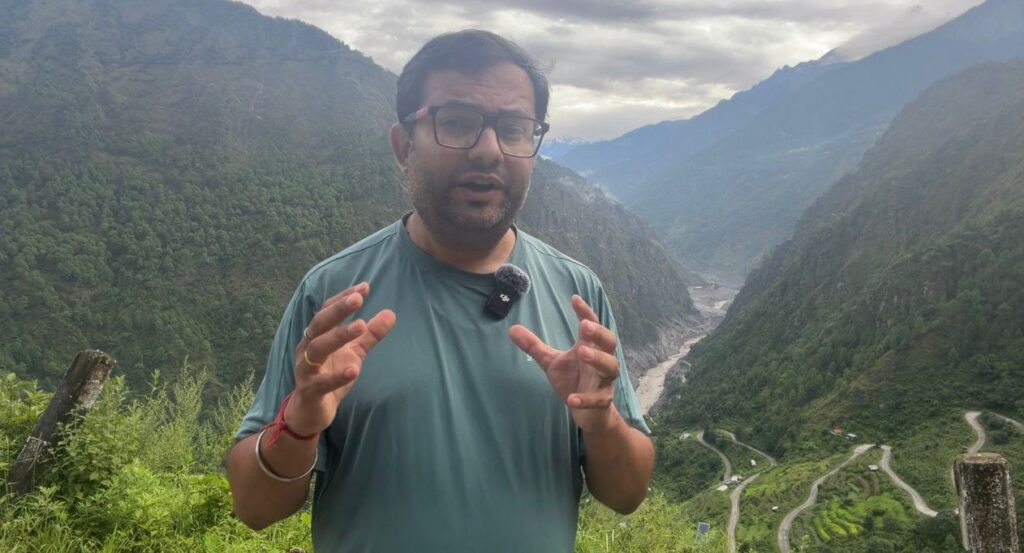
When going to report in a disaster area, a reporter needs more than just news-gathering skills. They must also have a plan for their own safety and alternative communication methods.
We spent the night in Kalikasthan. Early the next morning, we headed toward Dhunche. Before reaching our destination, our vehicle broke down. Later, we found out that the fuel supply belt was broken.
Since it couldn’t be repaired immediately, we called a mechanic from Trishuli to check it. The mechanic, who arrived on a motorcycle, took six hours to fix the vehicle. By then, evening had fallen. With the help of others, we pushed forward toward Dhunche.
In Dhunche, Mohan Acharya, a Member of Parliament from Rasuwa, pointed out a lack of coordination between the government and local levels.
Similarly, Indra Prasad Gotame, a Provincial Assembly member from Bagmati Province, shared that many people were trapped inside the tunnels of six hydroelectric projects in Rasuwa but timely rescues could not be carried out due to a lack of technicians and technology.
There, I also spoke with former minister Kulman Ghising. He was pressing for the immediate rescue of those stuck in the hydro tunnels. Stating that air rescue alone would not be sufficient, he emphasised the need for road and bridge construction.
‘Help Search for Our Missing Relatives’
From Dhunche, we headed toward Syabrubesi. Moving forward was difficult because the flood had swept away both the road and the entire village of Syabrubesi. With no electricity or internet, sending photos and videos remained a constant challenge. When we were not taking photos, we kept our mobile phones on airplane mode.
“Because there is no electricity, I haven’t even been able to speak with my people anywhere,” Mendo Gyalmo shared.
I asked her, “I am a journalist and will bring your message to the media. What would you like to say?”
“Please help search for our missing relatives. Tell them to make arrangements for our food and shelter. We don’t need anything else,” was her reply.
When Setting Out on Disaster Reporting
When reporting in a disaster zone, a reporter needs more than just news-gathering skills. They must also have a plan for their own safety and alternative communication methods. It is essential to carry equipment like power banks and solar chargers, arrange to record content offline for submission later when internet service is unavailable and coordinate in advance with the news desk regarding how long one might remain out of contact.
One should never walk alone through forests, active landslide zones or during nighttime travel. Whenever possible, reporters should move forward alongside local guides or security personnel. Our decision that evening to turn back rather than cross the forest cost us a day but from a safety perspective it was the right choice.
Another critical element is taking field notes. Systematically recording each day’s events, names, locations and timestamps not only aids in writing immediate news stories but also serves as a valuable archive for deeper, investigative reporting later on.