
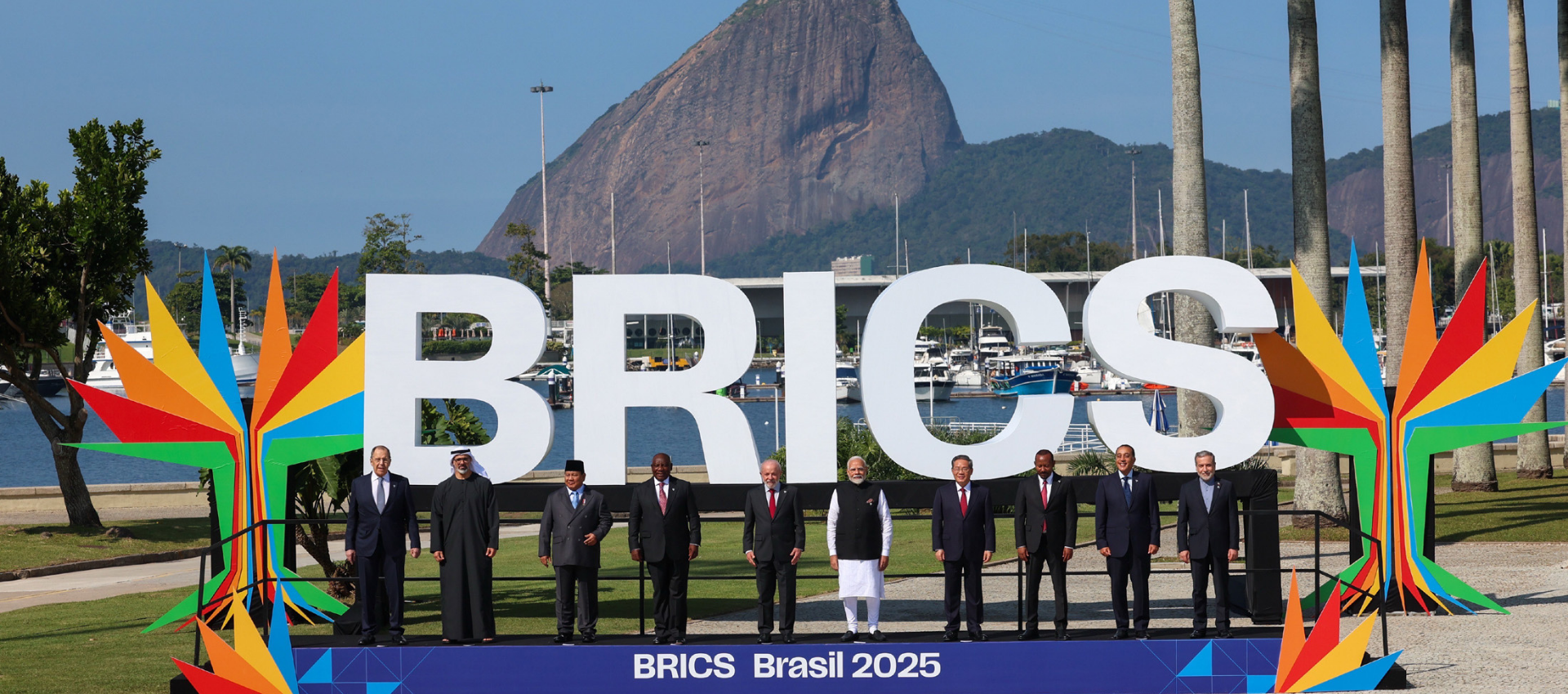
A s the preparations for the 18th BRICS Summit are underway in Delhi, the focus is on how the member and partner countries will formulate strategies to build intra-BRICS cooperation and share perspectives on matters of mutual importance.
Asian Dispatch’s Abhishek Anand spoke to Atul Mishra, professor of international relations, Shiv Nadar University, to understand what India can achieve as the chair and how the summit could help the voice of the Global South in the global context.
Here are the excerpts from the interview:
Q. BRICS has grown as a bloc over the years. What are the challenges you think India will face as the chair this year?
The summit is important because it brings together leaders to mark progress done over a period of time. The summit is not where the challenges will show up for the first time, but it becomes a moment to think about what those challenges are. The biggest challenge would be to avoid the repeat of what happened at the foreign ministers’ meeting in May 2026, where a unanimous joint statement could not be released.
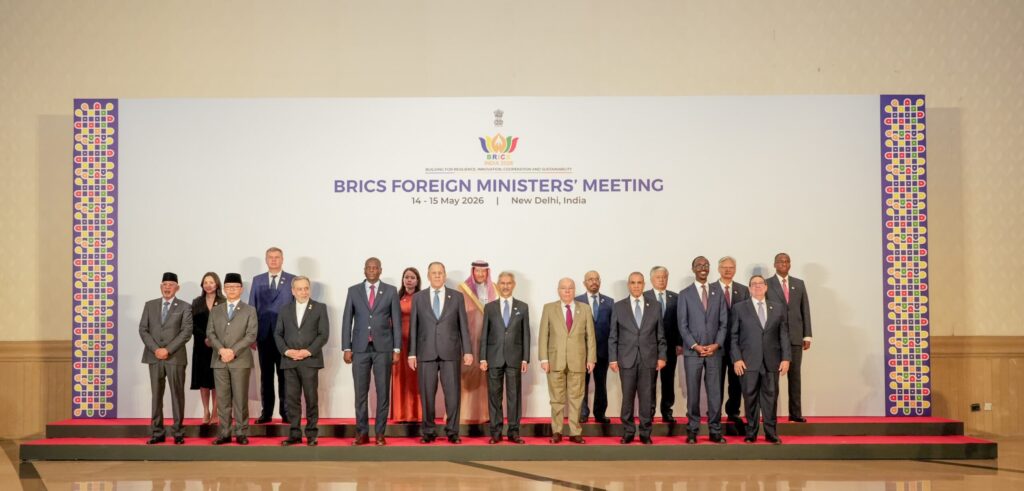
So, the challenge is to ensure that a summit declaration is released which is not completely lacking in its political messaging. This means that the statement should not be diluted to such an extent that it only becomes about development and does not include difficult political questions.
Q. Has the bloc lost its momentum after its expansion or is it still the same?
I don’t think that the expansion has led to the group becoming incoherent. There are two reasons for it. The first is that there has been a conscious effort between the founding and new members to focus on non-controversial, low-hanging fruits around development.
A different element is the war in West Asia. It has taken some toll on BRICS, but if you look at the agendas of the last three summits in South Africa, Russia, and Brazil, you will see more continuity in terms of deepened cooperation.
The final element to check if a body is relevant or not is to see how external actors look at you. Europe takes BRICS seriously and the current United States President Donald Trump has already threatened it. This means that BRICS is getting some things right. So, I don’t think any momentum has been lost after expansion.
Q. Is it fair to say that BRICS has become internally divided?
The more countries you have, the more fractures you are going to experience. People often forget that the Global South is bound together by a common skepticism of the international order (how the IMF, World Bank, and other institutions function) that the western countries have built.
There are only two basic factors: one is India and China (who have acted maturely) and the other, at the moment, is Iran and the United Arab Emirates (UAE). The latter are important players geopolitically as well as economically. The disagreements between these two countries have impacted BRICS to some extent, but I would not say that the internal division is so deep that the group itself has become fractured.
India’s leverage as the chair does not actually increase. It must ensure that Iran and the UAE see eye to eye at least within the context of the grouping. This becomes complicated because India is closer to the UAE than Iran. No chair ever wants to be in a situation where its member states are disagreeing over something such as their core national security interests.
Q. Indian Prime Minister Narendra Modi had described India as a bridge between the Global South and the Western world. What would be the meaningful outcome from this summit that could benefit the Global South?
To say India is a bridge between the Global South and the West is to say that this is a bridge that is always under construction. This is because new issues may arise over which the Global South and the West may not see eye to eye, then India can act as that bridge. I don’t think of the summit as a place where big announcements will be made. Broadly, there is a sense of cohesiveness within the group as far as its core development agenda is concerned.
There are three areas to watch:
- The New Development Bank (NDB): if more money goes into the bank as a result of the summit and the NDB identifies more projects to fund, then that will be progress.
- The second thing would be more money flowing into the Contingent Reserve Arrangement (CRA), which is meant to provide financial assistance to member countries in times of crisis.
- Finally, if BRICS can signal more independence of dollar in terms of intra-BRICS trade. All these would be meaningful progress.
Q. How can the summit promote dialogue between countries involved in the West Asia war? What are the likely outcomes?
It’s imperative to understand that BRICS is not capable of handling political or strategic differences. The foundational principle was that BRICS will sideline these two differences, which was the only way to bring all these disparate actors together. It is a developmental organisation, whose goal is to ensure that all the member countries develop. So, we shouldn’t expect it to handle political differences in this case as well.
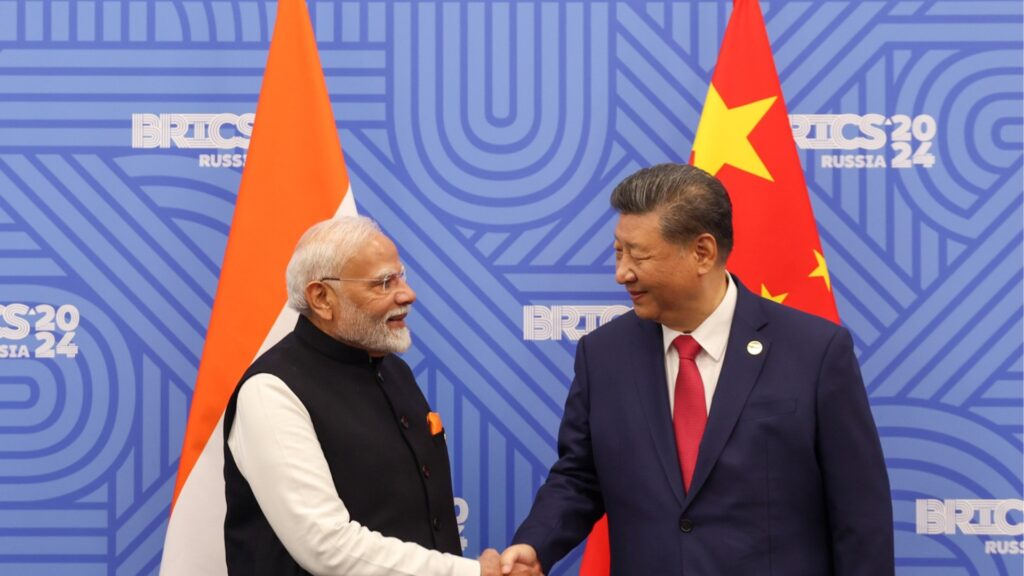
Q. Chinese President Xi Jinping will be visiting India after nearly seven years. What would this signal about the bilateral relationship?
The Chinese President’s visit to India would signal that there is enough comfort between the two countries. There are two things to keep in mind. He did not visit Brazil last year. Jinping is the leader of one of the two global powers in the world. The leader of the other power, US President Donald Trump, did not visit India for the Quad summit in 2025.
However, if there is a bilateral meeting that happens on the sidelines of the summit, it would be basically to take stock of the reset in the bilateral relationship. Overall, this will be great for India as it tells everyone that diplomacy is back on track and it tells the West that India is not isolated. This is because if you can bring a country with whom you have problems, that’s a success of diplomacy.
Q. With India deepening ties with the US, how do you think India will navigate its relations with Russia and China?
I’m not sure if India-US ties are actually deepening. The relationship between both countries has become more transactional and fickle. One sign of this is that the US constantly threatens India with sanctions. You don’t say things or do the things that Trump has been doing to India to a partner you value deeply. This is a stark contrast to how things were for about 20-25 years.
The US expects more from India today. The idea back then was that the US will invest in India to help it grow and become powerful. This would have helped the US balance China with the aid of India.
The US will readily cut a deal with Russia over Ukraine and the European security architecture, but Russia is not willing to do it. Washington DC has already accommodated Beijing in Asia, when Trump referred to China as a part of G2. So, if the US has accommodated China and has no major problems with Russia, what difference does it make to the US about the kind of relationship India has with either China or Russia.
The problem of the US with Russia has mattered to some extent, especially the oil part because the US has been frustrated with the latter for not yielding on Ukraine. And this has impacted Indian purchase of Russian oil but there is no major strategic cost that India has to pay to keep good relations with Russia at the moment.
Q. Where do you think India would position itself after the summit?
I would not discount that India can act as a bridge between Asia and the West to the extent that the latter needs a bridge to Asia. I think the framing would be that India is a middle power that wants a favourable international order so that it has more strategic options. It will prefer the international order to remain stable because that is the best bet for its own domestic development.
Q. What can Asia expect from this summit? What would be one message or signal that could define its success?
There are two futures of Asia that people imagine. One is a strategic future and the other is a developmental one. The strategic future would be Japan, South Korea, the Philippines, and India coming together to balance China’s rise.
If the summit marks continuous development and growth of BRICS, it would mean that despite there being a conflict, you will have three major West Asian (UAE, Saudi Arabia, and Iran) actors continuing to be a part of a wider project. You will have three major Eurasian powers (Iran, Russia, China) working together and two of the world’s most populous countries (India and China) combined together to work together towards a common but not a tightly unified agenda of development. The success of the summit in Delhi would signal that the future of Asia lies in economic development rather than military hostilities.