
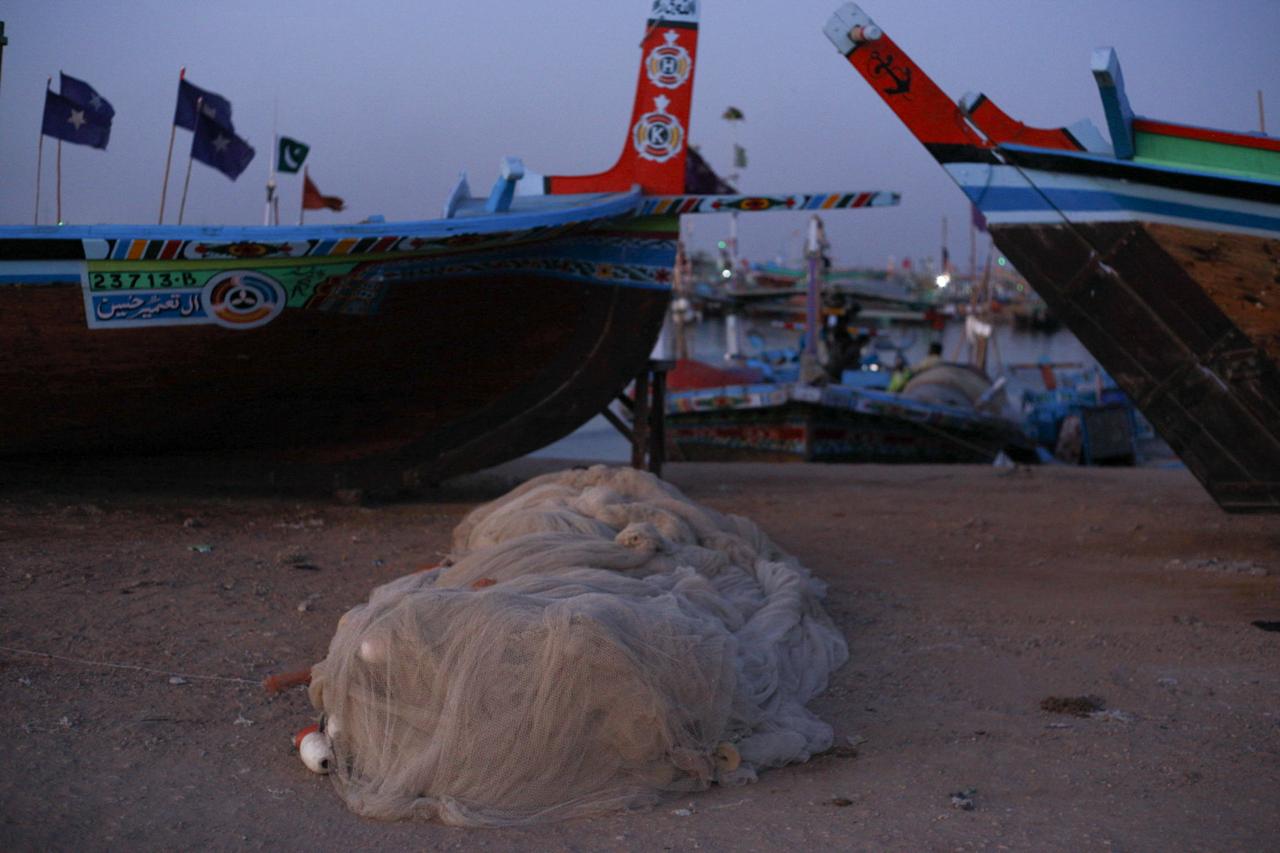
Each year, the Jat community, fishermen, and camel herders of the Indus delta in Pakistan’s Sindh province set out in thousands for hours across the tidal creeks in hundreds of brightly painted and decorated wooden boats.
Their destination — the annual three-day melo (fair) of the 17th-century Sufi saint Sanwlo Faqeer. It’s a vibrant gathering of music, prayers, and shared meals held along the Wari Creek, where the Indus River finally meets the Arabian Sea. But this year, the boats did not come.
The soaring diesel prices was the primary reason. What was once a gathering of devotion turned into an absence of boats, music, and people, who could no longer afford the journey.
That silence now stretches beyond a festival. It has reached the sea itself.
When the three-day fair began on April 7, the diesel prices in Pakistan had surged to PKR 520 (~USD 1.86) per litre, an increase of nearly 50 percent in a matter of weeks. On April 11, the prices were reduced by the government to PKR 385 (~USD 1.38) per litre. The increase in the fuel prices is driven by the war in West Asia that is impacting energy supplies and the global oil prices.
On February 28, the US and Israel attacked Iran. In retaliation, the West Asian country shut down the Strait of Hormuz, a key channel for the flow of oil. While a conditional two-week ceasefire was agreed upon on April 8, the channel, which opened briefly, was closed once again as Israel continued to strike Lebanon and the peace-talks between US and Iran concluded without an agreement.
Pakistan, which imports more than 85 percent of its crude oil from Saudi Arabia and the United Arab Emirates, felt the shock immediately and devastatingly.
For generations, fishing has been the last lifeline in this region. Agriculture was wiped out long ago by relentless seawater intrusion and the drastic reduction of freshwater flow from the Indus due to upstream dams and diversions. The sea became the only source of survival. Now, even that fragile lifeline is slipping away.
Standing beside his grounded boat, fisherman Illiyas Jat spoke words that have begun to echo across the delta.
We are not snakes that eat the sand. Our lands are eaten by the sea, and now we can’t go into the sea for fishing. You spend everything just to reach the water. And even if you catch fish, you cannot recover the cost. – Illiyas Jat, Fisherman
Across the creeks of Badin, Thatta, and Sujawal, hundreds of boats sit idle, tied to weathered poles or resting on cracked mudflats.
In these coastal districts, 84 percent people live in multidimensional poverty. The rate of stunting, impaired growth in children under five, is very high at 64 percent and nearly 43 percent of the population is affected by food insecurity, according to a report by the International Fund for Agricultural Development (IFAD).
What began as a distant war has entered their lives quietly, through empty nets and rising debts.
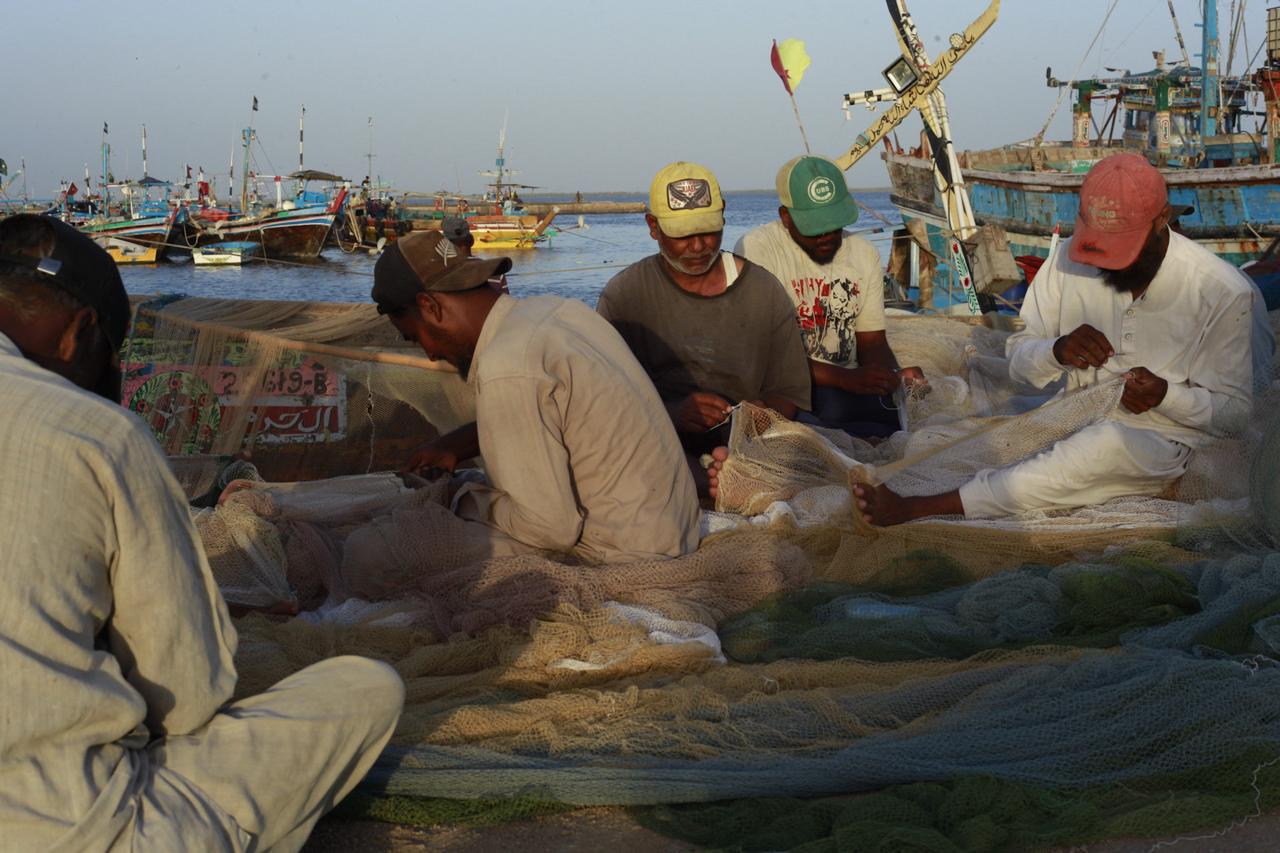
“Most of the boats are not going fishing because they know if they return with a loss, their loss will increase due to debt and the middleman will earn [from it],” said Mehran Ali Shah, chairman, Pakistan Fisherfolk Forum.
Endless Wait
Near Dhando jetty, a small tea stall called Darpadar rattles in the sea breeze, a gathering place for fishermen with nowhere to go.
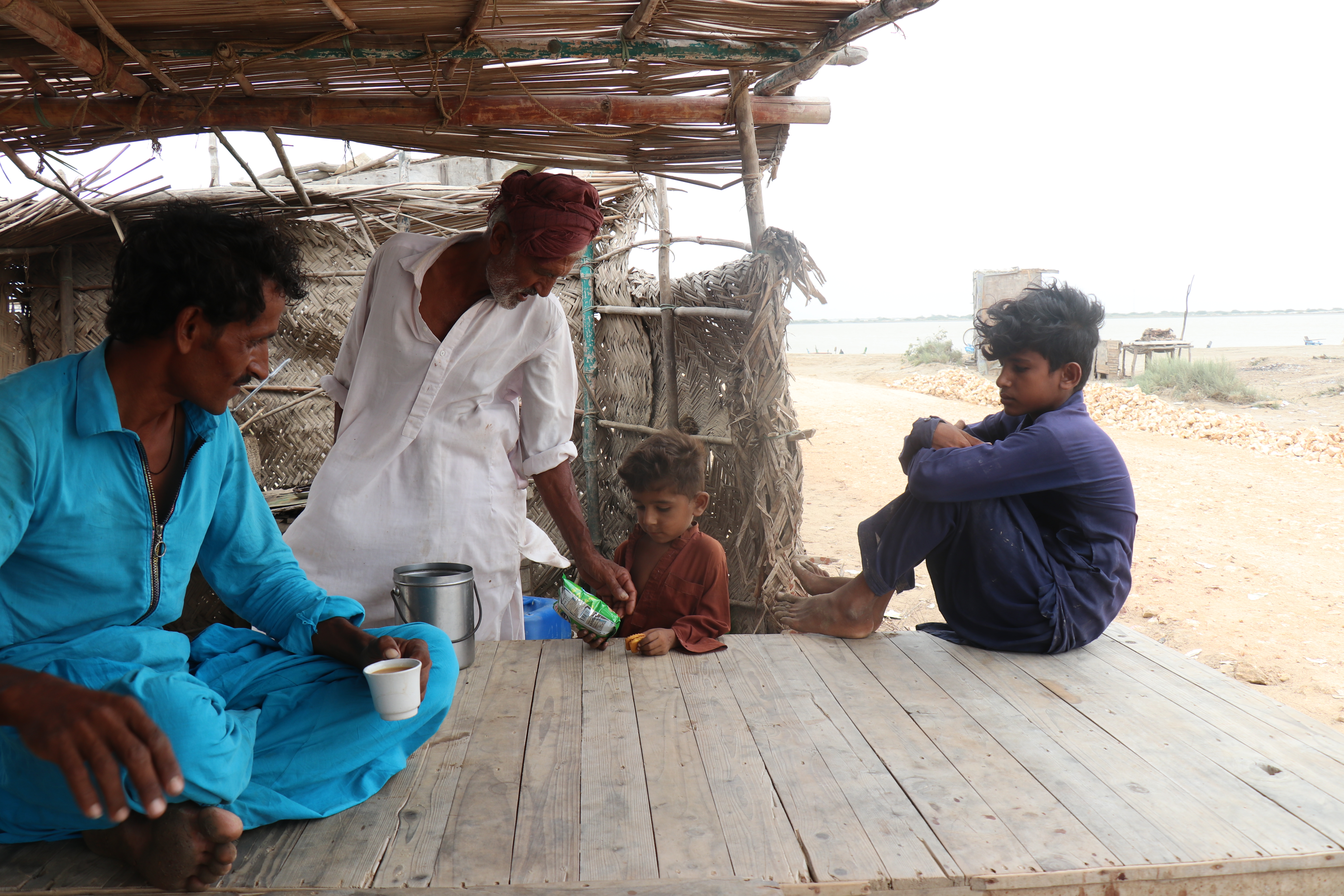
Ibrahim Mallah, a man in his forties with sun-leathered skin and calloused hands, had been sitting there for two days, waiting for a boat that would take him into the sea. He works as a daily labourer, helping fishermen catch fish, to make a living. He had traveled nearly 40 kilometers from his village on foot and bus.
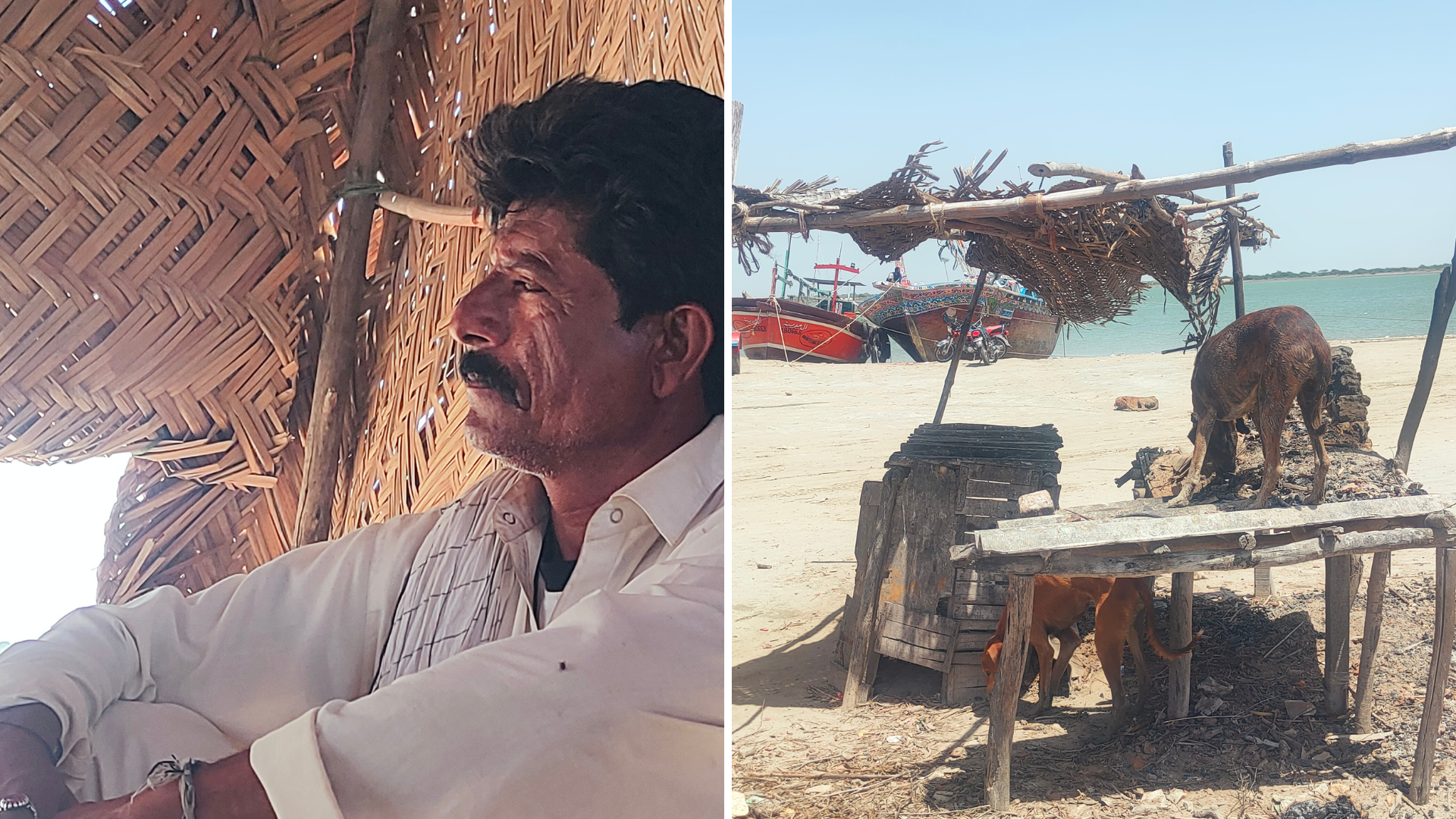
But most boats were idle, their ropes frayed and decks silent. The few that ventured out were already full, everyone scrambling to earn something as prices soared and families went hungry.
Ibrahim had asked every boat owner he could find, his pleas growing quieter with each rejection. Each time, the answer was the same. The math no longer worked: a day’s catch could not cover the cost of diesel but he did not want to return home empty-handed.
“What will I tell my children?” he said, his voice low and cracking under the weight of exhaustion. “That I didn’t get rozi (food)? That I came back with nothing?” As he continued to wait, he whispered to himself, “Jhulelal will provide. He provides for everyone.”
Jhulelal is the Sufi saint revered by Sindh’s fishing communities. Believed to be the protector of waters and of those who depend on them, but faith does not fill nets.
On the Jangisar jetty, Essa, a nakho (boat captain), sat on the weathered wall, with a diary open in his lap. He was calculating expenditures, line by line, scratching out numbers with a pen and rewriting them, as his brow furrowed in quiet desperation.
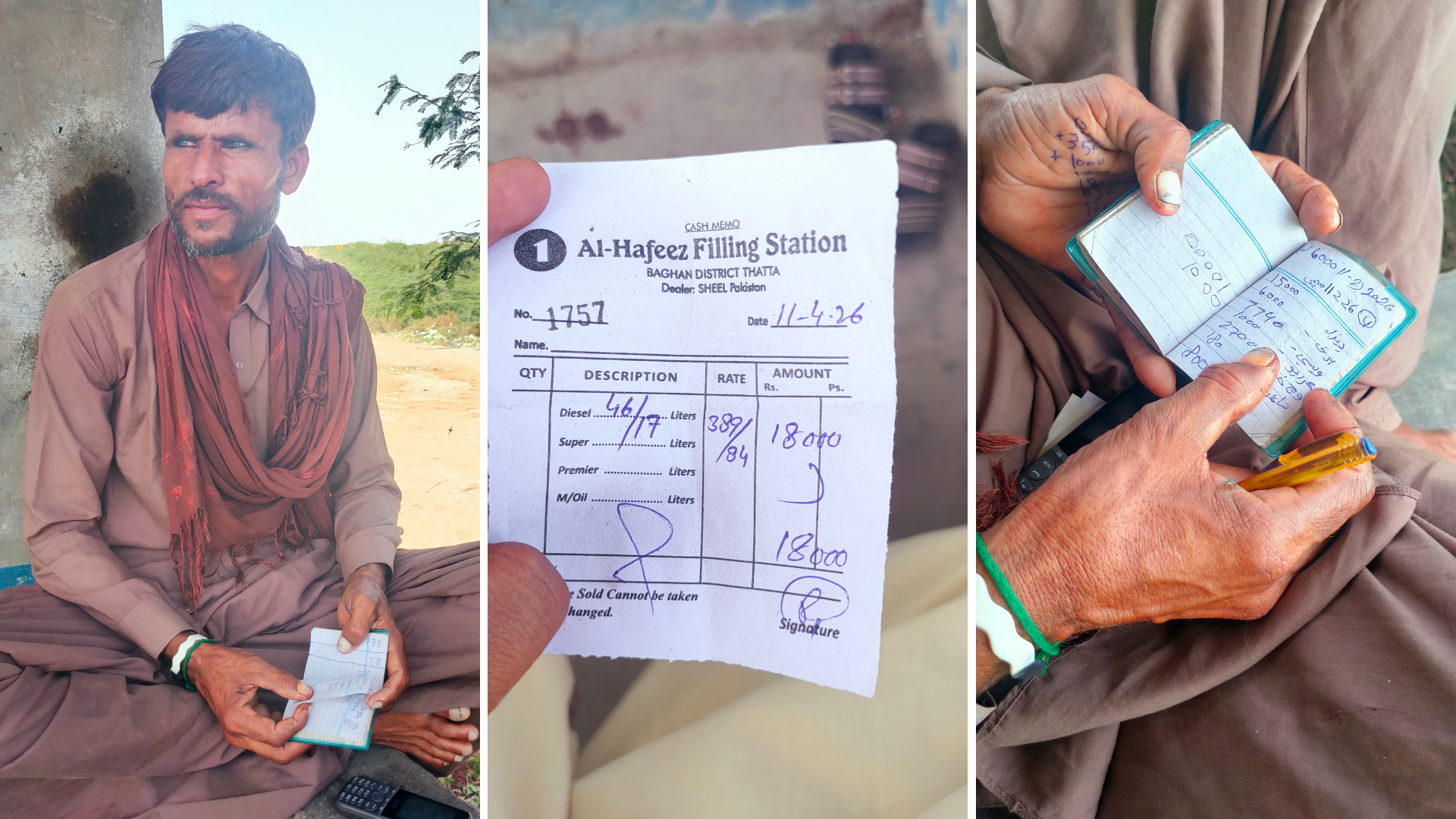
Before the war, 50 liters of diesel cost around PKR 15,000 (~USD 54). Now for the same quantity, boat captains like Essa are paying over PKR 20,000 (~USD 71). The difference of PKR 5,000 is more than what many fishing families earn in a month.
Some days, Essa catches nothing. Some days, he catches enough to cover the fuel cost and buy just a bag of flour. The summer season has always been difficult for fishing communities —rough seas, fewer fish, and unbearable heat. But this year has been extraordinarily challenging.
Across the delta, many fishermen are trapped in debt. They borrow diesel and food from shopkeepers who set their own terms. When they cannot repay on time, interest rises, deepening the losses.
Double Whammy
Mubeen Machi left his village in the Jati, in the Sujawal district of Sindh, three years ago. His small plot of land is now a barren crust of salt. Seawater had poisoned the soil years ago and freshwater from the Indus never came in meaningful flows anymore.
He moved to Karachi’s Ibrahim Hyderi, one of the largest fishing settlements in the city, hoping to find work among the crowded jetties and makeshift huts. But the crisis followed him like a shadow across the creek.
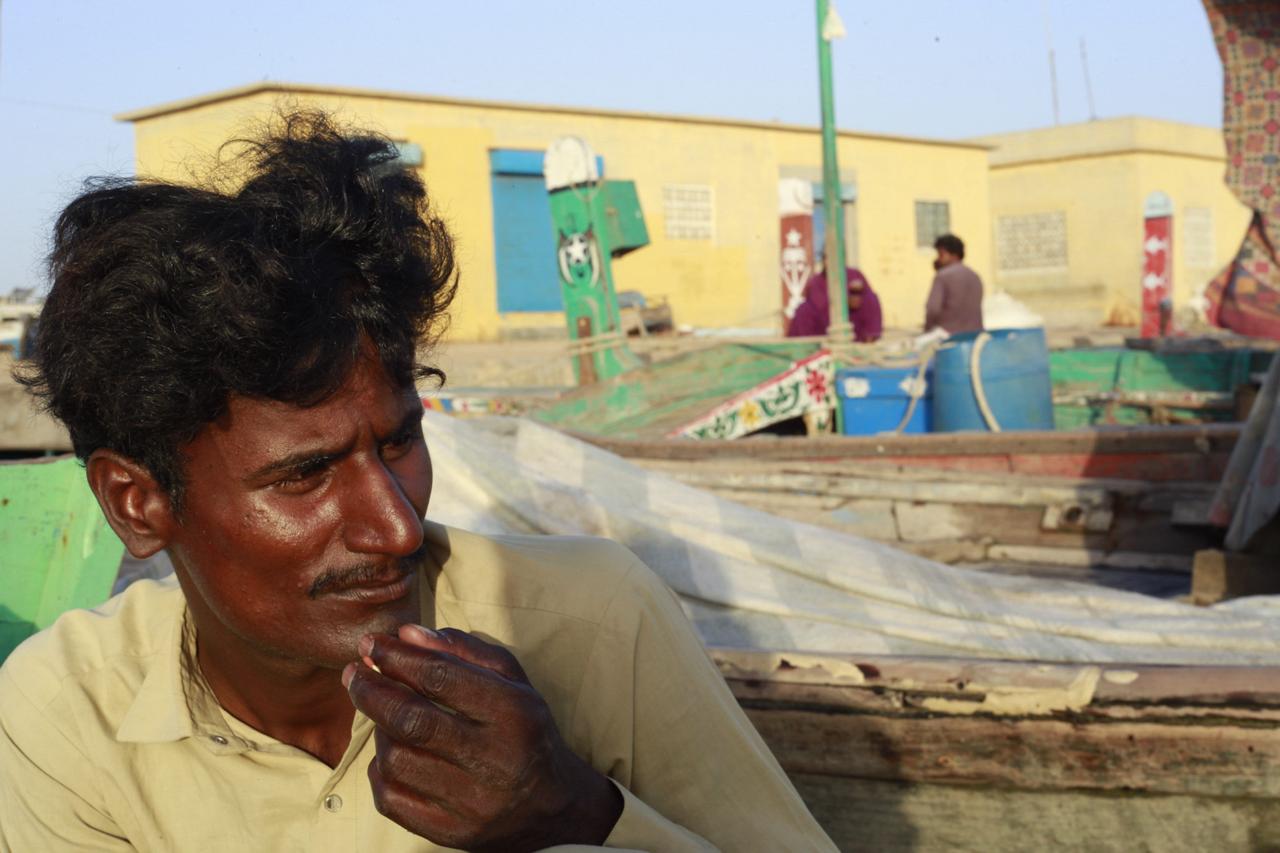
In the last five days, Machi earned only PKR 1,000 (~USD 3.60). Before the war, he could make that much in a single day. “I have a family to feed… What do I tell them? That the war has eaten our fish?,” he says as he continues to stare at the motionless fleet.
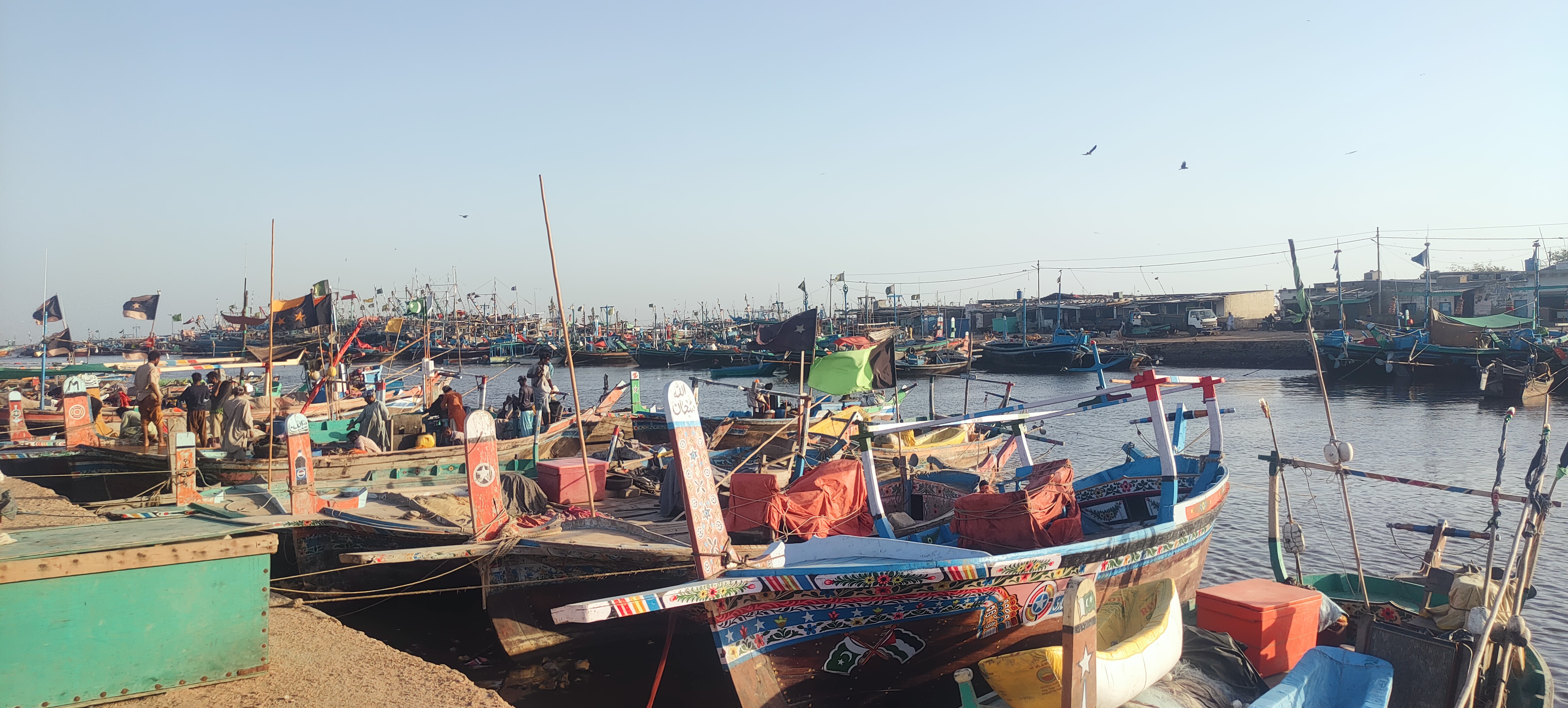
Some, like Mubeen, end up in Karachi’s sprawling coastal slums, where competition for work is fierce and wages are low. Others stay behind, watching the sea creep closer to their doorsteps.
Muhammad Moazzam Khan, technical advisor (marine fisheries), WWF-Pakistan, has spent decades studying the waters of the Indus delta. He has watched the fish stocks decline, the mangroves disappear, and the communities fray.
“The delta has been under stress for decades—seawater intrusion, reduced freshwater flow, overfishing, pollution,” Khan said. “But the fuel price hike is different. It is sudden and severe. Among the fishermen, the small ones are more affected.”
He said that the crisis has not only raised fuel prices but also disrupted global seafood demand. “International buyers are placing fewer orders. Prices for Pakistani seafood have dropped, particularly of those which were exported to gulf. So fishermen are facing higher costs and lower revenues at the same time.”
Pakistan’s seafood industry was valued at roughly USD 490 million in 2024-2025, with exports mainly to China, Thailand, and the UAE, Saudi Arabia, and Kuwait in West Asia. Overall, the war has disrupted supply chains and affected daily incomes in the coastal belts of Sindh.
Pakistan Fisherfolk Forum’s Shah, who has been advocating for fishing communities for over 15 years, said, “When oil prices rise globally, it is the fishing communities that are badly impacted as they are mostly neglected.” He also said that the Fishermen Cooperative Society, a statutory body under the supervision of the Government of Sindh, deducts money from fishermen’s catch for their welfare but doesn’t use it for them.
Asian Dispatch reached out to Fatima Majeed, chairperson, Fishermen Cooperative Society but didn’t receive a response at the time of publication.
Abbass Perozani has more than 100 boats in the delta. During the price hikes, he didn’t stop the boats, he was of the view, loss would be managed if boats kept running. He said, “We have a large system but it is tough for us, and for those who just labour with us, [they] are really worried.”
‘The Sea is Tired’
In Baghan, one of the hardest-hit villages in the delta, Zarina, a fisherwoman in her 30s, told Asian Dispatch that her husband’s boat has not gone out for ten days. She used to earn a small income mending nets and drying small catches. Now, there are no nets to mend.
“I wake up before dawn and think: what will I feed them today?” she said, gesturing toward her three children, who sat quietly.
My youngest keeps asking for fish. I tell him the sea is tired. He doesn’t understand this. – Zarina, Fisherwoman
Zarina’s story is not unique. Women in the coastal belt traditionally play a crucial role in the fishing economy – mending nets, preserving and selling small catches, managing household finances. Many also collect razor clams and top shells for export to China, though catches shrink in summer and when diesel prices rise.
But this year, with diesel prices doubled and fishing trips reduced to a fraction, even these small incomes have dried up. Women now walk miles to collect firewood or brackish water.
Across South Asia, the impact is unfolding in similar ways. Small-scale fishing communities in India, Bangladesh, and Sri Lanka are facing sharp increases in operational costs. Diesel often accounts for a major portion of a fishing trip’s expense and with soaring prices, boats are either docked at the shore or are operating at a crippling loss.
The war in West Asia has no immediate front lines in South Asia, but its shockwaves arrive daily at every jetty and fish landing site.