
In 2024, mother of a 14-year-old boy who died by suicide alleged that her son had formed an intense attachment to an AI chatbot playing Daenerys Targaryen, a character from Game of Thrones. Since then, what might once have seemed like an extraordinary case has become a recurring kind of a headline.
This November, parents of a 13-year-old girl filed a lawsuit alleging that she had used an AI chatbot to plan and discuss suicide. She survived only after a monitoring service raised an alert that eventually reached her family.
These incidents raise hard questions of accountability but the underlying behaviour is hardly new. Entrusting one’s most private thoughts and moments to internet technology is common behavior.
The internet offered both information and intimacy but they were not always sure what to make of either. They also felt overwhelmed. How could they tell what was reliable? Could they trust someone they had never met?
By 2026, AI cannibalised search. The search box no longer just retrieves an answer. It engages you. It ensures you engage back. Even if that means generating vacuous flattery or fabricating answers out of thin data.
But people including minors are increasingly turning to chatbots in their moments of need and crisis in the hope of a solution. This is something we at RATI Foundation’s Meri Trustline, an online safety helpline in India, have had a frontline view of.
We now file fewer cybercrime complaints for our clients because some have already done it with a chatbot’s help. Some even return to AI to cross-check what our counsellors have told them. In one case, a chatbot enabled a minor to recognise an online scam and seek timely assistance.
But when it came to matters that lay beyond the screen, it was far less reliable. It offered confident assurances about how quickly officials might respond, how platforms would act, and how easily a trusted adult could be approached. But anyone who has worked in child protection in India knows those assurances are gambling on uncertainties.
The distance between a plausible answer and meaningful help is where trust and safety is tested. Anyone who has tried to reach a human through customer support knows the routine. A chatbot offers cheerful apologies, asks you to repeat yourself and leads you in circles.
That is irritating when a parcel has gone missing. It is indefensible when someone’s safety is at stake.
The new publication by Tech Coalition on how AI systems should respond to disclosures of child sexual exploitation and abuse tries to solve for meaningful help. And the principles it espouses are unfashionably human:
- take disclosures seriously without blame
- follow the person’s lead
- ask only what safety requires
- be honest about limitations
- protect their information and help them reach safe human support
These sound elementary. Putting them into practice is not.
Consider the path for escalating information received that a child may be in danger. Who should it be escalated to? A parent who might punish the child? Police officers who might dismiss the complaint? An NGO that has closed its office for the day? What happens when the warning reaches someone with neither the training nor the authority to help?
In the 13-year-old’s case mentioned above, the alert reportedly went to a counsellor who had left the school nine months earlier. She passed it on to the current staff who contacted the family. It took a chain of humans, including the conscientiousness of someone who no longer even worked at the school, to make the software’s alert matter. Where the institutions responsible for child protection are already failing, another layer of technology is no panacea.
Debates about chatbot safety tend to gravitate towards the horrifying end of the spectrum such as assisting in suicide or producing child sexual abuse material. These severe issues are comparatively easy to test for but harm that accumulates quietly is harder to catch.
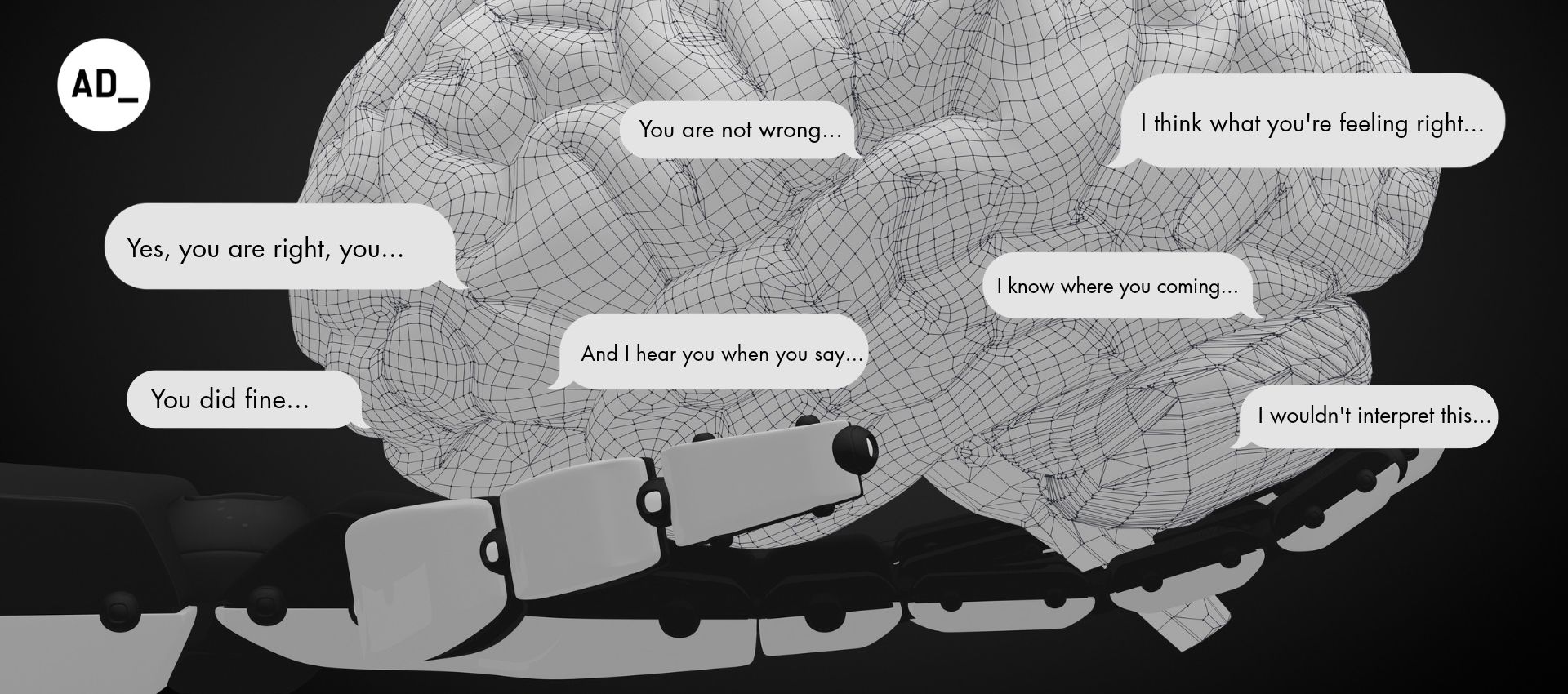
A science study this year found that sycophantic AI inspired trust while distorting judgment. A chatbot does not have to produce an obvious answer to become dangerous. Sometimes it only needs to keep agreeing to your bad idea.
There is also an equal and opposite failure of guardrail overreach.
A chatbot designed to shut down every conversation mentioning suicide may turn away someone looking for help. Restrictions can keep young people from reliable information about their bodies and relationships. The children we spoke to in 2019 went online precisely because they could ask what they could not ask elsewhere. If sensitive subjects are prohibited, they risk reproducing the same silence that drives children towards risk.
There is also the question of who protects the people and services that AI recommends to others.
In a recent case at our helpline, we assisted a person from a marginalised community who had shared their phone number online so others in the community could reach them for support. The number was fed into an AI system without their consent. It repeatedly surfaced to users who sexualised and harassed them. In another instance, a South American helpline for journalists was flooded with calls from people experiencing suicidal distress after an AI service incorrectly prompted it as a suicide helpline.
But the big question here is responsibility. Humans in the loop like counsellors, moderators, teachers, and police officers get things wrong too. But at least in principle, their decisions can be challenged and corrected. With AI, responsibility dissolves into a chain of intermediaries. The model maker points to the application, the application to the platform, and the platform to a reporting portal that sends the person back to square one.
Child safety in AI demands full-stack thinking about accountability with obligation assigned according to the role each actor plays. The recent investigation by Decode and Tattle Civic Tech into the infrastructure offers a clear path of establishing accountability at various Layers.
Schools, platforms, and app stores must also consider the risks of making these systems available to children. And those designing referrals and alerts must ensure they protect personal information and lead to services that can actually help.
A sympathetic answer in a familiar language is worth little if it ends in a referral to a service that doesn’t exist, doesn’t answer, or cannot help. Technology companies have become extraordinarily good at automating the performance of care. They must now invest just as seriously in making human support accessible, correcting failures quickly, and providing meaningful remedies when things go wrong.
The uncanny valley used to be about whether a machine seems human. Now, it is about whether any human is answerable for it.