
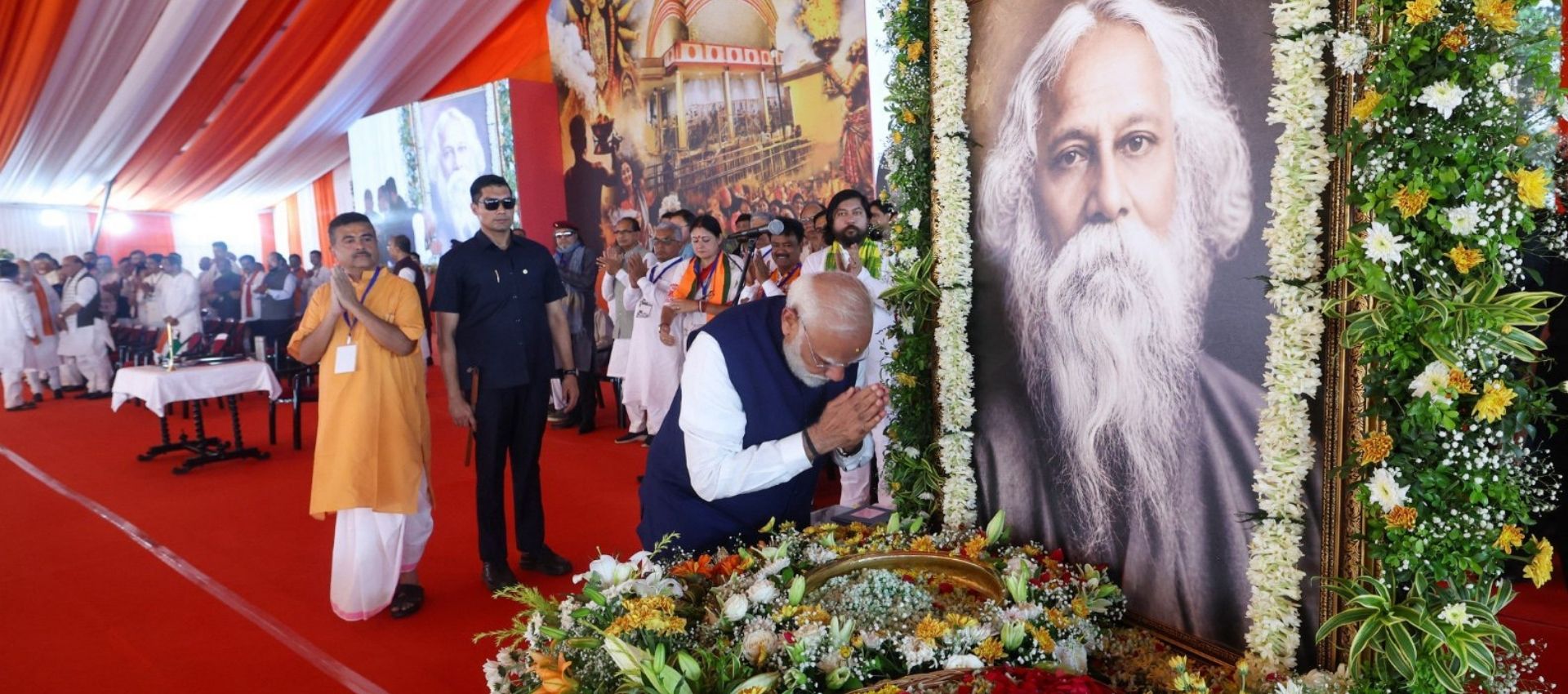
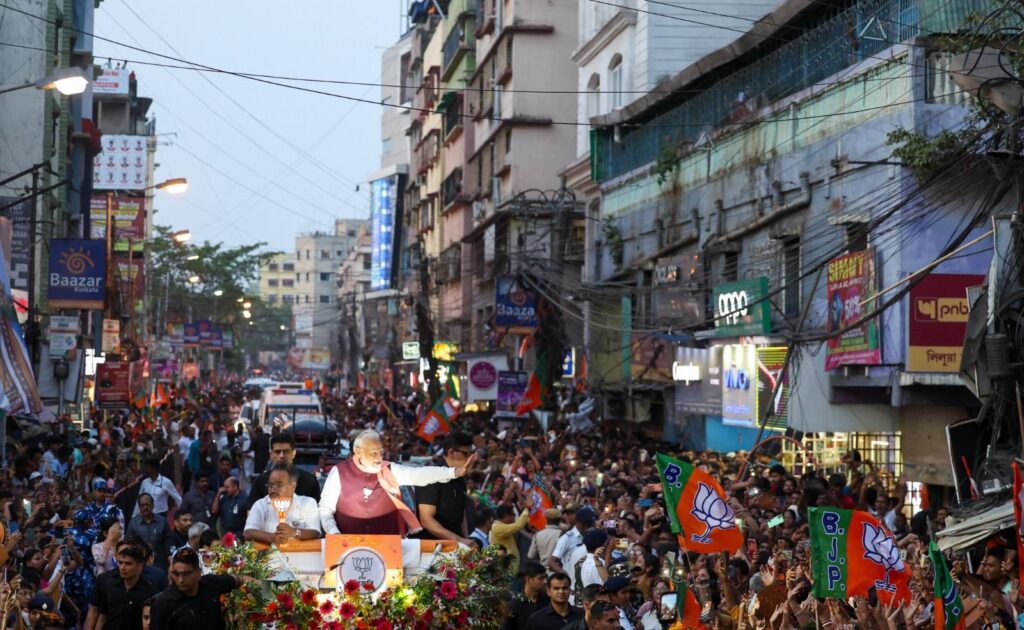
On May 4, West Bengal witnessed a paradigm shift in its politics. The Bharatiya Janata Party (BJP) secured 207 of the 294 Assembly seats, ensuring that for the first time in nearly five decades the party at the centre would also govern the state.
While this “double-engine” alignment has made voters optimistic about the BJP’s pre-election promises, economists and political analysts are wary of how the saffron party will deliver on them. The list is quite exhaustive: one crore new jobs, generous monthly allowances for women and unemployed youth, and massive infrastructural development projects.
But the new government, led by Suvendu Adhikari, faces steep challenges. The BJP government inherits a state burdened by public debt projected to exceed Rs. 8.15 lakh crore, compounded by years of industrial stagnation.
A situation like this is very tricky because this kind of debt limits the state’s capacity to borrow further and makes it difficult for the state to spend on crucial infrastructure that can lead to growth,” says Saikat Sinha Roy, professor of economics at Jadavpur University.
Roy feels that the new government needs to focus more on spending that will translate into growth. He suggests empowering the existing strong MSME sector and creating a better investing atmosphere for large manufacturers, which will create jobs.
But for 29-year-old Souvik Chatterjee, this new government has come with a renewed hope of better employment opportunities in the state. Chatterjee has been working since he was 21 to support his family. Since 2018, he has been preparing for a range of state-level exams while also taking central exams such as SSC CGL. However, he says that recruitments in the state have been extremely irregular.
Many exams he cleared at the preliminary stage were later marred by cancellations or delays due to corruption scandals. In between, he worked in private laboratories, often on meagre salaries of Rs. 15,000–20,000, while continuing to prepare for a secure government job he and thousands like him had been waiting for.
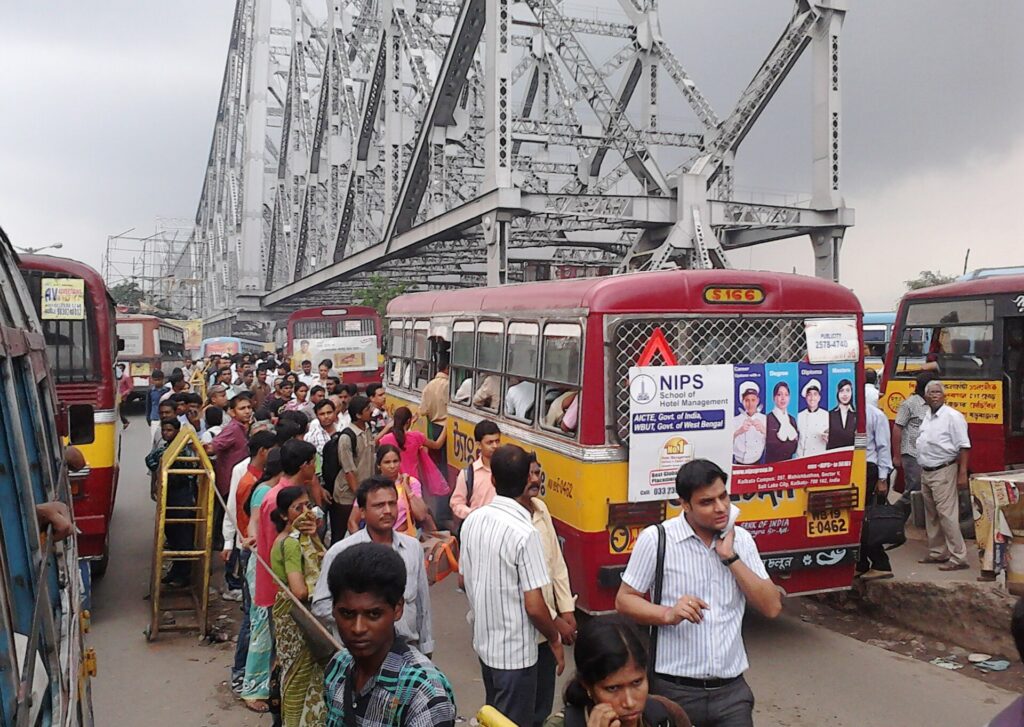
So Chatterjee is clear about what he wants from the new government. “Every year you should recruit 5,000-10,000 people,” he says. “Release the results on a fixed date and complete the entire process within a set timeframe. And at the same time, open up industries so that those who are left behind don’t have to wait another year… People like us are forced to leave for Bengaluru, Hyderabad and other places. Employment should be created right here.”
His expectations come from BJP’s campaign promises of a “new era of prosperity” in the state. And there are early signs that make people hopeful. Soon after the election results, the Centre moved to approve a massive Rs. 39,000 crore package to ensure drinking water supply through tap connections.
But considering the fiscal reality the BJP government inherits, that’s not much. West Bengal’s debt-to-GSDP ratio stands at around 38 percent, with outstanding liabilities high and a significant portion of the state’s expenditure being funded through borrowings.
In this situation, even the first promises the BJP needs to keep of implementing schemes such as Annapurna Bhandar (doubling the monthly transfer from the previous Lakshmir Bhandar’s Rs. 1,500-1,700) and free bus travel for women already seem daunting.

“Given the current scenario, we are stuck in a Catch-22 situation. If the government has to continue spending so much on handouts then they will be forced to cut down spending on infrastructure and skilling, which is crucial for growth,” says Roy, adding, “a major chunk of this money needs to be spent on infrastructure which will bring business and revenue, and eventually bring down debt.”
Welfare Schemes
While the welfare schemes of the Trinamool government (which the BJP promised to trump in its manifesto) were challenging for a government to maintain, they have been evaluated to deliver measurable short-term benefits.
Independent evaluations show they reduced poverty in some districts, lowered school dropout rates among girls and gave many women greater say in household decisions — over 85 percent of beneficiaries reported feeling financially more secure.
The new government insists on standing by its promises but on May 27, the chief minister announced that around 30 lakh beneficiaries of the old Lakshmir Bhandar scheme have been declared unfit after verification linked to the Special Intensive Revision (SIR) of voter lists. This has resulted in fresh forms and re-verification, raising fears of delays in the June 1 launch and exclusion of genuine beneficiaries.
Such fears are not baseless. The national record of BJP governments on welfare offers cautionary lessons.
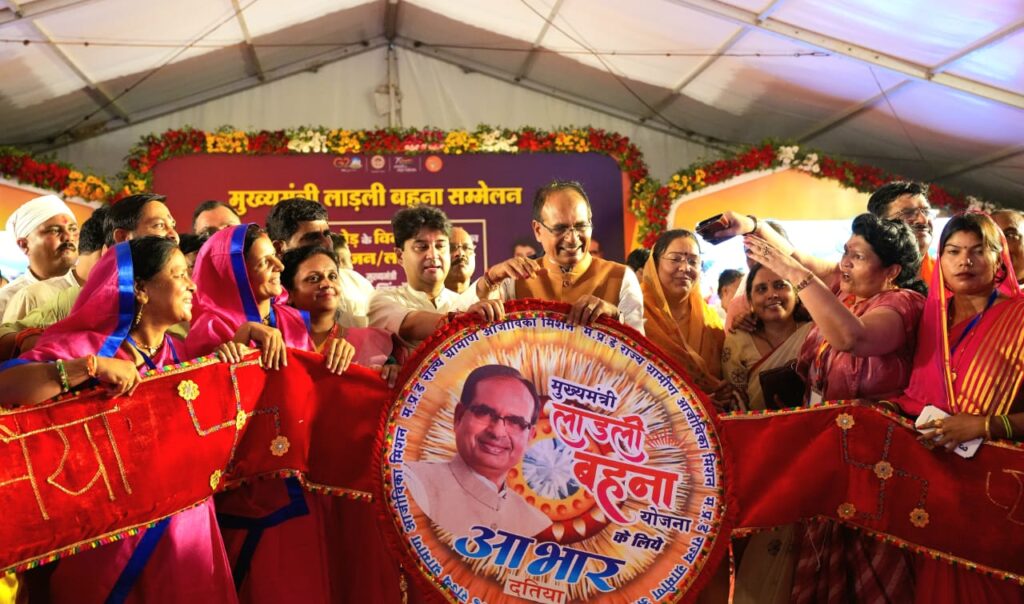
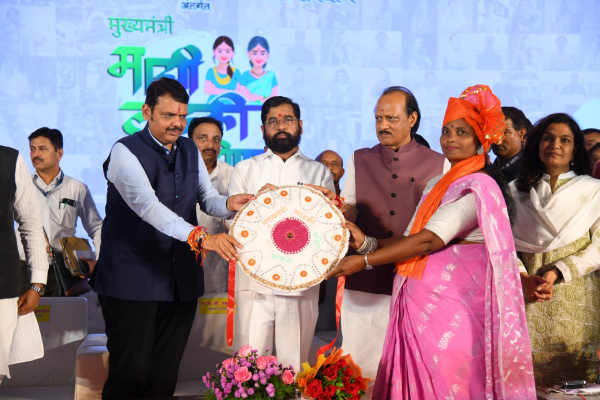
In Madhya Pradesh, the flagship Ladli Behna Yojana which was launched months before the 2023 Assembly elections with Rs. 1,000 monthly transfers to women had seen delays and now the government has said that there is no proposal to open fresh registrations. In Maharashtra, the similar Ladki Bahin Yojana saw December 2025 and January 2026 payments held up and now after a state-wide verification exercise nearly 80 lakh women have been found to be ineligible.
“How much we benefit from such handouts and the implementation failure or success needs to be studied. But one thing is clear that these are competitively rolled out only to win elections. Eventually even electoral dividends hit a plateau like we saw in West Bengal this time,” says political observer and Professor at Indian Statistical Institute Subhamoy Maitra. He argues that to be paid by the government cannot be a universal right. “Something like a right to work can be more useful.”
However, economist and Former Director of the Institute of Development Studies Kolkata Achin Chakraborty argues that doing away with successful social schemes could be damaging for the progress that it has enabled in rural Bengal.
He points towards a silent development crisis in the state that has slipped all manifestos.
Education in the state has deteriorated without any plan or vision from any political party — gross enrolment ratio in higher education is only around 26 percent in Bengal compared to 47 per cent in Tamil Nadu, and boy dropouts at Class 9-10 level are among the highest in the country,” he says.
“No manifesto seriously addresses it. Public investment in education and physical infrastructure is essential — private universities alone cannot solve this,” he argues.
Chakraborty is not in favour of overhauling everything and believes it works better to start with what exists. He stresses that Bengal’s micro and small enterprises already employ large numbers but suffer from low value addition and low wages. “Supporting these existing units with credit, skill improvement and hand-holding is critical. Without raising their productivity, real earnings will remain low,” he says.
Moumita Das, a 29-year-old psychologist who runs her own clinic in Kolkata, highlights the deeper social costs that schemes alone have not addressed. The 2024 RG Kar rape-murder case and incidents such as Hanskhali, the 2022 rape and murder incident involving a minor, became symbols of declining women’s safety.
Women’s Safety and Job Creation
While Das pins her hopes on the new government in the state, in the national context, women’s safety and empowerment data does not show a drastic difference, argues Maitra.
National Crime Records Bureau (NCRB) 2024 recorded 4.41 lakh crimes against women nationally. Female labour force participation stood at 40 percent, according to the Periodic Labour Force Survey (PLFS) 2025. The BJP is also grappling with urban youth unemployment in multiple states and given the local and global economic climate, addressing this issue in West Bengal will not be easy either, argues Roy.
“West Bengal needs large-scale manufacturing and heavy industry to create sustainable jobs. Relying on the services sector alone will not be enough,” he says.
And while thousands of young people like Souvik and Moumita are hopeful of regular government recruitment, Roy does not see any major shift on that front either.
“Recruitment is slowing across the board. The era of large-scale public employment is drawing to a close and we need to be prepared for a world with fewer government jobs,” he says.
Senior BJP leader Anirban Ganguly, who has been closely involved in the party’s Bengal strategy is open about the required shift.
“In this state, there is still a very strong aspiration for government jobs, much more than corporate or private jobs. That has to be changed. You have to give them more opportunity. There has to be more training for that. There has to be more skilling, more opportunities which will come up, so that you don’t look at only government jobs as avenues of being meaningfully employed. The government will act as a facilitator which encourages industry, which encourages investment and which leads to creation of jobs,” he says.
Pointing out how it will be different from the previous government, he says that “It’s not sufficient to just have business meets and business summits. The investment coming to those… have to be channelised into re-energising the economy, re-energising the infrastructure.”
But at an immediate level, the nearly two lakh posts reportedly vacant in the state will be a question that cannot be skirted. The experts feel that BJP has an advantage of low base. “If they recruit a thousand people through a clean process, they will have an immense advantage,” Roy says. The BJP can always highlight the wreckage it inherited. Moving from “minus ten to minus five,” as political analyst Maitra puts it, may itself feel like progress to many voters.
Maitra believes the election result was driven less by enthusiasm for the BJP’s agenda than by exhaustion with the Trinamool government. “People just wanted to get out of Trinamool’s grip. So even if they fail reasonably in delivering their promises, it looks like they have a long runway,” he says.
However, the patience of the population is unlikely to be unlimited. The middle class, squeezed for years, is watching closely to see if real ladders of opportunity are created.