


There was a time when information moved with deliberation.
News travelled at the speed of horses, ships, and the printing presses that followed Gutenberg’s invention in the 1440s. In the 1850s, German-born British entrepreneur Julius Reuter built one of the world’s first modern news networks, famously using carrier pigeons to carry stock prices between Brussels, Belgium and Aachen, Germany.
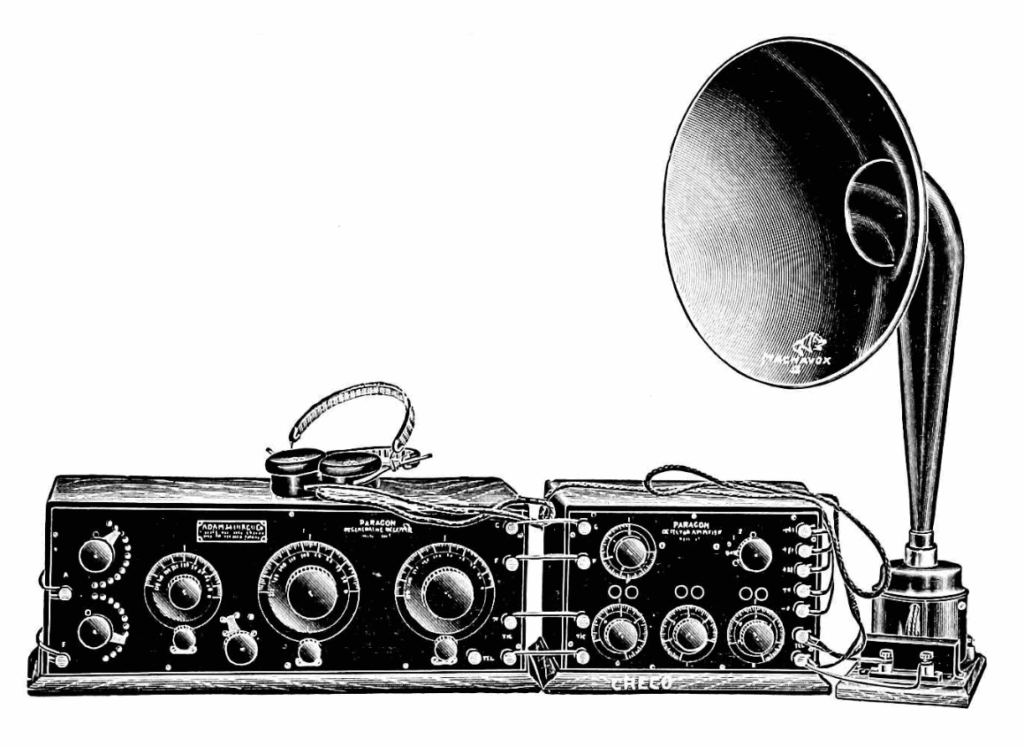
Radio arrived in the 1920s, television towers in the 1930s, bringing voices and images directly to our homes. Yet, between an event and its interpretation, there were always pauses. Editors verified facts. Historians added context. Societies had time to absorb meaning before they reacted.



Those pauses were never mere delays. They were the moments where journalism did its most important work — verification.
We write this as two people who have spent the last decade on different sides of the same problem. One of us has spent years reporting and building information infrastructure and driving the digital transformation of newsrooms across Asia. The other has spent years studying how communities come to trust or quietly stop trusting the institutions that claim to speak for them.
From both vantage points, one conclusion has become impossible to avoid: the pauses are gone, and we have not yet built anything to replace what they protected.
Challenges of Journalism Compounded by AI
Journalism, at its best, is a public good. It is as essential to a functioning democracy as clean water or working courts. When DataLEADS was built in 2015, it was conceived as a kind of mothership: part newsroom, part data lab, part training academy, and part incubator set up to understand open data and digital tools as they were beginning to reshape how information moved.
The bet was simple: if journalism was going to survive the coming decade, it would need new skills, new tools, and a renewed clarity about what it was and is actually for?
Good journalism has always rested on two commitments:
- The first is that reporting should reflect the ground realities of the people.
- The second is that it should be grounded in truth and integrity, not merely in what is convenient, fast, or popular.
Strip those away and what remains may still look like journalism but it will not function like it.
The challenge is that these ideals have often existed alongside the difficult realities journalists work within. Two longstanding problems are worth naming — not because AI may inevitably worsen them, but because the way we shape and govern AI today will determine whether journalism becomes more fragile or more resilient in the years ahead.
- The first is epistemic capture: when the framing of an issue is shaped largely by those with proximity to power, funding, or institutions, rather than by those who live the issue everyday.
- The second is parachute journalism: the reporter who drops into an unfamiliar district, files a story within 48 hours, and leaves before understanding what was actually seen.
Both problems share a single consequence — the people closest to a story, those with the most at stake, are the ones least likely to shape how it gets told.
Data-driven journalism, for all its promise, has often been especially vulnerable here. Numbers can be collected far from the ground and presented with enormous authority while losing the texture that lived experience provides.
A district’s health crisis becomes a chart. A community’s loss becomes a percentage. A reporter who has spent time in a place knows which questions the data does not answer, which official figure the residents quietly distrust, and which silence in an interview is the actual story. A reporter who has not been there cannot know any of this, however clean the spreadsheet looks.
The sense that someone genuinely went, listened, and stayed long enough to be changed by what they found. That sincerity was never decorative. It was the thing that made a story trustworthy in the first place.
For years, organisations such as DataLEADS have worked against this drift in concrete ways. By training journalists across the regions and countries rather than only in the metros. By building data and AI capacity inside local and regional newsrooms. By creating online verification networks in different regional languages close to the communities where rumours actually spread. The infrastructure was unglamorous, but the logic was sound: keep the tools, and the trust, as close to the ground as possible.
Globally, the architecture of information increasingly gave way to the relentless logic of speed. After the world wide web (www) opened to ordinary users in the early 1990s, the transformation accelerated relentlessly.
Google organised the world’s information in 1998. Facebook turned relationships into networks in 2004. YouTube made everyone a broadcaster in 2005. X (then Twitter) compressed public conversation into a real-time stream in 2006. Smartphones began appearing in India in the early 2000s, and the launch of the iPhone in 2007 transformed the landscape, placing an entire digital ecosystem permanently in our hands.
India felt this acutely. Many of us still remember our first mobile phone, the first time it rang in public and a whole room turned to look. India’s first mobile call was made in 1995, when calls were a luxury, incoming minutes were charged, and bills meant standing in queues. Within two decades, politics, commerce, journalism, and friendship had all migrated into the glowing rectangle in our pockets.
This brought losses we are still counting.
The shared public sphere, a common set of facts that a society could argue over, fragmented into millions of personalised feeds. Two people in the same household can now inhabit entirely different informational universes, consuming different fears and different versions of the truth.
Yet the same shift also produced one of the great democratisations of expression in history. A single person with a laptop in a small town can now reach an audience that once belonged only to large institutions. Podcasts, newsletters, and independent creators have opened pathways for voices that gatekeeping had long excluded, including, sometimes, exactly the voices that parachute journalism used to miss. The new landscape is not simply worse. It is more open and more chaotic at the same time.
And then, by the time ChatGPT arrived in 2022, machines were no longer just distributing information. They had begun generating it. We should be honest that this has brought real gifts to journalism.
AI is a capable proofreader and a tireless thinking partner. It can translate interviews, summarise dense research, and analyse archives in minutes. There was a time when making sense of parliamentary proceedings and audit reports meant collecting them by hand and reading thousands of pages. Today those same documents can be searched and interrogated before lunch. Used well, AI can free a reporter to do the human part of the job: to go, to ask, to notice.
But the same tools that polish good work can manufacture convincing emptiness at near-zero cost.
Consider healthcare. For years, the central challenge was human-driven misinformation: a misleading remedy shared online, a frightening claim forwarded on WhatsApp. During COVID-19, digital verification work finally entered the mainstream of social media platforms as a recognised and necessary function. Online verification teams were stretched thin, but the problem was still, at least, human in scale.
After 2023, that scale broke. Generative AI can now produce synthetic articles, fabricated studies, fake quotes, and deepfaked video faster than any network of newsrooms can review them.
The work of verification has not just grown harder. Its very nature has changed. When fabrication is fluent, cheap, and infinite, the question is no longer only “is this false?” but “can anything still be shown to be true?”
Overwhelmed, people retreat into personal circles and trusted contacts, which often turn out to be echo chambers and even greater sources of distortion. Attention drifts away from real issues. Important channels get hijacked. Skepticism curdles into cynicism, and cynicism is corrosive: people stop believing science, governments, journalism, and eventually one another.
Existing responses, on their own, cannot meet this. More verification teams cannot out-produce a machine. More content, even good content, only adds to the flood. Media literacy helps, but it asks ordinary people to do forensic work that should not be theirs to do alone. The problem is no longer a shortage of information. It is a shortage of trustworthy signals about which information, and which messenger, is sincere.
The Future of Journalism
This, we believe, is where the future of journalism actually lies.
Not in producing more, faster, but in rebuilding trust as something that can be seen and verified. For nearly two centuries, as the author Francesco Marconi has noted, journalism’s great advantage was simply knowing first: the scoop, the exclusive.
AI has erased that advantage permanently. But what it cannot replace is provenance. It cannot fake the fact of having genuinely been somewhere, listened to someone, and stood behind the result. In a world where polished content is effectively free, the scarce and valuable thing is credible proof of sincerity. A signal only carries meaning when it cannot simply be performed on demand.
That principle is already shaping practical work. DataLEADS now runs AI-readiness training so that journalists can use these tools without being used by them.
It is this same logic that animates Sinceriti, a community platform by Belongg Community Ventures: the conviction that sincerity— genuine commitment that is costly to fake, needs infrastructure if it is to remain legible. When anyone can sound credible, sounding credible stops being evidence of anything. What still means something is the cost a person was willing to bear to be there, to verify, to be accountable for the result.
This matters most for the voices with the least cover. When fabrication is everywhere, audiences and editors default to trusting names they already recognise and networks they already move in. That instinct is understandable, and it quietly shuts out the regional reporter, the first-generation journalist, the local stringer who actually lives the story but lacks the institutional badge. A trust crisis, left unaddressed, does not spread its costs evenly. It rewards proximity to power all over again, which is exactly where epistemic capture began.
The task of the next decade is to build systems that let honest reporting, and honest reporters, prove that they are exactly that, regardless of which newsroom they belong to or whose network they were born into.
There was a time when Indians settled an argument with a single question, “Paper mein aaya hai kya?” (Has it appeared in the newspaper?) That question was never really about a publication. It was about trust in a process, the belief that information had passed through verification before it reached the public.
That process is what we now have to rebuild, deliberately, for an age that no longer waits. The most important institutions of the coming decades will not be the ones that move information fastest. They will be the ones that can still make trust, authenticity, and sincerity worth something.
Journalism’s task is not to win the race against the machines. It is to remain the one thing the machines can never counterfeit: a sincere human account of what is real.