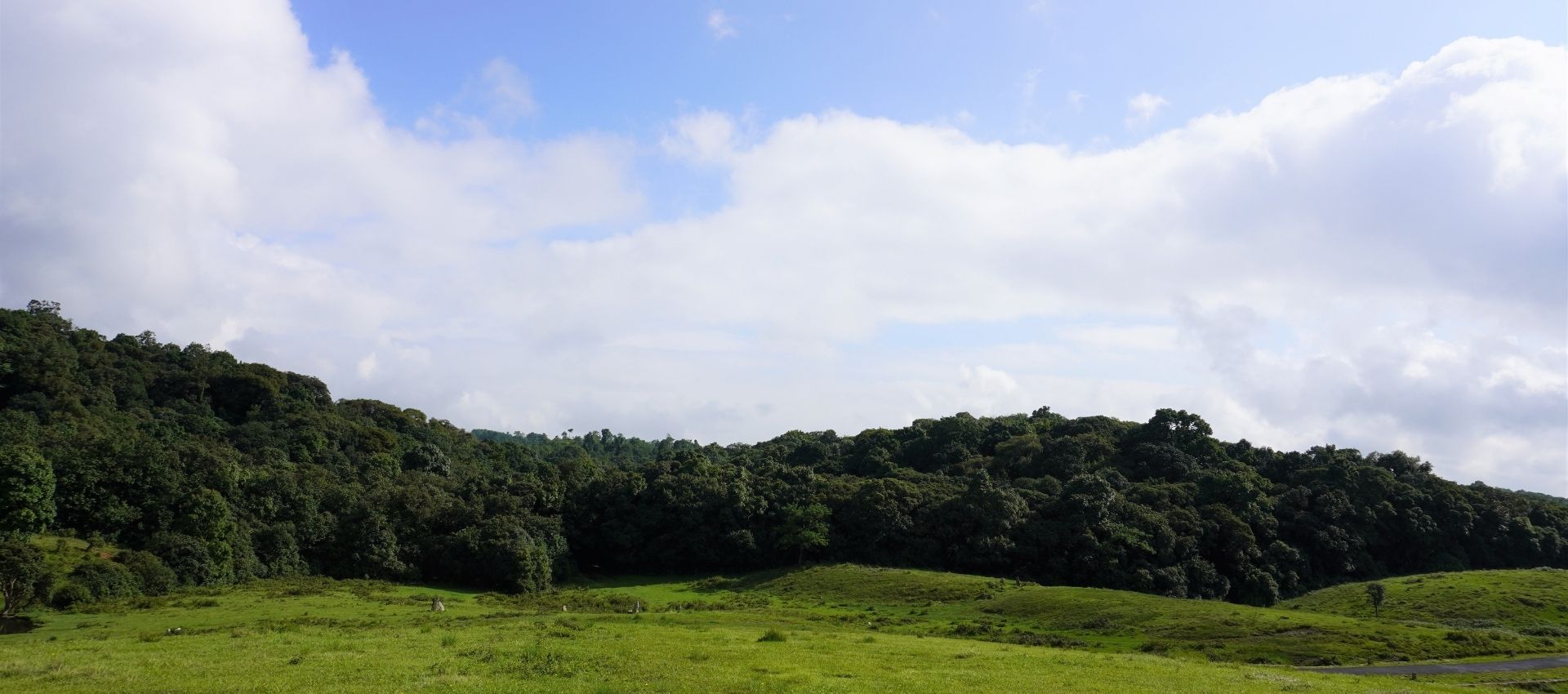
Before entering the Mawphlang Sacred Forest in Meghalaya, visitors are warned not to take anything out — not a leaf, not a stone, not even fallen wood. “Nothing is to be disturbed,” says Born, a stern-faced guide from the Khasi community, pausing beside a cluster of monoliths near the entrance.
Then he turns and walks into the grove.
Inside, the shift is immediate.
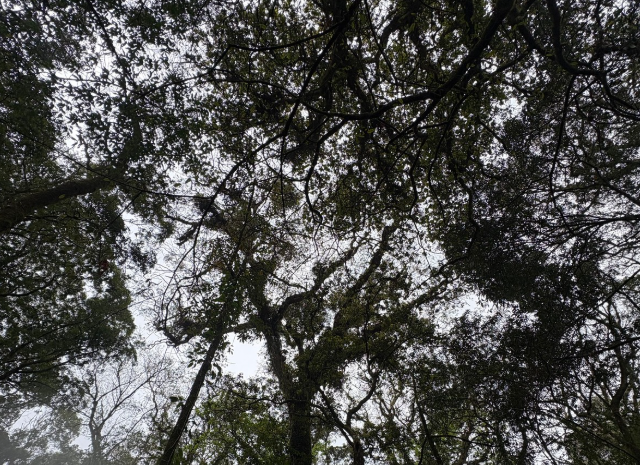
The green canopy of towering oak, rudraksha, rhododendron, and Khasi pine trees shuts out much of the sky. Roots coil around old stones and damp earth lies buried beneath layers of leaf litter.
The air feels cooler than the open grasslands outside. Rainwater slips quietly down from the canopy and disappears into the forest floor. “Before temples, this is where we spoke to the gods,” says Born.
For generations, sacred groves across Meghalaya have survived because communities believed the forest itself was sacred. Locally known as Law Kyntang, the forests are protected through clan systems and taboos rather than fences or government regulations.
“Removing wood, cutting trees or disturbing the forest is believed to invite punishment. If you break them, the wrath of the local deities will fall on you,” Tambor Lyngdoh, a custodian of the Mawphlang Sacred Grove and conservationist, says.
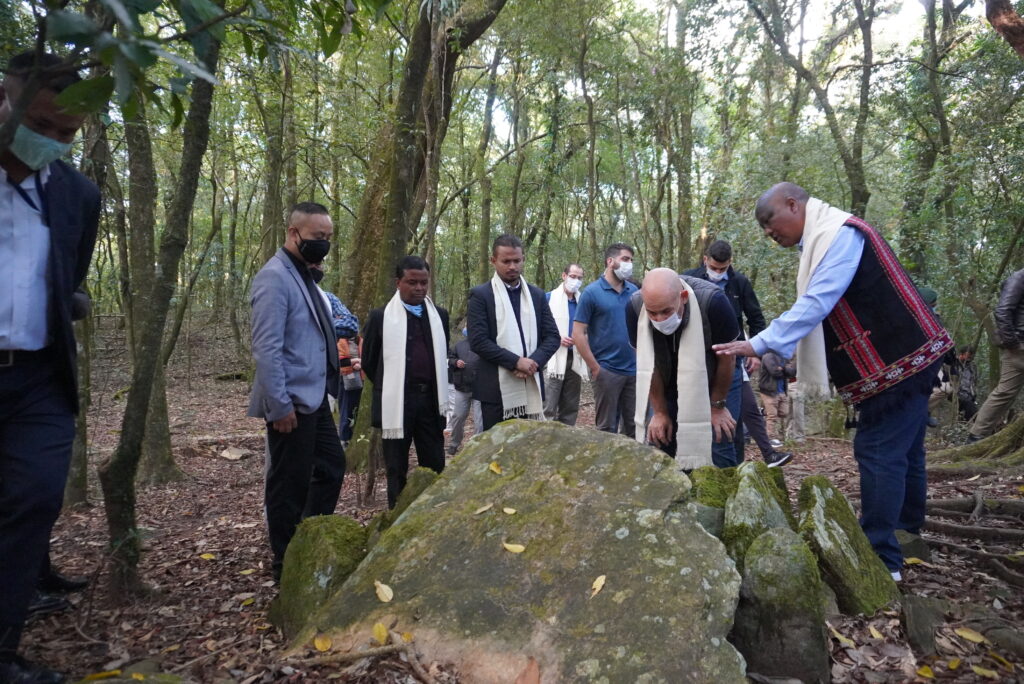
Today, these forests matter more than faith alone. With climate change putting water and biodiversity under pressure, sacred groves are becoming increasingly important. But at the same time, the belief systems that protected them for generations are beginning to weaken.
Why Do These Groves Matter Now?
The 2022 Forest Inventory of Sacred Groves estimates their number at more than 400. “Some, like Mawphlang, have strict rules regarding the removal of anything from within them, others are more liberal. Fruits, flowers, and wild edibles can be harvested for local consumption,” says Bhogtoram Mawroh of the North East Society for Agroecology Support (NESFAS).
The importance of the forest is perhaps easiest to understand through water. One study found that 66 of 79 surveyed sacred groves were located in catchment areas of major rivers and rivulets, while 58 were situated at the origin of perennial streams. These groves protect catchments that support lives and livelihoods. Around Mawphlang and nearby Tyrsad, the streams provide water for households, paddy fields, and farmlands downstream.
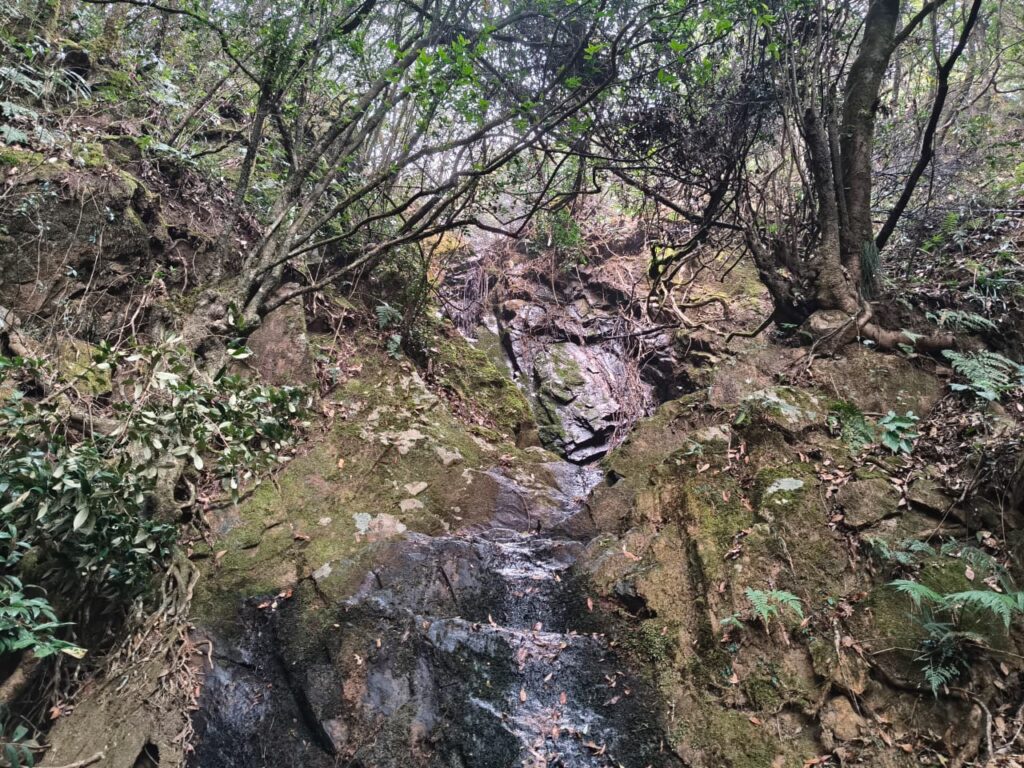
“The soil within the groves is found to have high humus content, as evidenced by the heavy litter found there,” says Mawroh. Such soils absorb and store water, helping sustain springs and streams through dry spells.
They are also among the last remnants of native broadleaf forests in parts of Meghalaya. These forests provide habitat for many native species that have disappeared from the surrounding landscape due to logging, land use change, and forest degradation. They also support a range of wild edible, medicinal, and culturally important plants that local communities continue to depend on.
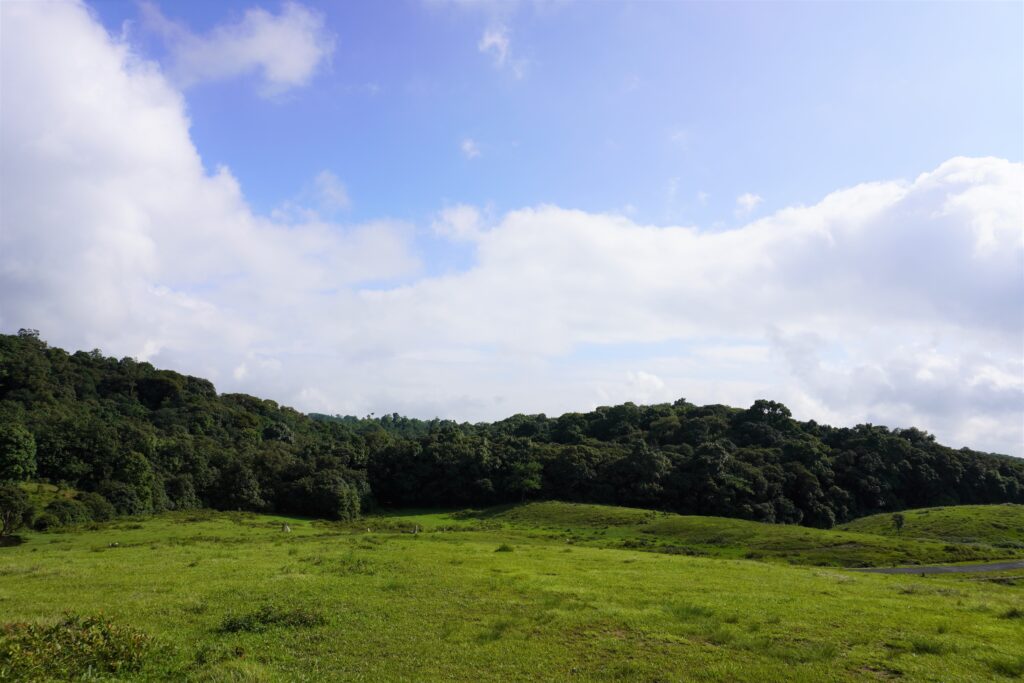
Over 50 rare and endangered plant species of Meghalaya have been recorded in these groves, including Nepenthes khasiana — India’s only native carnivorous pitcher plant. Local communities have traditionally used the fluid from its unopened pitchers to treat eye ailments, and extracts for cholera and skin ailments.
The importance of these forests is likely to grow as climate change reshapes Meghalaya’s landscape:
- An IIT Gandhinagar study projects a warmer future with greater rainfall variability in the state.
- An IISc assessment suggests that 25 percent of its forests are already highly or very highly vulnerable.
- More than half of Meghalaya’s 55,000 documented springs have either dried up or seen a drastic reduction in flow, according to the World Bank.
As rainfall becomes more erratic and dry periods lengthen, forests that can absorb, store, and release water become increasingly important for communities downstream.
People living around these forests are already noticing the effects of a changing climate.
Near Mawphlang, paddy farmer Maw recalls stories of continuous rainfall for days but today, he says, such spells rarely occur. “We can see the impact of changing rainfall on our farms,” he says.
Similar concerns have been reported elsewhere in Meghalaya.
A recent study of 300 farmers in the Jaintia Hills in Meghalaya found that farmers reported rising temperatures, more frequent droughts, and declining crop yields, with horticultural crops particularly vulnerable to heat and soil moisture stress. Limited irrigation and water access also made it harder for them to adapt to changing conditions.
Maw has seen changes in the sacred forest as well. “When I was a child, the forest was much denser. You could hardly walk through it without pushing past bushes. Now there are far more open spaces,” he adds.
His observations echo wider concerns. According to the Meghalaya Biodiversity Board, the area under sacred groves is shrinking and some have already become degraded forests.
“Sacred groves are declining in number for many reasons, two of which are the abandonment of indigenous faiths and the declining importance of the clan. When rituals are no longer held, the space loses its sacred status. Along with this, the influence of the priestly class also wanes, making it more difficult to manage the forest,” says Mawroh.
As these customary systems come under strain, conservationists say it’s essential to balance government interventions with local stewardship.
***
Nearly two thousand kilometres away, the northern edge of the Western Ghats show what can happen when the systems protecting these forests begin to weaken — the sacred groves (locally known as devrai) were once protected through customs that treated the forest itself as sacred.
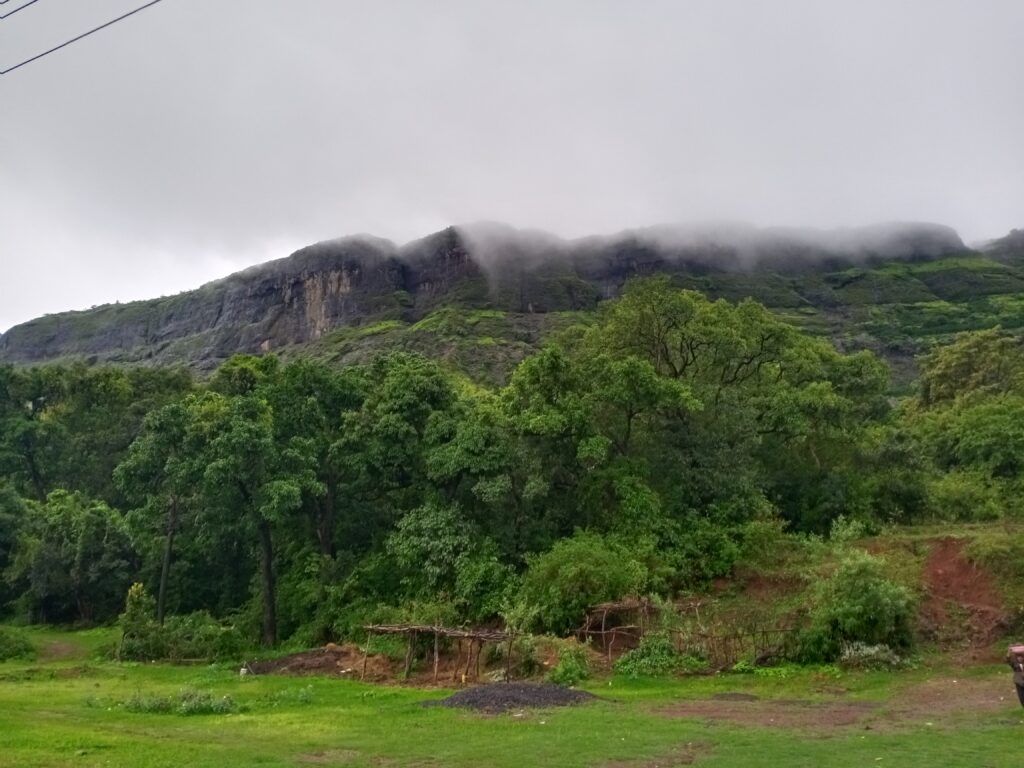
But now, in some cases, the sacred groves have been destroyed due to rapid urbanisation. A 2026 study found that sacred groves in the northern Western Ghats experienced higher levels of human disturbance than reserve forests, protected areas, and private forests in the region.
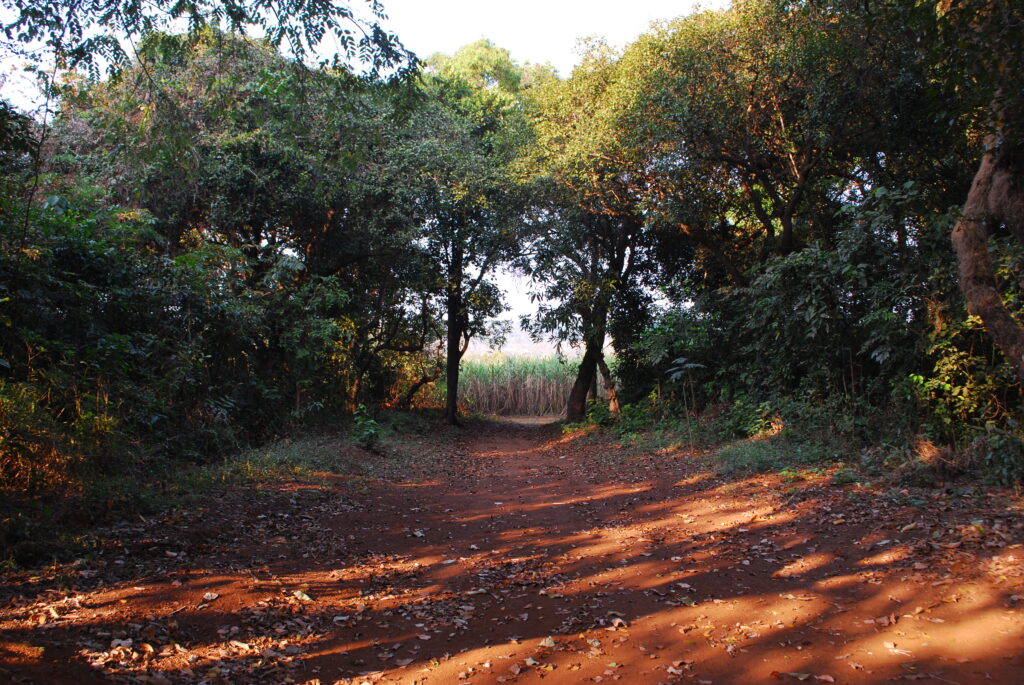
“The concept of protecting a forest for the deity is getting eroded at breakneck speed. The deity has remained as it is but forests are gone or remain minimal,” says Ankur Patwardhan, member of the Maharashtra State Wildlife Board and director, Ecoreviva Nature Foundation.
In Ratnagiri district, villagers in Nandivse helped clear a part of a sacred grove after being told the felling was part of a government plantation programme. Over the years, streams emerging from the grove have declined and Great Pied Hornbills, that once nested in its mature trees, are no longer seen in the area.
Similar to Meghalaya, Patwardhan says, “Many sacred groves sit at the source of perennial streams that villages depend on. Communities are now reporting reduced stream flows during summer, while some streams dry up entirely during extreme summers. Clearing vegetation around groves has increased runoff and soil erosion, reducing groundwater recharge that helps sustain water supplies through the dry season.”
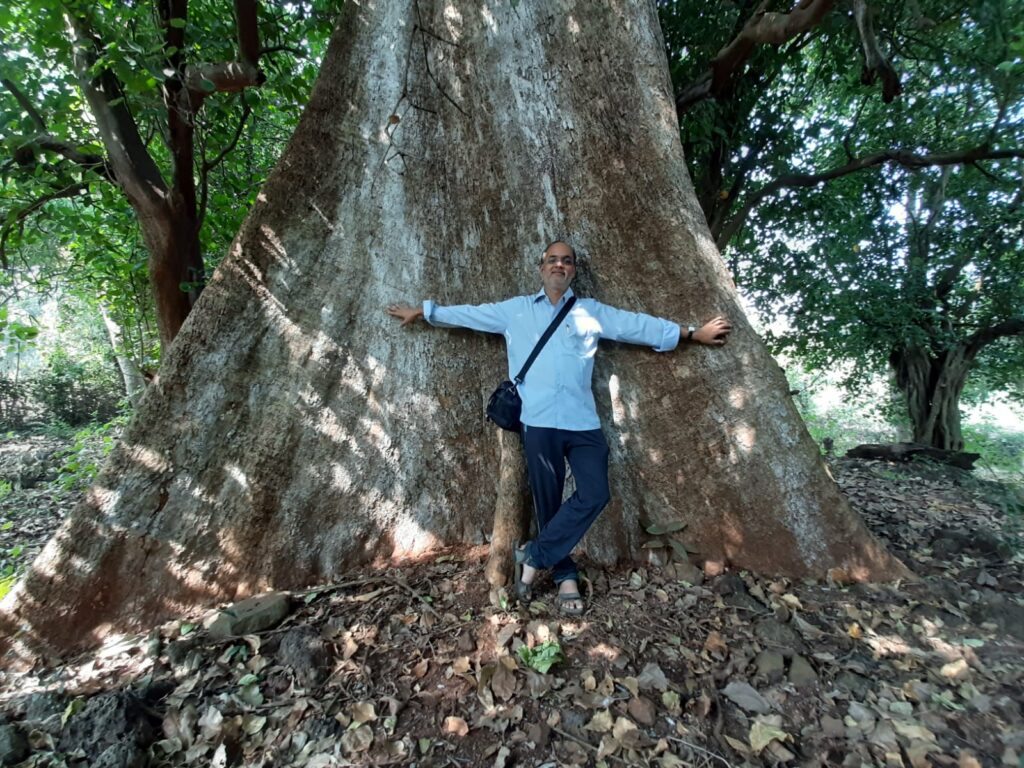
In a region already experiencing hotter temperatures and more variable rainfall, the loss of these functions carry increasing costs for local communities.
Yet, the sacred groves that remain retain species and forest features that have vanished from the surrounding landscape.
“They are representative of primary forests,” says Aboli Kulkarni, co-founder of The Green Concept and co-author of the northern Western Ghats study. “If you scan the area around the sacred grove, those species are not found. But they are present inside the sacred grove.”
Decline is also not inevitable. In some villages, communities have adapted traditional systems to changing realities. In Ajeevali village near Pune, a semi-evergreen grove dedicated to Waghjai, the tiger goddess, helps recharge groundwater and sustain farms in a village with no irrigation facilities. Birds and frogs sheltering in the grove help control agricultural pests.
Its survival owes as much to governance as to belief. When villagers realised that a few families were benefiting disproportionately from the extraction of maadi, a local liquor made from fishtail palm sap found in the grove, they changed the rules. “Extraction rights are now auctioned within the village. The revenue is pooled into a common fund for village welfare and religious activities. The grove remains protected, and the benefits become collective,” says Devansh, a local.
Can These Systems Survive?
Like Ajeevali, many sacred groves in Meghalaya remain protected through community rules and clan systems. But the state has also begun exploring ways to support these systems through formal conservation frameworks.
For Veveane Sayo, senior manager, Meghalaya Basin Management Agency, which operates under the planning department of the state government, that distinction is important. “The government’s role is not to replace community custodianship, but to support it. This includes mapping, documentation, biodiversity studies, awareness, and conservation planning,” she says.
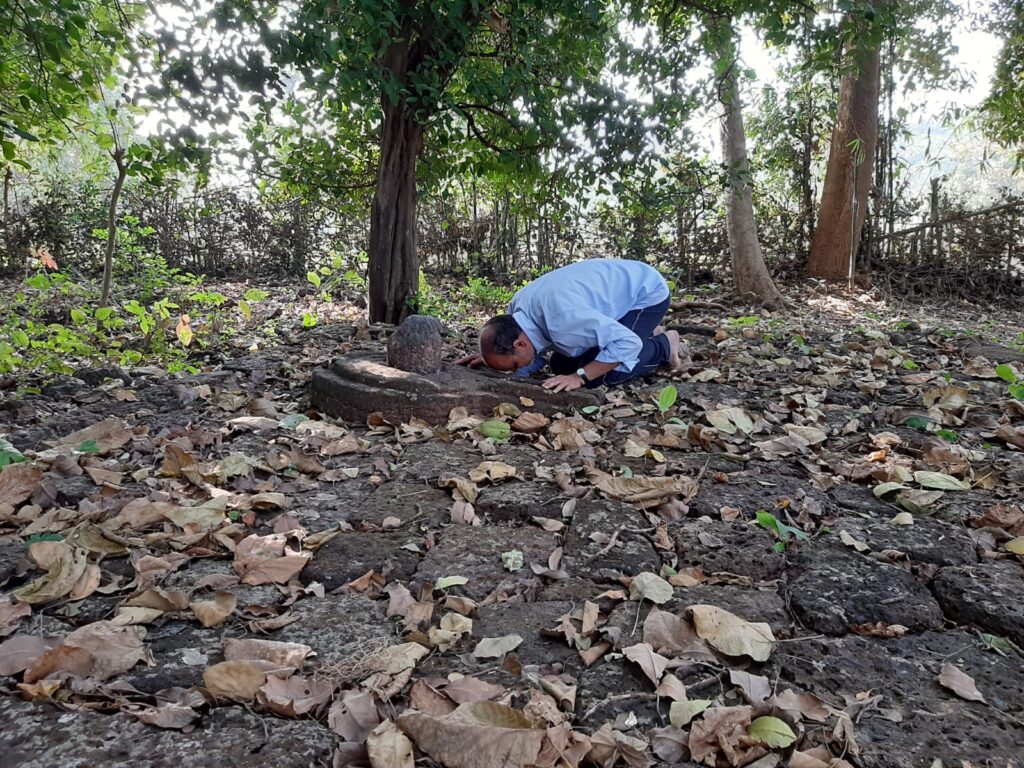
The Forest and Environment Department is also notifying sacred forests as Community Reserves under the Wildlife (Protection) Act, 1972. This provides them with legal recognition while allowing communities to retain ownership and decision-making authority over their forests. “A sacred grove should not become just another notified forest area on paper. It must continue to be a living community space,” says Sayo.
Maharashtra presents a different picture. While sacred groves are widely recognised for their ecological value, there is no dedicated government framework focused on their long-term management. “Not really, no such structure exists,” says Patwardhan.
That places greater weight on community stewardship and local institutions. “The biggest challenge is that the connection with the sacred, the deities and the forests within the groves is degrading. The romantic notions about sacred groves are only in the stories and past research,” says Archana Godbole, a botanist and director of the Applied Environmental Research Foundation (AERF).
AERF has worked with more than 115 villages across the northern Western Ghats to restore degraded groves and rebuild local stewardship, often by creating economic incentives to keep forests standing. In some villages, communities shifted from destructive logging to the sustainable harvest of baheda fruit, which has commercial and medicinal value, generating income while conserving trees that provide habitat for hornbills. “It is very difficult to conserve sacred groves with just awareness without tangible direct benefits,” says Godbole.
Back in Mawphlang, the taboo survives because generations of people chose to obey it. But even there, protection depends on people continuing to care. Lyngdoh worries about a future where people will gradually stop viewing these groves as sacred.
As climate change makes these forests more important, the question is no longer just whether the groves can survive. It is whether the social systems that protected them for generations can survive too.