
Early this month, when the world celebrated the arrival of 2025, in the small mineral-rich Indian state of Chhattisgarh, a journalist called Mukesh Chandrakar was found dead in a septic tank.
Mukesh was known for his fearless reporting on corruption in his home state, exposing the blatant rot that exists in all the promises made by those in power. But corruption has seeped into the system so deeply that even speaking the truth can become a death sentence. This became a tragic incident of how one more name has been added to the growing list of journalists in Asia silenced for just doing their job.
Why do bold journalists like Mukesh Chandrakar get killed? To send a chilling message to never cross the invisible line drawn by those in power. These acts of violence are deliberate, brutal reminders of what happens when someone dares to challenge the ones in power. In countries like India, non-state actors – such as local mafias, corrupt businessmen – and other shadowy figures, have a huge influence and often operate with near-total impunity. Even when their crimes are exposed, they rarely face consequences. Arrests, when they do happen, are often followed by immediate bail, scapegoating, or quiet acquittals, ensuring the cycle of fear and suppression continues unabated.
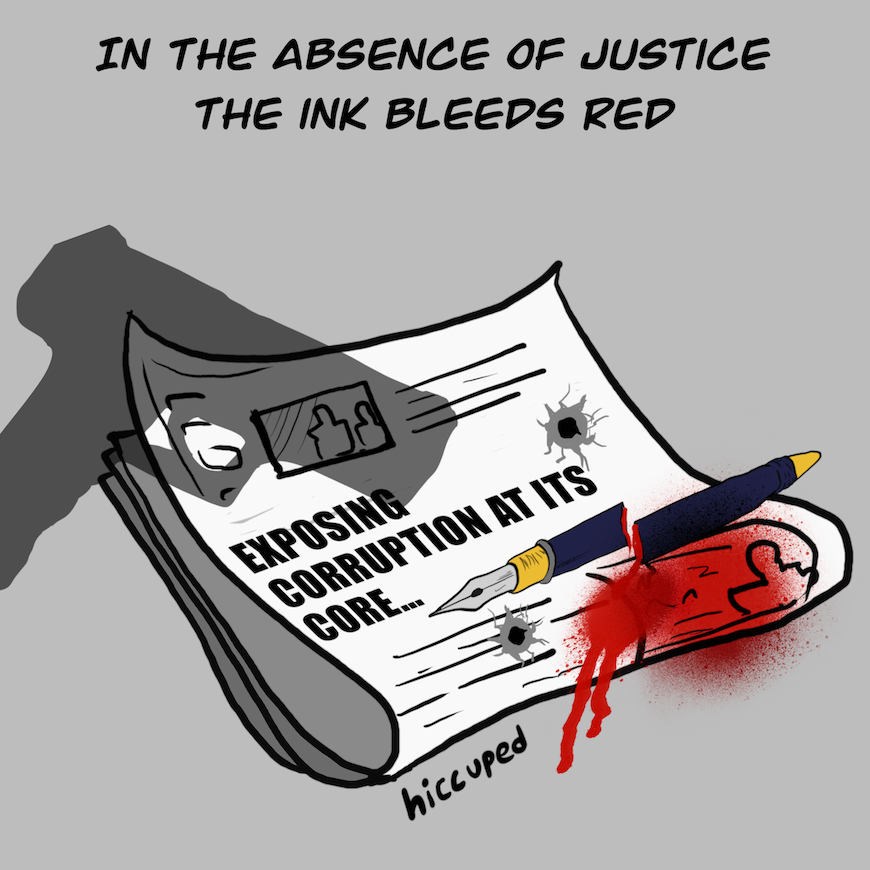
The murder of journalists by some influential capitalist or non-state actors are very much part of a disturbing pattern across Asia. In the Philippines, a country infamous for its impunity, radio broadcaster Percy Lapid was shot dead for criticising powerful Philippine officials for corruption.
In Afghanistan, local journalist Mohammad Elyas Dayee was killed in a targeted bombing the very same week when another journalist, Yama Siawash, was targeted and killed. In Pakistan, when journalist Aziz Memon died, the authorities insisted that he died of “natural causes” but two days later, it was uncovered that he was strangled to death because he uncovered corruption linked to local officials. Gauri Lankesh, a journalist from India who was known for her criticism of right-wing politics, corruption, and caste-based violence, was shot dead outside her home. The ones accused in this murder were not only granted bail but also received a hero’s welcome by pro-Hindu supremacist supporters. Chhoeung Chheng, an environmental journalist from Cambodia was shot and killed while investigating illegal deforestation.
All these journalists had one thing in common: They exposed the powerful non-state actors, capitalists, mafias, insurgent groups, and economic elites that operate in the shadows. These people don’t let you forget that speaking the truth can be life-threatening. They remind you that your governance is weak, and laws can be bent. Here, influence and money can purchase freedom, can silence dissent and a free pass is granted to those who seek to suppress accountability.
How many more journalists must die before we break from this endless cycle of fear and injustice? It is not easy for journalists living in conflict-ridden areas where speaking the truth is not just a profession, but a daily reality and relentless oppression they are forced to endure. If we let this incident become another piece of news, then we are only allowing a troubling message:That the reputation and influence of the powerful hold greater value than the lives of those who risk everything to uncover the truth. If we continue to ignore their sacrifices, we risk losing not just the truth, but also the courage to seek it.
