
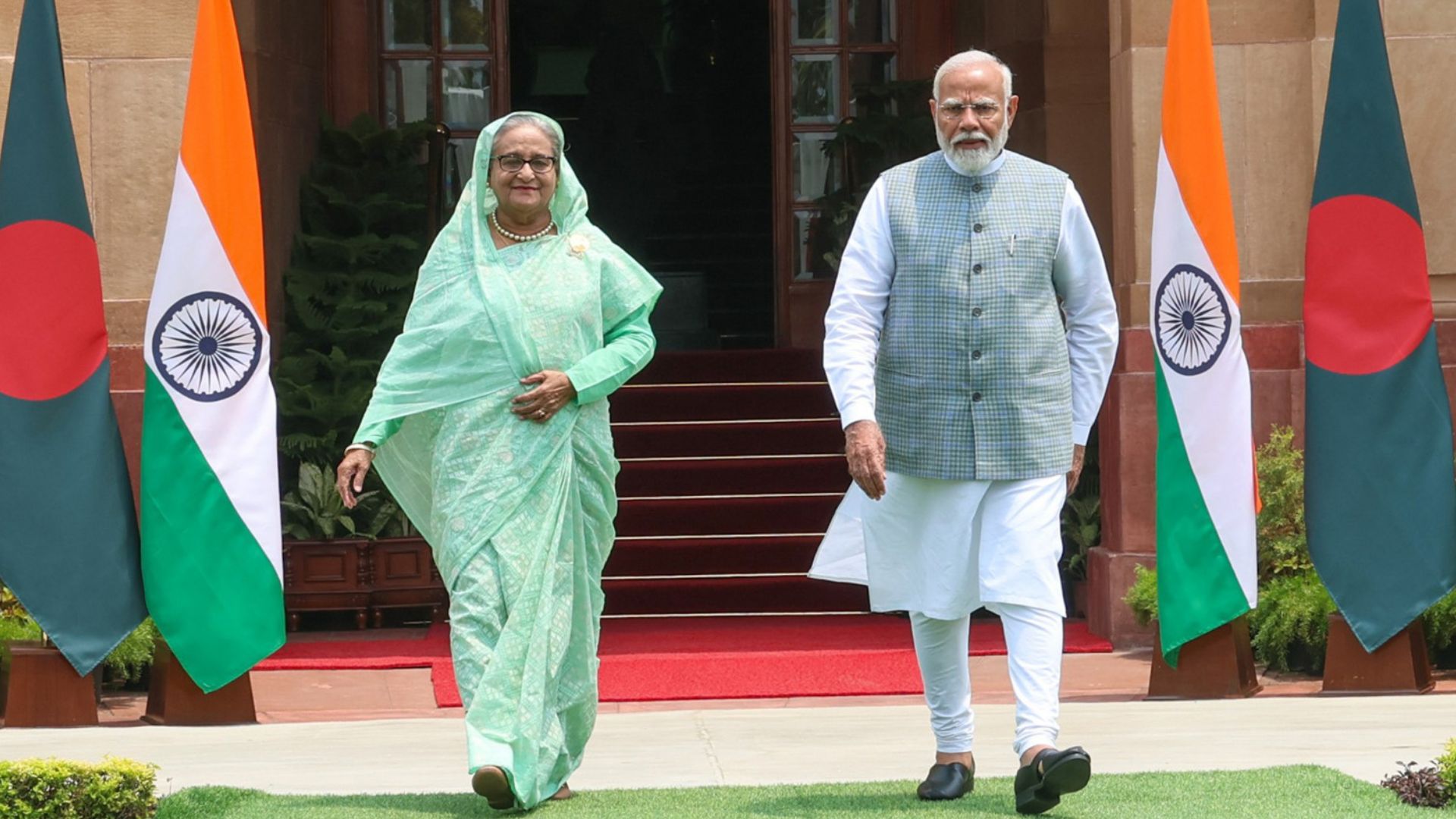
Days after the International Crimes Tribunal (ICT) in Bangladesh held former Prime Minister Sheikh Hasina guilty of crimes against humanity and sentenced her to death in absentia, an eerie sense of calm prevailed in the country’s capital city, Dhaka.
Ahsan Ullah, a street vendor near Dhaka University, told Asian Dispatch that he feared the situation might turn violent after the verdict but he was surprised to see that nothing happened, apart from a few incidents of violence.
Ullah has been around the university campus for years and knows that the spot has been at the heart of nearly all demonstrations in the city.
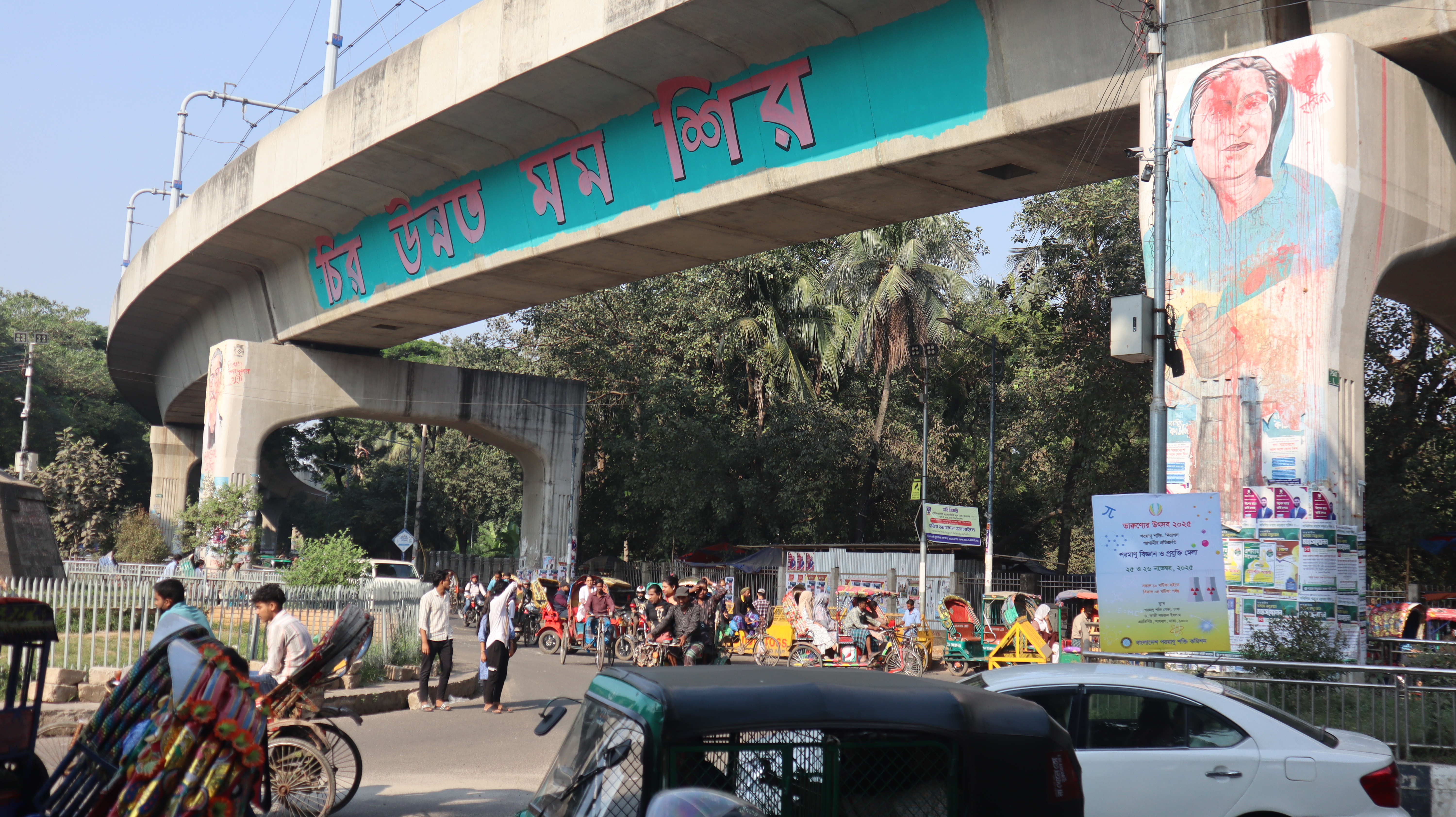
“I thought the Awami League was a big party and they would come out on the streets. If the leader is convicted, you expect the followers to show some strength [translated from Bengali],” Ullah said.
Ahead of the verdict, Awami League did announce protest plans, including a ‘Dhaka lockdown’ and nationwide shutdowns.
The elderly vendor, who has witnessed the rise and fall of many political parties in Bangladesh over the years, was however cautious about dismissing the future of the party.
Hasina fled to India in 2024 after the student uprising, in which over 1400 people were reportedly killed. The student-led movement led to the fall of her government and since then, Dhaka’s interim government has said that they are committed to pursuing reform agendas aimed at preventing future democratic leaders from turning into autocrats.
READ: ‘Autocracy Will Return Without Profound Reform’, Says Bangladeshi Interim Chief Advisor
The highly publicised verdict also brought back the extradition question. The Indian Ministry of External Affairs has said the request is “being examined as part of ongoing judicial and internal legal processes”. This is the second time Dhaka has requested Hasina’s extradition.
India-Bangladesh Ties in Focus
India-Bangladesh relations hit the lowest after Awami League’s government collapsed.
Jon F Danilowicz, a former US diplomat in Dhaka, said that there are already signs that the Indian government is gradually distancing itself from Hasina and her supporters, and is looking to build a new relationship with Bangladesh after the elections. Compounding his argument, he referred to India’s response to the verdict and a recent statement by National Security Advisor (NSA) Ajit Doval as the visible signs.
Doval had cited “bad governance” as the reason behind the collapse of the governments in Bangladesh, Sri Lanka, and Nepal.
Danilowicz added, “The biggest constraint on both sides of the border will be domestic public opinion. India cannot expect to have the primacy in Bangladesh that it enjoyed under Hasina, but a mutually beneficial and respectful relationship is possible.”
“While it is unlikely that India will extradite Hasina, over time New Delhi will grow increasingly uncomfortable with her presence and may look for a third country to take her in. Where there is much more scope for cooperation is on the return of other Awami League-linked fugitives currently taking shelter in India. Sending them back to face justice would be a positive signal,” he opined.
Altaf Parvez, an independent researcher of South and Southeast Asian history and politics opines that India must now make a clear decision about Hasina.
“Either allow her to return to Bangladesh and face the situation, or encourage her relocation to another country. This is the first reasonable step Bangladesh can expect from India if the two countries are to improve their bilateral ties,” he said.
However, Faisal Mahmud, Minister (Press) at the Bangladesh High Commission in New Delhi, called India-Bangladesh ties “fundamentally resilient” and added that the relationship is “not contingent on any single individual or political party”.
“The Indian government’s carefully measured response following the verdict against Sheikh Hasina suggests that its priority is a stable, democratically functioning Bangladesh. The 16-year authoritarian stretch of Hasina’s rule – culminating in a massive uprising and over 1,400 deaths – has made clear that neither stability nor democratic governance is possible under her leadership. I believe the current Indian administration fully recognises this.” — Faisal Mahmud, Minister (Press), Bangladesh High Commission in New Delhi
Asian Dispatch also reached out to the office of Randhir Jaiswal, the official spokesperson of India’s Ministry of External Affairs, for a comment on New Delhi’s position regarding Hasina’s extradition request and the future of India–Bangladesh relations. The story will be updated as and when we receive a response.
READ: Cultural Ties Suffer as Political Tensions Continue Between India and Bangladesh
Awami League’s Future
While some locals in Bangladesh think that Awami League’s politics is over, political analysts in Dhaka caution against writing them off entirely.
Muhibbollah, a middle-aged rickshaw puller in Dhaka, said he was not surprised that the Awami League failed to stage major protests following Hasina’s verdict.
“This party is gone,” he said, adding that the alleged human rights violations during Hasina’s tenure, including the alleged murders and enforced disappearances, are so deeply ingrained in people’s minds that they “hate” her.
This sentiment is echoed by the younger generation in Dhaka. Ahad Siddiq, a postgraduate student of banking and insurance at the University of Dhaka, said the party’s muted response highlighted its waning grip on society.
“Awami League protests now happen mostly through online bots. There’s no real mobilisation in the field,” he said.
In May 2025, the interim government had banned all the activities of the Awami League under the Anti-Terrorism Act. The party’s student wing, the Chhatra League, was banned earlier in October 2024. Political observers highlight that the fear of retribution from police and political opponents may also be a factor behind the limited mobilisation.
Parvez said the party had taken a major blow, particularly given criminal offences committed during its rule but their “politics is not finished in Bangladesh”.
“While the party adopted a distorted character during its long tenure, its core politics – claiming leadership of the liberation war, promoting secularism, and centrist policies – still has a place in Bangladesh,” he added.
“As the country shifts rightwards, the space for liberal, pro-liberation war, and pro-secular politics remains. But for the Awami League to succeed, it must acknowledge its role over the past 15 years, admit its crimes, and ensure accountability,” Parvez said.
READ: In Bangladesh, Cops Accused of Killing Protesters During 2024 Uprising Roam Free
He also underscored that if Hasina and her children remain in leadership, the party will face difficulties, as they were part of the previous administration and entangled with its injustices.
The party’s grassroots, however, see no future without the Sheikh family.
“The idea of a ‘refined Awami League’ often discussed in Dhaka, a clean party without Hasina or current leaders, will only work if Sheikh Hasina endorses it,” said Arman, a former central assistant secretary of Chhatra League, the student wing of Awami League.
“For grassroot supporters, Awami League is Sheikh Mujibur Rahman, Sheikh Hasina, and the family. We cannot imagine the party without them,” he said, adding that the Gen Z backlash against the party was because they only saw Awami League in power, not the others. “The more they will see others, they will go easy on us,” he added.
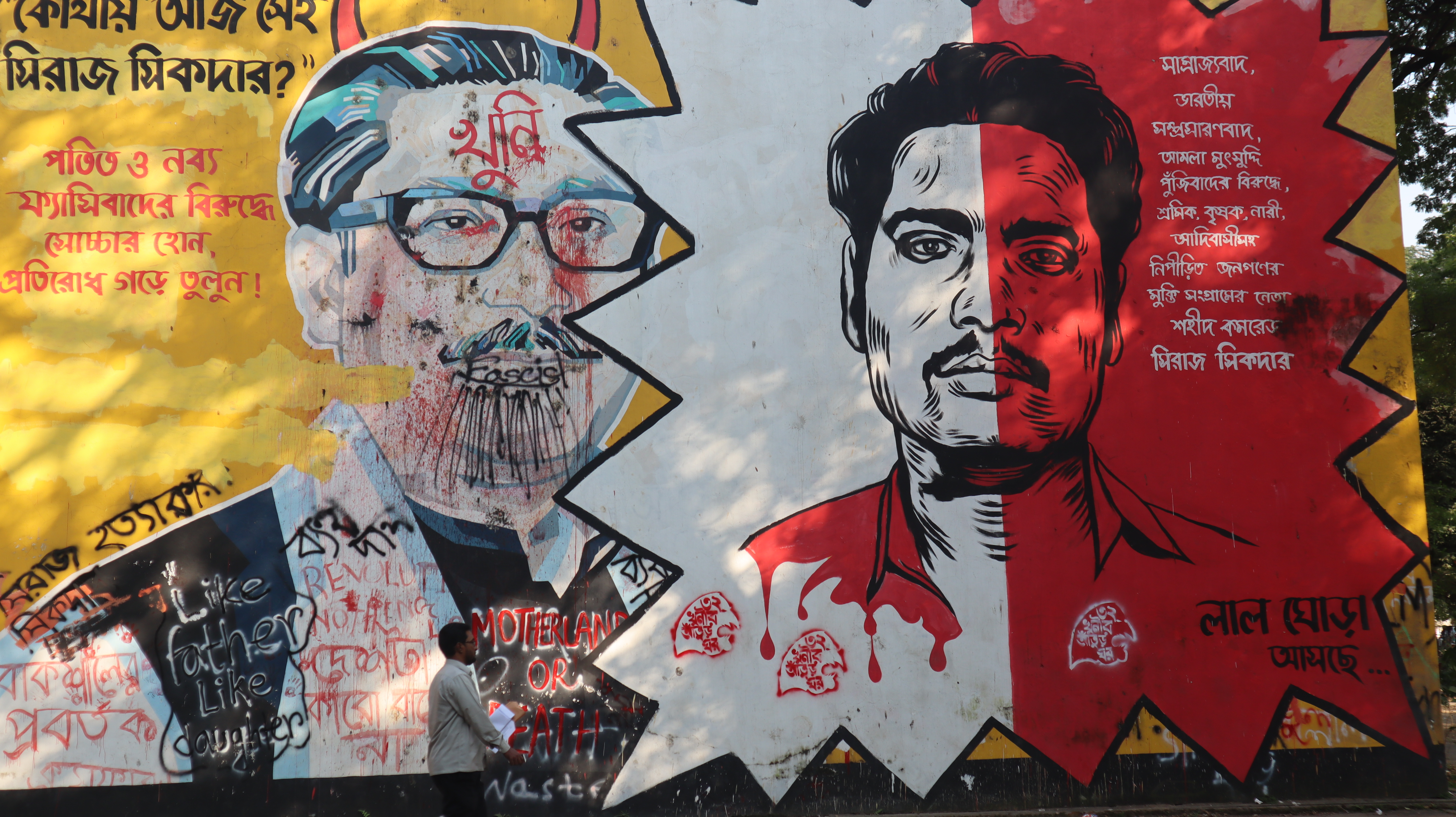
Looking at the party’s future from Hasina’s fate separately, Danilowicz observed, “She [Sheikh Hasina] and her family are politically finished. There is no path back after the extreme violence and massive corruption exposed.” But said that the party could move forward by acknowledging the mistakes from the past.
“There is, however, a possible path forward for the Awami League if it acknowledges past misdeeds, reforms its leadership, and commits to the principles of the July Charter. This process will begin post-elections and must be part of a broader truth and reconciliation framework.”
Justice served or denied?: People’s verdict
Golam Mortuza Mozumder, head of the three-member panel of ICT, handed down the verdict on November 17, 2025, in a packed Dhaka courtroom.
The court found her guilty of incitement, ordering killings, and failing to prevent atrocities or take punitive action against the perpetrators.
“In the atrocities of killing and gravely injuring the protesters… accused Prime Minister Sheikh Hasina committed crimes against humanity by her incitement order and also failure to take preventive and punitive measures,” Mozumder said in a readout of the ruling.
Alongside Hasina, former Home Minister Asaduzzaman Khan Kamal was also sentenced to death. Former police chief Abdullah al-Mamun, who testified against Hasina and Kamal, was sentenced to five years in prison.
Despite fears of violence, thousands in Bangladesh celebrated this verdict. Among them was Nusrat Tabassum, a top student leader, who was detained from her home during the July uprising.
Expressing her satisfaction with the verdict, she told Asian Dispatch, “Full justice will be ensured once this verdict is carried out.”
“At the same time, all other perpetrators — all of Hasina’s associates connected to the July massacre — must also be brought to justice. I believe the people of Bangladesh have welcomed this verdict very clearly and the families of the martyrs and injured have found at least some consolation,” she added.
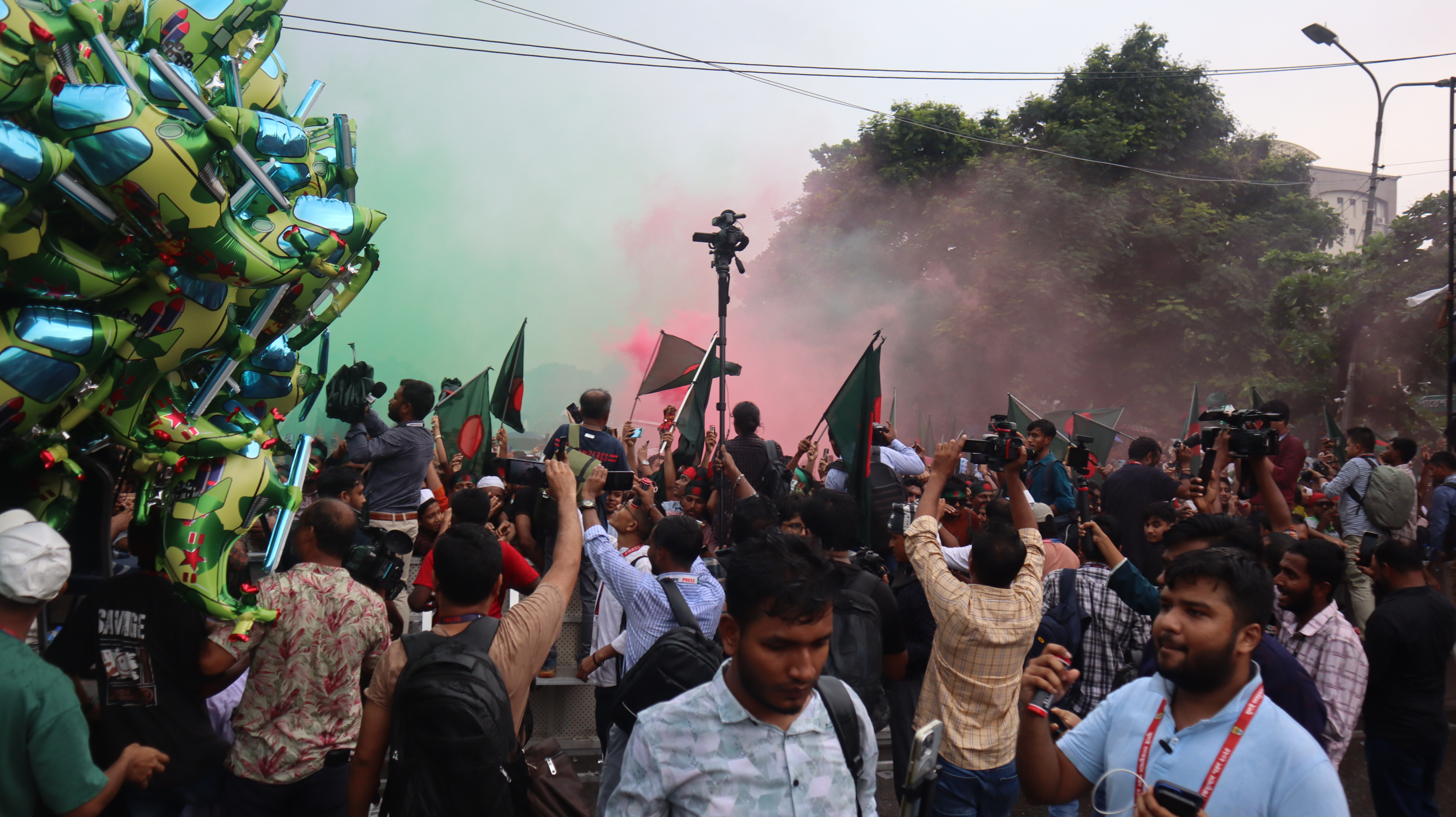
Another Dhaka-based student leader Taposhi Dey Prapti said that, in her view, Bangladesh didn’t receive the full justice it deserved but added, “the outcome has given the victim families a sense of satisfaction.”
“While I personally oppose the death penalty, the crimes committed by the former prime minister required accountability. Justice demands an appropriate and fair trial, so I do have concerns about how the trial was conducted,” she added.
Khokon Chandra Barman, a protester who was shot in the face during the July uprising, demands that Hasina is brought back from India and the verdict is implemented.
The verdict has, however, been rejected by Hasina and Awami League supporters, both in Bangladesh and abroad.
“We haven’t paid any heed to the court verdict,” said Arman.
Calling the July 2024 protests a “conspiracy”, he said that Hasina and her administration were not guilty. We reached out to several other leaders of Awami League for a comment but did not receive a response at the time of publishing this story.