
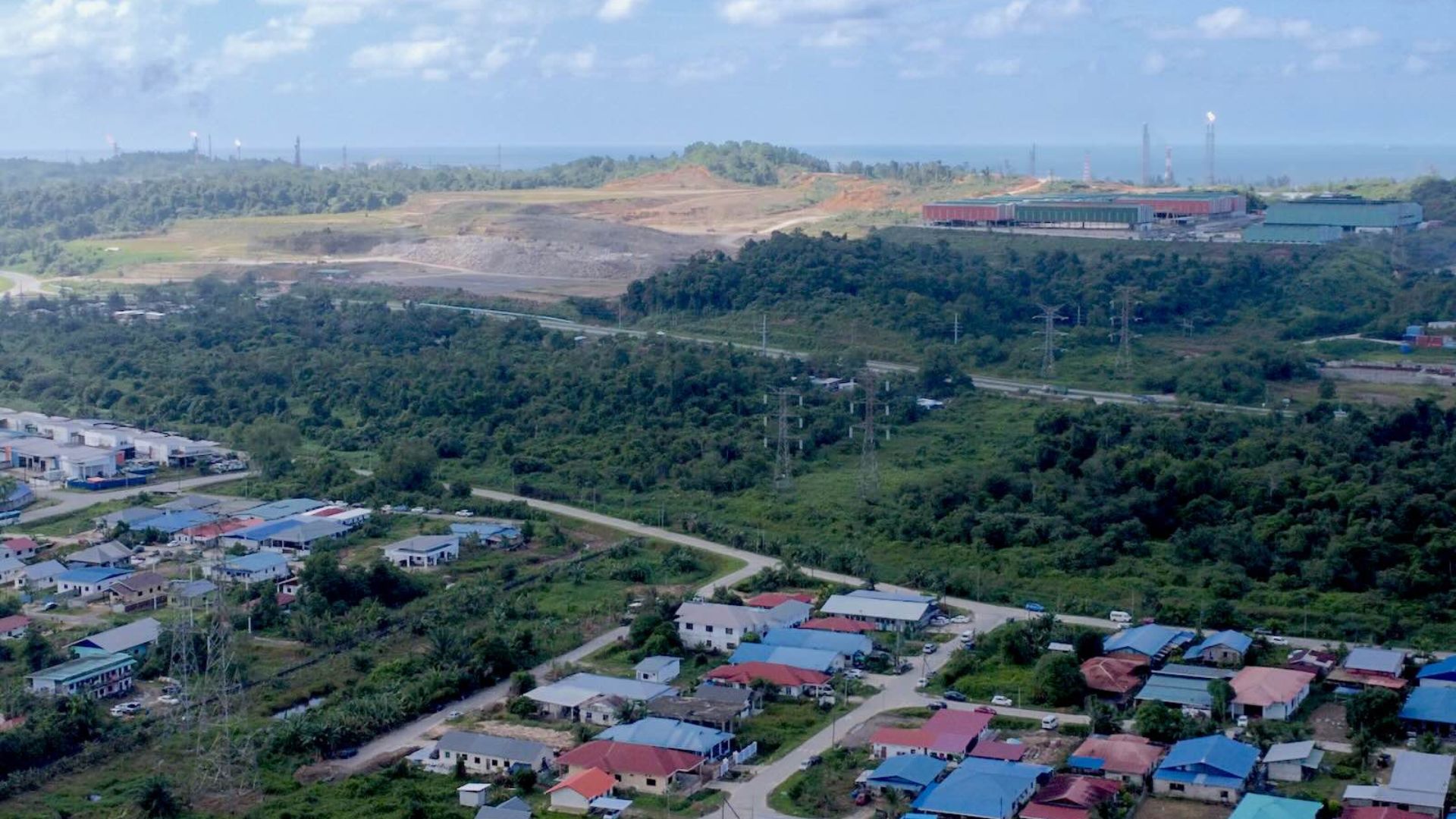
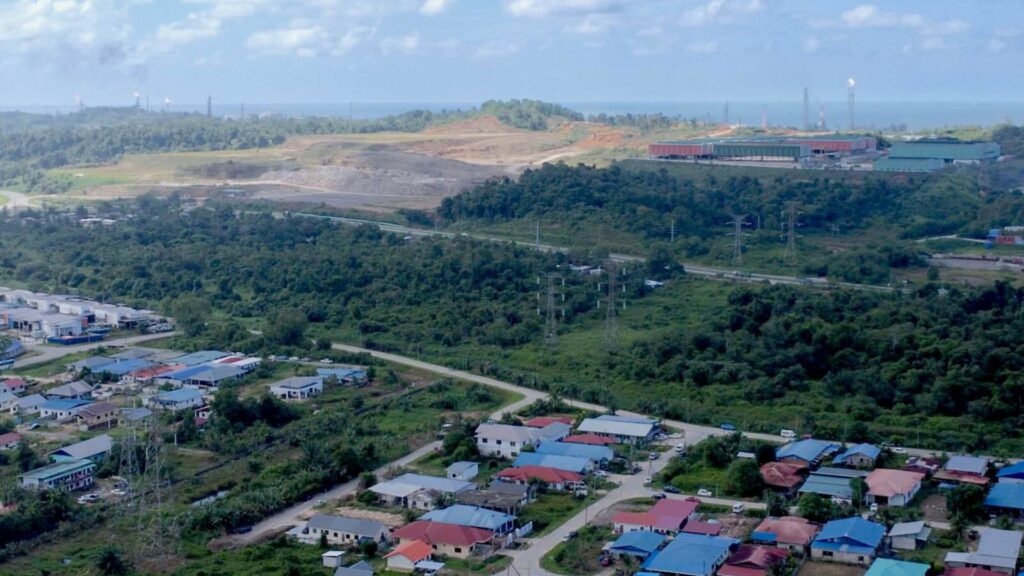
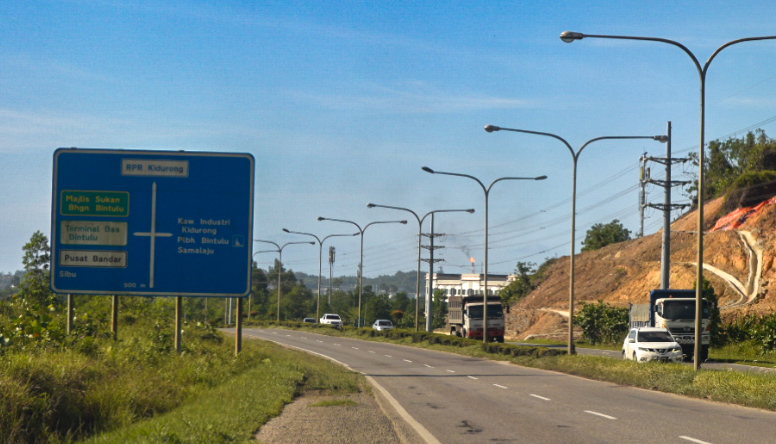
Sitting in front of his house in the settlement of Sungai Plan, less than 3km away from the Petronas LNG Complex, Lion Anak Nyapong says that he has learned to live with the noise and bright light given off by the facility.
From his house he can see one of the Liquified Natural Gas plant’s tall flare towers, which burn off excess gas that the facility cannot process with a flame that burns day and night.
“It looks like the fire from our kerosene lamp,” he says. “When I first came here, I was a bit scared because of the sound coming from there. It’s a very loud roaring sound. But after a while, I got used to it.”
Rising Emissions
The LNG production facility in Bintulu, Sarawak is the biggest in Malaysia and one of the world’s largest.
LNG terminals burn off unused gas – instead of exporting it or using it to provide power – due to inefficiencies in their systems or technical issues.
Often this occurs if there is a dangerous increase in pressure at a particular unit or gas is being flushed out of parts of the system to restart it or repair it.
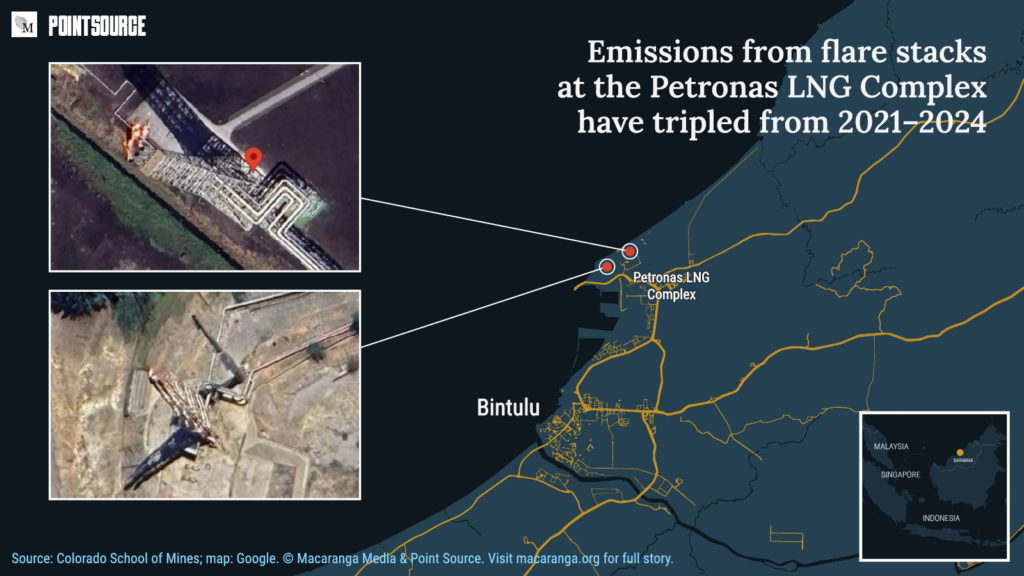
In Bintulu, the volume of excess gas flared has more than tripled over recent years, raising fresh concerns about its environmental and public health impacts.
The terminal flared an estimated 81.5 mil cubic meters of gas in 2024, compared to 24.8 mil cubic meters in 2021, according to satellite data gathered by the Colorado School of Mines and analysed by UK-based research group Point Source.
LNG Expansion
The rising volume of gas flaring from the Bintulu facility over recent years has occurred despite Petronas pledging in 2022 that it would reduce greenhouse gas emissions across the entire company by 25 percent by 2030.
Burning natural gas like this produces climate-warming greenhouse gasses like carbon dioxide. It also releases dangerous pollutants like sulfur dioxide and small particulate matter, known as PM2.5, which affect human health.
A scientific study published in 2022 by the Institute for Medical Research (IMR) found that the small particulate matter pollution consistently exceeded permissible limits in the Bintulu region.
Toddlers at Risk
The study also found an association between hospital admissions for children under the age of 5 with the small particulate matter and sulfur dioxide pollution in the area. It concluded: “Better air quality control is necessary for children’s health living in the natural gas industrial area.”
Petronas and the Department of Environment did not reply to Macaranga’s queries about the increased flaring in Bintulu and the IMR health impact findings.
Nonetheless, Petronas did announce in 2024 that it achieved “Zero Routine Hydrocarbon Flaring” for its Malaysian upstream oil operations, and in its Integrated Report 2024, seeks to end routine flaring at existing oil production sites by 2030.
Major Players
The Petronas LNG Complex was constructed by Petronas as part of its drive to make the country a global player in international gas markets.
This flagship LNG facility has a production capacity of 30 million metric tons of LNG a year, and was key to making Malaysia the world’s fifth largest LNG exporter in 2024. The main buyers were Japan, China and South Korea.
But the Bintulu facility came online more than 40 years ago, and now illustrates some of the wider risks of Malaysia’s continued reliance on LNG — even as the country prepares to formalise its long-term gas strategy.
Energy Transition Plans
Malaysia is currently preparing to release its National Gas Roadmap, which will set out the country’s policies and framework for the use of LNG.
It is expected to build on plans that have already been published in the National Energy Transition Roadmap, which aim to boost natural gas’ role in Malaysia. The approach the country has taken to meet its climate goals, is to phase out coal almost completely and reduce crude oil as primary energy sources.
Gas will be what the government calls the “transition fuel” and main primary energy source providing 56 percent of primary energy in the country by 2050, up from 42 percent in 2020.
Projects in the Pipeline
Petronas is expected to play a central role in the country’s plans to import and export LNG over coming decades. A key element of its strategy is the development of new gas infrastructure, both inside Malaysia as well as overseas.
One major project within Malaysia is the Sipitang Oil & Gas Industrial Park in Sabah, which is set to include an LNG export terminal. The terminal is worth RM8.8 bil (USD2.2 bil) and will connect to the Bintulu LNG Complex by a gas pipeline.
The building of the industrial park is controversial for involving the clearing of part of the Mengalong Forest Reserve, a peat swamp virgin jungle reserve.
Outside of Malaysia, Petronas is developing LNG terminals around the world worth more than USD58 bil (RM230 bil), as well as making investments in developing fields to provide the gas.
These terminals include 2 projects in Canada: the USD30 bil (RM119 bil) LNG Canada project in British Colombia and the nearby USD6 bil (RM24 bil) Cedar LNG terminal.
The LNG Canada facility started making shipments last year but is already proving to be controversial. A recent investigation by Point Source with the Canadian investigative news organisation The Narwhal revealed that it flared 350 mil cubic metres of gas in 2025, making it one of the most polluting LNG terminals in the world.
The high flaring levels at the facility come amid technical problems with the terminal’s flare stacks and the regulator has been told that these could take three to five years to fix.
LNG Impacts
Both the Malaysian government and Petronas are claiming that gas has a lower carbon footprint than coal and therefore ‘cleaner’, but these claims are increasingly being challenged.
In October 2024, a peer-reviewed study by environmental scientist Robert Howarth at Cornell University, found that LNG was 33 percent worse in terms of planet-heating emissions over a 20-year period compared to coal.
In addition, Adam Farhan, the co-founder of environmental research organisation RimbaWatch, believes significant methane leaks and emissions at gas facilities are not being fully taken into account by Petronas and the Malaysian government when estimating environmental impact.
Unaccounted Leaks
“It is highly likely that their claims about how increasing gas dependance will cut greenhouse emissions are misleading as they fail to account for methane leaks associated with fossil gas infrastructure.
“These leaks are increasingly being found to be higher than previously thought, and Malaysia is yet to carry out independently assessments.”
Globally, the Paris-based International Energy Agency estimates that total energy-related methane emissions are about 80 percent higher than the total reported by countries to the UN Framework Convention on Climate Change.
Petronas did not respond to Macaranga’s query about methane leaks.
Health Concerns
Researchers are also finding increasing evidence relating to the negative health impact on communities near LNG facilities in the US.
In 2024, the US-based Bullard Center for Environmental and Climate Justice published a report highlighting that LNG export facilities degrade air quality by releasing pollutants known to cause respiratory illnesses, cancer and birth defects from prolonged exposure.
Also in 2024, a report by the environmental organisations The Sierra Club and Greenpeace linked air pollution from US LNG export terminals to an estimated 60 premature deaths and USD957 mil (RM3.8 bil) in total health costs each year.
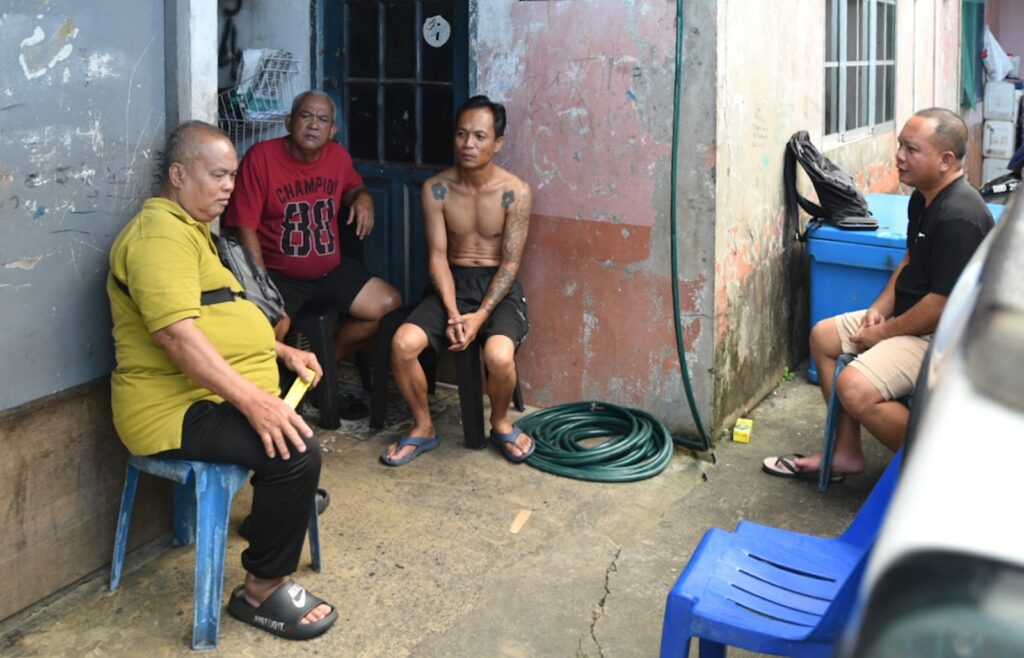
While the connections between exposure to emissions from the natural gas industry and negative health impacts on local populations are becoming increasingly well established by scientists, few people in Lion’s neighbourhood of Sungai Plan in Bintulu are aware of the dangers.
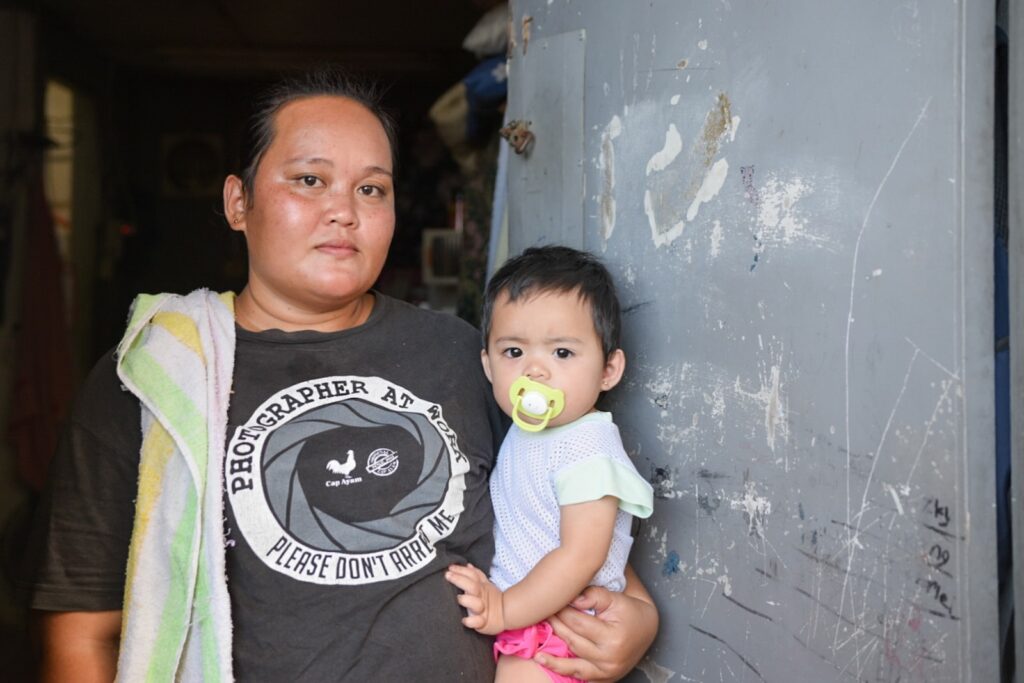
Rita Anak John, a neighbour of Lion and a mother of 3 young children, told Macaranga she had never heard anything about the potential health impacts of living so close to an LNG facility.
Kenedy Anak Peter, who also lives in Sungai Plan and works at a nearby aluminum factory, said that he hears sirens from the LNG terminal on a regular basis and is concerned about the possibility of an industrial accident at the facility.
Sitting outside Lion’s house, he said, “My worry is, if anything happens, what is the evacuation plan? What is the contingency plan? What will happen to the people that live here?
“I have been living here for 10 years and they (Petronas) haven’t once met or communicated with us.”
Communication Void
Before Macaranga visited the neighbourhood to talk to residents, Kenedy had not heard about the Institute of Medical Research study looking at air quality in the area, which was published in 2022.
“If this is real then we need to get answers from the Department of the Environment, especially in relation to what can be done to resolve air quality issues,” he said.
“It would be good if houses were built further away from the LNG complex to reduce the risks, but the government hasn’t give us housing options that are further away.”
Neither Petronas nor the Department of Environment responded to Macaranga’s queries about air quality and community engagement.
Sharing Research
Justin Mikulka, a spokesperson for the US-based oil and gas monitoring organisation Oilfield Witness, believes that more should be done to educate those living close to the Bintulu facility about the dangerous chemicals that they are being exposed to.
“Peer reviewed papers looking at the impacts of gas flaring and venting on air pollution in the US has shown that negative health impacts can be found more than 30 km away, so these people are really living very close to this export terminal,” he said.
“In the short term they should be worried about the potential aggravation of conditions like asthma, and in the long term the major concerns will include cancer and heart disease.
“On top of this, these communities could suffer very badly if there is an accident or an explosion at the facility.”
He added: “I’m not surprised that local communities are unaware of the risks of living so close to a facility like this.”
Some experts believe that academics and public figures in Malaysia need to speak more openly about the dangers related to LNG so that members of the public can make informed decisions about the areas that they live in – and whether they want to call for reduced emissions from existing gas facilities.
RimbaWatch’s Adam said, “Many academics rely on government funding for their research and, because of Petronas’ status as arguably Malaysia’s most prominent government-linked company, they may be afraid of speaking out against the company in case it would jeopardise their chances of getting approvals for future research.
“If academics felt like they had more freedom to research and discuss emissions from the oil and gas sector it is likely that it would help to drive improved policy changes that would help to cut down on polluting activities.”
Permission Needed
Faiz Ibrahim from the Institute for Medical Research was the lead researcher on the 2022 paper about air quality in Bintulu.
Contacted by Macaranga for an interview, he said that he did not have permission from the Ministry of Natural Resources and Environmental Sustainability to talk to journalists about his findings regarding LNG emissions.
Economics of LNG
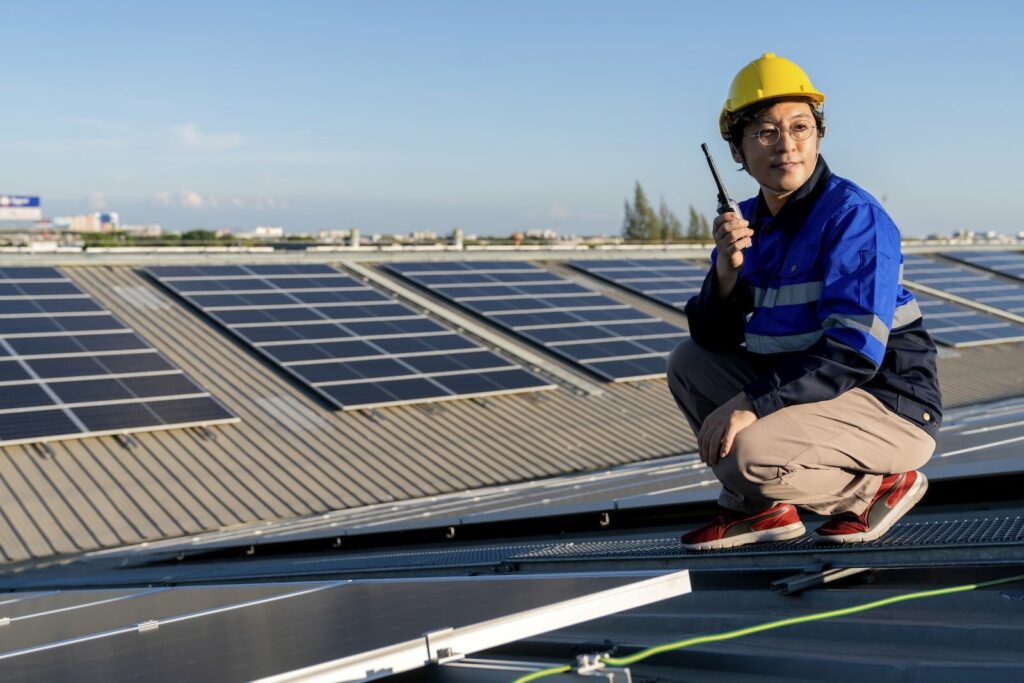
While Petronas continues to invest in LNG amid growing environmental and health concerns, some analysts note that high costs for LNG and rapidly falling prices for solar and battery storage may make the company’s expansion strategy financially risky.
They believe that if the country refocuses on renewables, it could achieve both climate goals as well as providing economic benefits.
Christopher Doleman, a gas specialist at the Institute for Energy Economics and Financial Analysis, said, “It’s possible that LNG will struggle to compete against solar combined with battery storage, which is emerging as a viable, cheaper alternative, particularly in the wake of the recent Iran conflict.”
Bloomberg reported that the cost of solar cells has declined by roughly 95 percent over the past 15 years, making other components more expensive than the modules themselves.
Oil and Gas Revenue
As things stand, the economic contribution that Petronas is making to Malaysia has declined dramatically over the last decade.
In 2015, Petronas and its partners contributed to around 45 percent of Malaysian government revenues but this is estimated by the Ministry of Finance to have fallen last year to 17 percent of government revenues.
On top of this, last year (2025) the fossil fuels company announced that it was cutting 10% of its workforce – 5,000 jobs – amid declining profits.
Mikulka said, “The decisions that Malaysia has made to invest billions in LNG is a big mistake, not only in terms of the environment and health, but also from an economic perspective.”
For the residents of Sungai Plan, the roaring flare towers and regular sirens of the Bintulu facility have become a normal part of their busy daily lives. But for Petronas’ critics, the plant is increasingly becoming a symbol of what they see as the flaws in Malaysia’s LNG-focused energy strategy.
We took four months to produce this story with the field reporting taking place in the Bintulu region during January 2026. The project combined the analysis of satellite data with historical air quality data, and the real-life experiences of individuals on the ground living next to the LNG export terminal. A key part of the research was processing gas flaring data that is collected by the Colorado School of Mines. The university’s Earth Observation Group specialises in nighttime observations of lights and combustion using data from sensors mounted on satellites. Their methodology uses multiple satellite images that are taken over time, allowing for the identification of persistent combustion points in the same location over weeks or months. This differentiates the stable and repetitive burning of gas from wildfires or other temporary sources of heat, and it allows the team to use an algorithm to estimate annual gas flaring volumes. Currently, the Earth Observation Group is monitoring around 10,000 gas flares around the world. We also interviewed academics, campaigners, analysts, as well as local people living in the Bintulu region. Carrying out on-the-ground research for the story proved challenging. Sarawak is a region that has suffered from a lack of international reporting historically and, over January, travel to the area was disrupted by heavy flooding.
The journalist used Otter.AI to assist with the transcription of interviews for the story and ChatGPT as a general AI assistant to assist with tasks that included searching for documents and brainstorming research queries.