


It was 8:30 am.
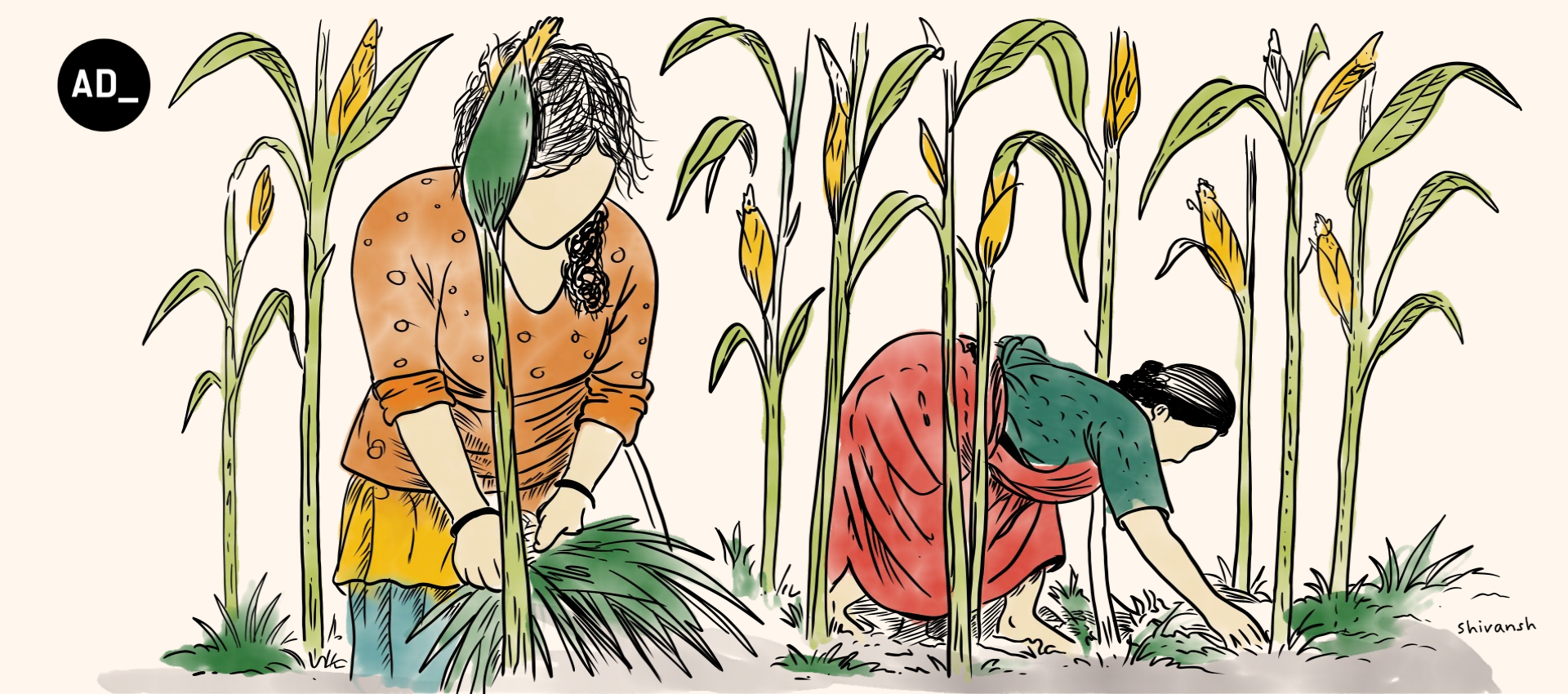
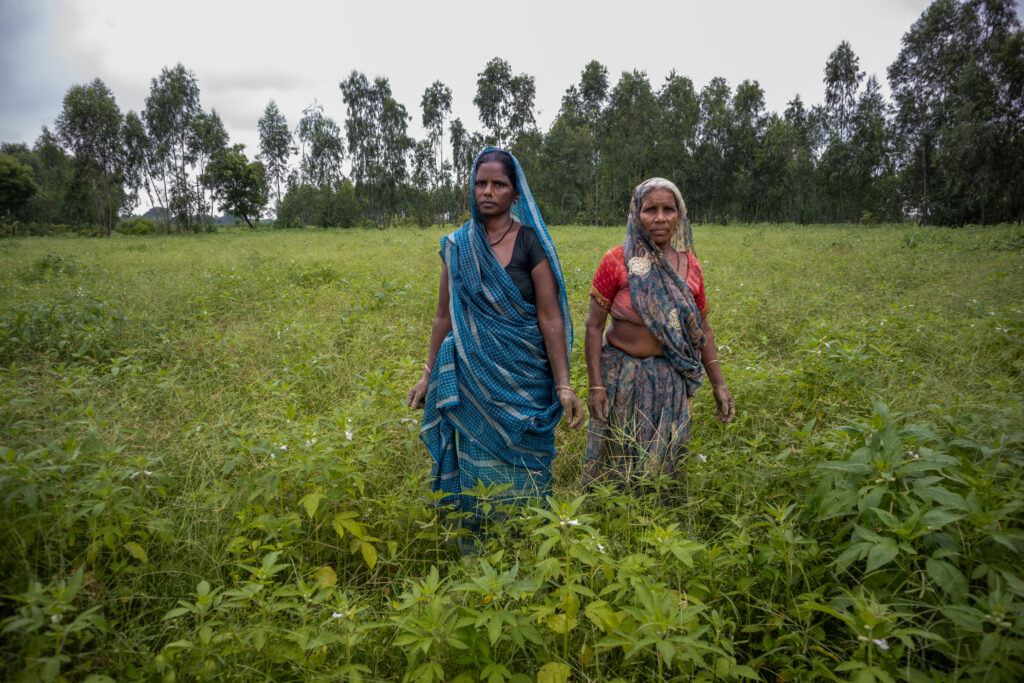
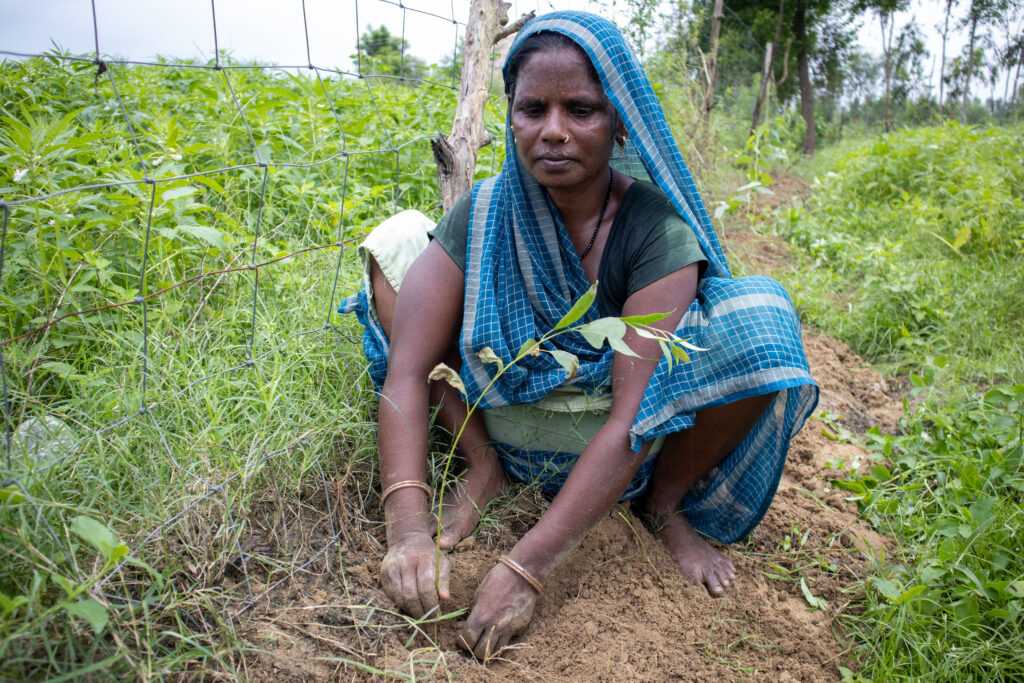
60-year-old Bitana Devi and her 45-year-old daughter-in-law Ram Pyari had already started working in their farm in western Uttar Pradesh’s Khandhar village. It was the sowing season and they were planting eucalyptus trees alongside sesame plants, guava, and pomegranate on their 3.10 acre land.
Drenched in sweat, the two were quietly digging the soil until a question from this reporter broke the silence.
“Yeh aap kya kar rahe hai?” (What are you doing?)
Bitana Devi looked up and explained that she was planting eucalyptus trees that will grow in a couple of years and provide protective fencing for the farm and financial security for her family.
She has been working as a farmer for as long as she remembers. She used to support her father and after she got married at the age of 18, she started working with her husband.
“When my husband was alive I would work with him and take care of sowing, harvesting, transplanting and all the other activities on the farm. He would plow the land, sell the produce in the market, and take care of external activities,” Bitana Devi said as she continued her work.
Her husband died of lung failure in 2019. It was Bitana Devi’s son who stepped up, but he too passed away in 2024 due to mouth cancer, leaving Bitana Devi and Ram Pyari to maintain the farm.
“My husband and father-in-law would take all the decisions. They would go to the mandi (market) to sell the produce. Now in their absence, we have to do these things but people don’t take us seriously. They speak to us disrespectfully because we are women,” Ram Pyari said.
She also said that an informal network existed for them when the two men were alive but that network has also faded away.
There were people in the village who used to help us when my husband was alive but now they don’t. There was no monetary benefit for them then, there is none now. But now when we ask them, they make excuses and don’t show up.
Ram Pyari, Farmer
She said she noticed a sudden shift in people’s behaviour after her husband’s death. “I am suddenly invisible to them. I have done farming all my life but I am still not considered a farmer,” Ram Pyari added.
According to a written reply given by the Minister of State (MoS) for Agriculture and Farmers Welfare Ramnath Thakur in the parliament, women make up close to 60 percent of the agricultural workforce in India. Despite this, they are rarely recognised as ‘farmers’. This increased participation doesn’t necessarily mean an increase in control and decision-making.
“Women may do much of the sowing, transplanting, weeding, harvesting and livestock work, but are still often seen as ‘helpers’ rather than farmers. This recognition comes at a cost, as it is closely tied to who owns the land, decision-making, and accesses institutional support,” Shoba Suri, senior fellow-health initiative and Sharon Sarah Thawaney, executive assistant to the vice-president (development studies), Observer Research Foundation (ORF) told us.
Suri and Thawaney added that land is usually at the centre of this as ownership (and inheritance) continues to be male dominated.
Widowhood presents an interesting contradiction, where women are more likely to acquire land as widows than as daughters, but legal ownership does not always mean effective control, as decisions may still be influenced by male relatives.
Shoba Suri, Senior Fellow-Health Initiative and Sharon Sarah Thawaney, Executive Assistant to the Vice-President (Development Studies), ORF
The Agriculture Census 2015-2016 indicates that women hold less than 15 percent of the land titles in India. This trend is consistent across South Asia. According to a 2026 research by ORF, authored by Suri and Thawaney, women own just 2-13.5 percent agricultural land in the region.
Nitya Rao, professor of gender & development, University of East Anglia, said, “The UN Food and Agriculture Organization (FAO) announced 2026 as the International Year of the Woman Farmer to give focus to this issue globally, not only [specific] to India or South Asia. In many places in Africa and Asia, climate crisis has meant that men are migrating, while women are the ones staying behind and farming, with or without the support of men. In most cases they don’t have ownership of land and this is a big barrier to productivity, but also accessing other rights and services.”
Even in Bitana Devi and Ram Pyari’s case, while both the women worked on the farm, the land was in Bitana Devi’s husband’s name. She said that it was transferred in her son’s name and now after his death they will have to get the ownership transferred.
“The process requires time and understanding. I will ask my relatives for help to get the land transferred,” Bitana Devi said.
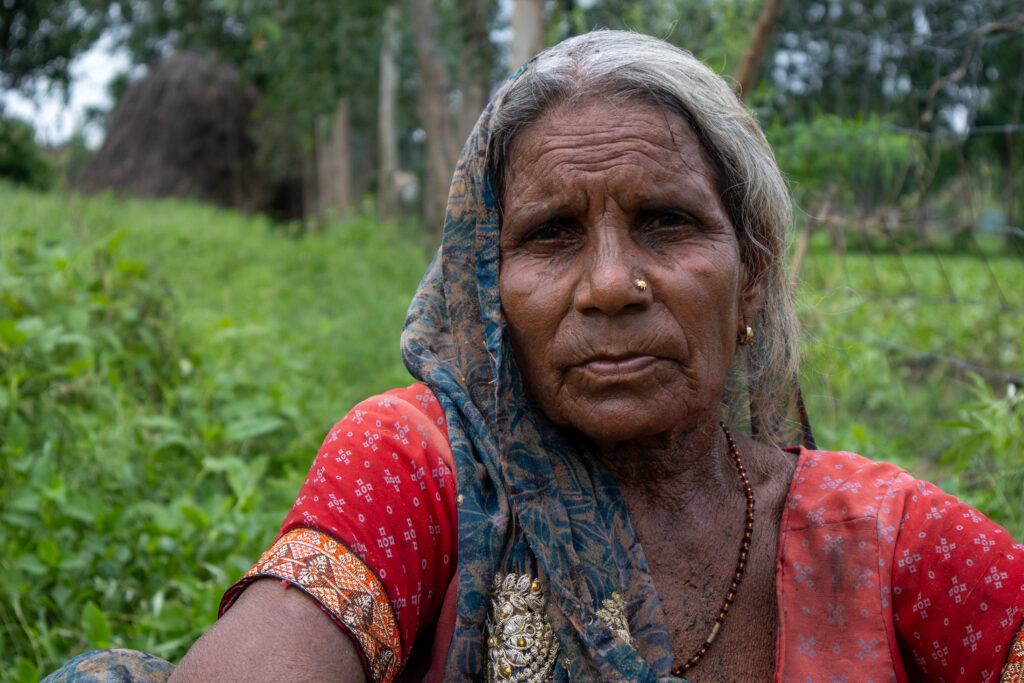
Female farmers we spoke to across India, Nepal, and Sri Lanka shared similar stories with us.
Despite making 57 percent of the workforce across South Asia, women face barriers to land, credit systems, and decision making, often compounded by social norms and patriarchal structures.
Land Titles
In northern Sri Lanka’s Vavuniya district, 51-year-old Sandawathi is preparing to walk away from the paddy fields she has known all her life.
“Farming is mostly done by men, with women playing a supporting role. As a woman, I struggle to find labourers. Modern machinery makes farming easier, but I cannot afford it. I also grow chili and vegetables on my father’s land, but my brothers decide what I can cultivate and how much land I can use, depending on their plans for the season,” she said.
Sandawathi said limited access to land, labour, fertiliser, and other resources have pushed many rural women towards community farming, where they share land, resources, and responsibilities.
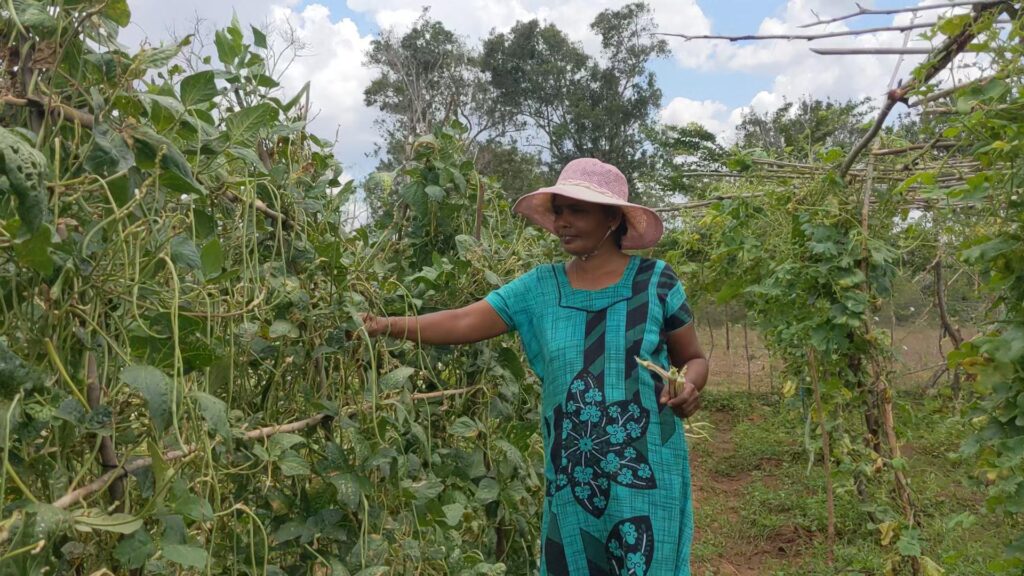
According to FAO, only 16 percent of women own agricultural land in Sri Lanka. Without land in their names, women often face limited access to credit, subsidies, and other agricultural benefits.
While the laws in Sri Lanka do not uniformly deny women property rights, customary inheritance practices, administrative systems, and state land regulations have historically favoured male heirs.
“Land is often the starting point. When women cultivate land but do not hold the title, they are less likely to be formally recognised as farmers. That then affects their ability to use land as collateral, access institutional credit, receive extension services or qualify for government support,” Suri and Thawaney said.
For example: In India, farmers lose out on the benefits of government schemes such as the PM-Kisan scheme due to lack of land ownership. In Sri Lanka, various Agricultural Subsidy Programs aimed at providing financial assistance to farmers are also tied to land ownership. Similarly, in Nepal, historically agricultural subsidies have been closely linked to land titles.
Maheshi Premachandra, project coordinator, Movement for Land and Agriculture Reforms (MONLAR), highlighted this also keeps women from building a stable livelihood.
“For women without land titles in their own names, getting a bank loan can be difficult because land deeds are often required as collateral. Due to this a considerable and worrying number of women, especially in North Sri Lanka and in districts such as Anuradhapura and Polonnaruwa, turn to microfinance providers that do not require property as security. But this can open another path into debt. When one loan becomes difficult to repay, another may be needed simply to keep up,” Premachandra said.
This often restricts their ability to invest in agriculture, expand their businesses, and move into more profitable parts of the value chain.
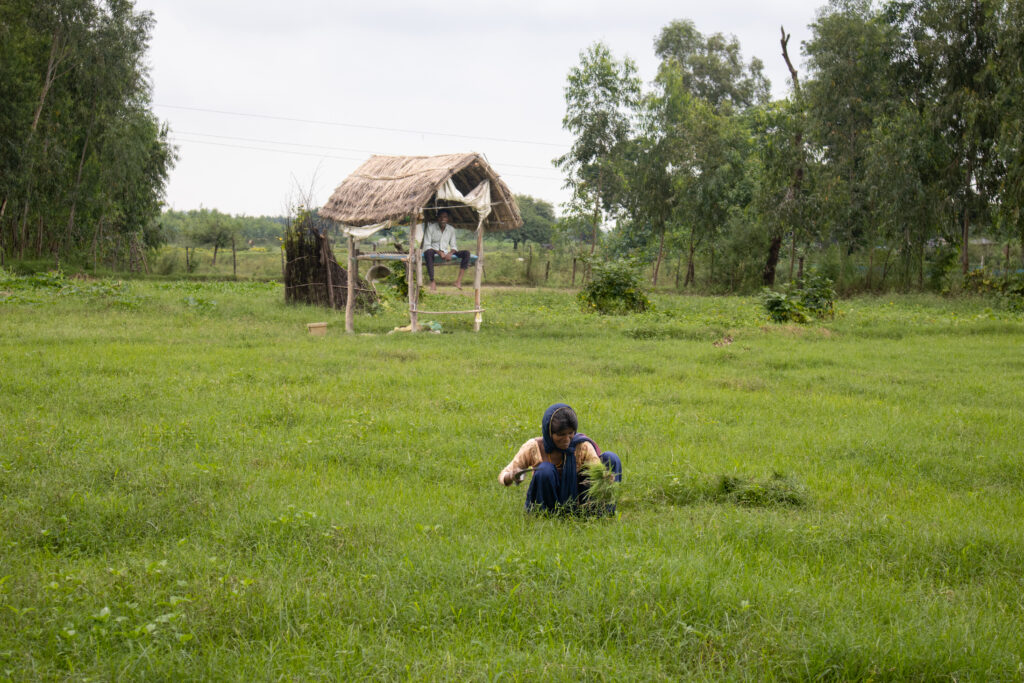
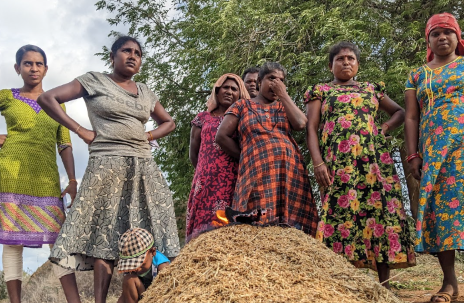
Rao opines that ensuring women independent access and rights to resources can prove to be more beneficial and improve the overall productivity of the household plot. She referred to Maharashtra Women Farmers Empowerment Bill, which was passed in July 2026 to recognise female farmers.
“They passed the bill and initiated the process of giving women farmers certificates. It is not changing the land right itself, but it will give women farmers a certificate. Recognition as farmers, will entitle them to benefits. She can get access to cooperatives, credit, water, among other things. We’ll have to see how it works in practice but they have already started the [process],” Rao said.
In India, agriculture is a State subject and different states have different policies.
A report by the World Resources Institute highlighted that when a piece of land is owned by a woman, it benefits their communities and households.
“Research shows that, compared to men, women contribute a greater proportion of their agricultural and land-based income to their household than men, improving food security and children’s health and education as a result,” the report read.
Experts point out that due to limited access to formal training, machinery, and the ability to travel longer distances to negotiate directly with the buyers, women are restricted to lower-value activities.
25-year-old Yashoda Dhungana, a female farmer in Nepal’s Kavrepalanchok district, spoke about this.
Dhungana’s husband migrated to West Asia 12 years ago to earn a better livelihood. She says she has to rely on middlemen to sell her produce, which is often at a loss.
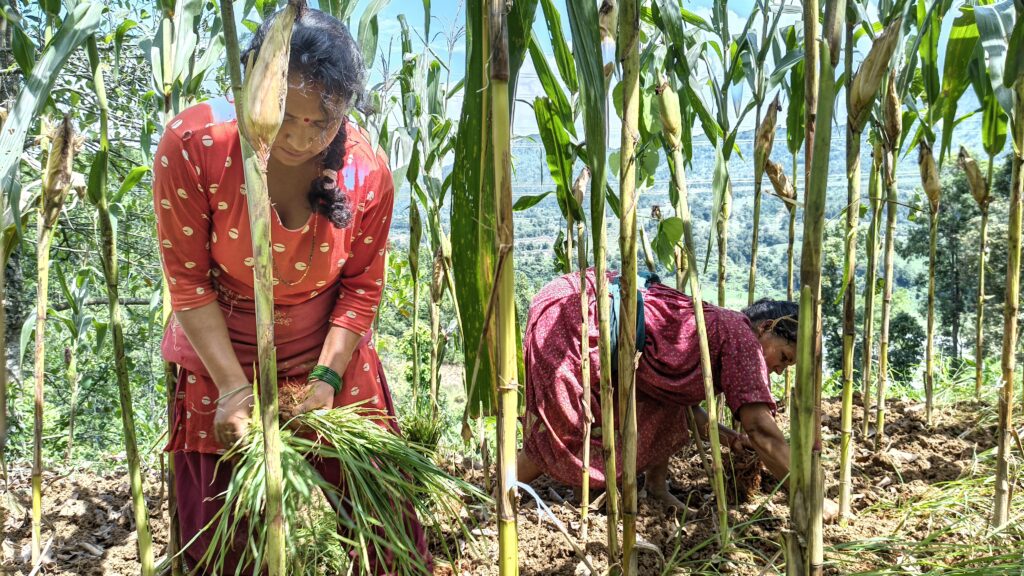
“If my husband were home, he would have taken the produce to the market to sell it, and we wouldn’t have had to depend on middlemen,” Dhungana said.
Economic Exclusion Strengthens Social Taboos
Economic exclusion is also shaped by social expectations about what women should and should not do.
Women’s agricultural work has long been treated as supplementary to men’s, even when they perform essential tasks throughout the production cycle. Research shows that women carry a heavy physical burden, often working long hours during the peak season.
Despite this, cultural beliefs restrict women’s access to particular spaces and stages of cultivation.
“When we were young, we were not allowed to step near the paddy harvest threshing floor. We don’t know if there is any truth but we were told not to step near the ‘sacred area’,” 39-year-old Sivarasa Ranjani, a farmer from Vavuniya, Sri Lanka told us.
In Nepal, women are prohibited from plowing the fields. Sharada Paudel, assistant professor of sociology, Mid-West University in Surkhet, Nepal said, “There is a superstitious belief that if a woman plows a field, the deities will get angry, which will bring bad luck and may lead to death of livestock, illnesses, sickness or death among household members.”
Bitana Devi told us that in their village women are not allowed to do any farming work while they are menstruating because the local belief is that it will bring bad luck.
Rao shared an incident about a widowed woman from Jharkhand who was outcasted for plowing her land while she was menstruating. “I spoke to a lot of people and I think these kinds of practices are, of course, negative. This is something that needs to change. And I think probably with mechanisation, it’s becoming easier to break that taboo.”
Despite performing major field tasks in earlier phases — including weeding, harvesting, and land preparation — women, in some parts, are culturally restricted from participating in these final threshing operations.
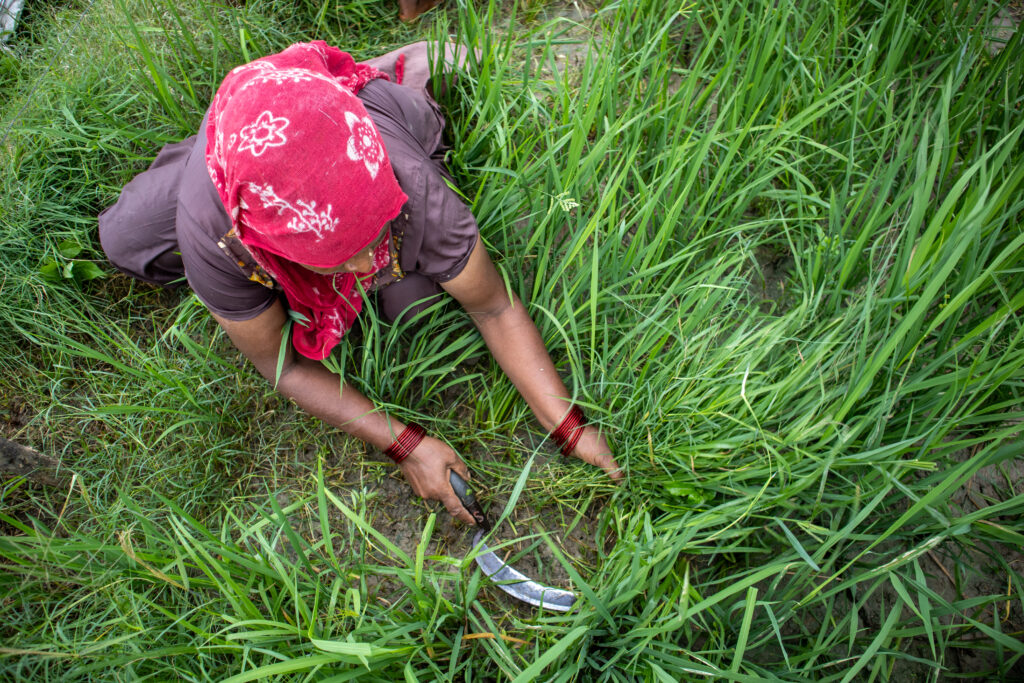
The contradiction is stark: women may weed, prepare land and harvest crops, yet in some communities remain excluded from some activities.
Such restrictions can make women’s work less visible and limit their authority over the harvest.
‘Recognise Women as Farmers’
The challenges surrounding female farmers in Nepal, India, and Sri Lanka are not linked to participation. The women are there but the question is to make their participation more inclusive, equal, and economically beneficial for them.
“The first step is to formally recognise women as farmers. Agricultural policy still tends to identify the landowner as the farmer, even when women are doing much of the cultivation. Stronger land rights, including joint or female-first titles, should therefore go hand in hand with easier access to credit, insurance, inputs and extension services. Better sex-disaggregated data and gender-responsive budgeting are also important, because women’s work cannot be properly supported if it remains undercounted or invisible,” Suri and Thawaney said.
Rao, too, said recognition is important but understanding the diversity among female farmers to frame policies is equally important.
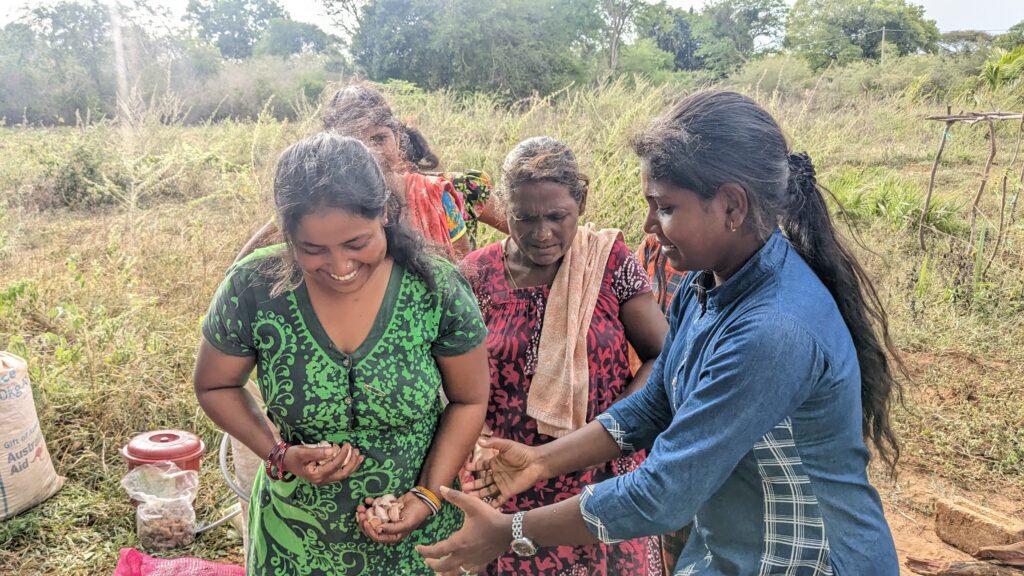
“Women farmers are not one single homogeneous group. Within women farmers there are fishers, there are cattle rearers, there are goat rearers, there are forest produce collectors. All these are women farmers. Then there are labourers, landless labourers, they’re also women farmers. They are working on the land. So we have to recognise the diversity,” she said.
She mentioned that India has a National Policy for Farmers which was approved in 2007.
We do have a national farmers policy [in India], and while not specific to women farmers, anybody engaged in all these activities is classified as a farmer. Such recognition is very important for good policy.
Nitya Rao, Professor, University of East Anglia
Experts also pointed out that a change in the outlook towards women is needed.
“We need to educate policy makers and bankers that while women may not be literate, they have a lot of knowledge in terms of what they are doing,” Rao said, adding that different groups should work together to ensure women have adequate resources and support, which will help create a more gender responsive policy.
The broader goal, as pointed out by Suri and Thawaney, of policies should be to help women move beyond labour-intesive, low-return activities.
“This means improving access to women-friendly machinery, digital and financial literacy, climate-smart technologies, training, women-led FPOs and better market linkages. Just as importantly, investments in water, energy, childcare and transport can reduce the unpaid work that limits women’s time and mobility,” the two researchers said.
FAO’s Kae Mihara, regional gender officer (Asia Pacific), talked about focusing on a gender transformative approach. She, too, focused on working with different stakeholders and said, “This is not only about women’s issues, but this should be everyone’s business.”