
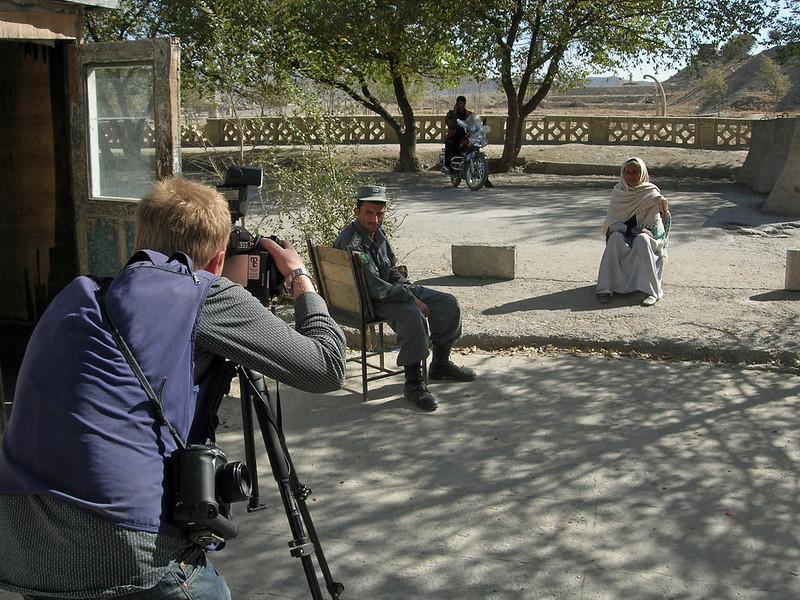
For Saurabh Sharma, an independent journalist who reports primarily on human rights in India, threats and the sense of looming danger have become routine. The 33 year old is based out of Uttar Pradesh, India’s most populous state.
Threatening calls from local goons is routine, especially when he reports on an issue that puts a critical lens on the policies of the local government, he says. India ranks 159 out of 180 in terms of press freedom, according to the 2024 World Press Freedom Index.
“Saurabh tumhara ghar toh illegal hai, bulldozer bohot chalta hai yahaan [Saurabh, your house is illegal and bulldozers are very common here],” is one of the threats Sharma recalls receiving recently. In Uttar Pradesh, ‘bulldozer justice’ references the politicisation of home demolitions in order to crack down on critics or dissent. In fact, in 2022, Sharma had to move to another city after his news report on deaths by firearms in his home state, Uttar Pradesh, brought unwanted attention from local influential figures.
Sharma’s story is a part of the larger fractured and shrinking space for free press where over 2,000 journalists and media workers have been killed worldwide for doing their jobs. Of them, at least 15 percent were freelance journalists, a broad term used to describe media workers who work on a contractual or project basis.
Early this year, a documentary called The Stringer put a spotlight on the risky and thankless job most regional freelancers do to tell important international stories. The Stringer follows the story of the iconic photo of a nine-year-old Vietnamese girl fleeing napalm attack. The photo won the Pulitzer Prize in 1973, received by Nick Ut, a photojournalist for the US-based media outlet, The Associated Press. However, the film alleges that the actual owner of that photo was a local journalist who never got recognition for it. The Associated Press denies the claims in the film.
Nevertheless, the conversation put a spotlight on regional freelance journalists, who are a significant asset for international newsrooms that face language or access barriers. With that come risks. Reporters like Sharma often operate without support and safety.
One-way lane in International Journalism
The perils of parachute journalism continue to thrive within Western narratives about Asia.
Studies show that much of the gaze in international journalism is dominated by Western and imperialist framing that often employs orientalist tropes and serves Western political interests. This reflects in the power disparity between local and Western journalists too.
For foreign correspondents, ‘fixers’ are a vital part of the reporting process, and that can entail many different things. ‘Fixers’ or ‘stringers’ are reductive terms that assign local journalists the restrictive role of facilitating access without agency or ownership, thereby reaffirming power imbalance.
“As a fixer, we arrange the interviews, conduct the interviews, do the translations, give the background to the foreign correspondent, formulate questions and topics for them,” Haroon Janjua, a Pakistan-based journalist, tells Asian Dispatch. “We know what the situation is like, so we have to explain a lot to them.” All foreign correspondents have to do, he adds, is “gather translated stuff and write it in some order.”
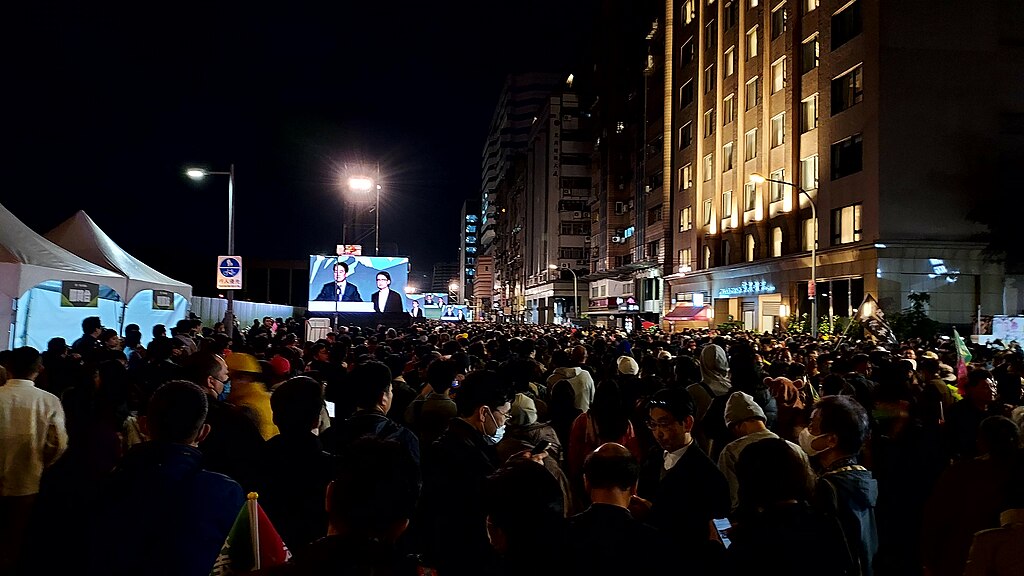
A prominent example of this uneven relationship is the coverage of Taiwan’s 2024 presidential election, which saw a record 430 journalists travelling to the country. Many journalists relied greatly on local journalists and freelancers to get access and translations. Soon after, Taiwanese local journalists issued a joint statement highlighting the “numerous unfavourable experiences” they had with foreign journalists.

“Many fixers reported experiences of unfair pay practices, disrespect for their time and expertise, and pressure to contribute to sensationalist or pre-determined stories,” wrote Yip Wai Yee for the Reuters Institute for the Study of Journalism.
Editorial aside, the unequal dynamics reflects in the pay gap too, which assigns a much lower budget to local and regional reporters over foreign journalists.
Janjua recalls a newsroom where a foreign reporter allegedly receives higher pay and benefits than a local reporter with the same job profile.
Heather Chen, a Singapore-based journalist, told Asian Dispatch that local contractors, additionally, are rarely extended the same benefits or union protection that is granted to full-time hires.
“There are always clauses in [freelance] contracts,” Chen said. “For example, if you work for a major newspaper in Seoul, you will likely not be allowed to engage with labour unions.
Then comes the daily privilege carved out for foreign correspondents. Sharma recalls how one newsroom paid him $100 a day to ‘fix’ a reporting, but the foreign correspondent who accompanied him was given more for minor expenses on the field. “These [foreign] reporters would [spend] $200 on evening drinks in the name of source meetings and things like that,” Sharma says, adding that often, local journalists are like “porters” for Western journalists.
While much has been reported on the bane of parachute journalism, freelancers in Asia are compelled to participate in coverage that reiterates preexisting notions or stereotypes about their region.
Sometimes they push their thinking into a project, because they already have preconceptions about Asia. The West sees us as third world countries, and the things that highly resonate with international audiences are our challenges and difficulties. —Joan Aurelia, an Indonesian freelance journalist, told Asian Dispatch.
Reporting decisions often lie solely with an editor sitting thousands of miles away from the on-ground reality. Several studies and surveys have shown how most international newsrooms lack racial and gender diversity, which are known to produce culturally insensitive reporting or, worse, grave errors such as the one The Guardian committed in 2020 when they mistook two Black artists with each other after one of them made an anti-semitic comment. Lack of newsroom diversity impacts freelancers too.
Chen, from Singapore, reiterates the need for diversity in international editorial teams.
“Most foreign newsrooms in Asia are still White-dominant. The people who get the final say tend to be Caucasians. Maybe there are more women right now, but it doesn’t necessarily mean that there are more opportunities for local journalists,” she said.
This Disparity bleeds onto Bylines
The names which come first on a byline are influenced by these structural demarcations. Stories like this are common—The bulk of the reporting work may have been done by a local journalist in a particular country, but the first credit will still go to a foreign correspondent, likely not a native.
Sri Lankan journalist Shihar Aneez told Asian Dispatch that he recommends a standard process for all freelancers so that issues like pay gap are clarified before the reporting process begins.
“There’s no standard rate, sometimes you don’t even have a contract,” said Aneez. “Sometimes we are asked to go to a rural area and cover, and when we try to claim the expenses, there’s no allocation for that.”
When credit is given, it can often be relegated to ‘additional reporting’. Sharma spoke of experiences of fighting for every single byline.
“For freelancers, bylines are the only capital we have,” said Sharma. “That’s our identity.”
The reliance on local journalists is not going away, especially as countries like India employ increasingly hostile measures to keep foreign journalists away.
So what needs to be done by these publications? In her eight-point guide quoted earlier, Taiwanese journalist Yip Wai Yee stresses timely payments, cultural sensitivity, respect and collaboration.
Chen said that as long as a journalist was working for a commercial news organisation, they should be entitled to benefits and protections like full-time staff. Even though this sentiment is echoed by freelancers across Asia, meaningful change cannot happen without conscientious effort from Western journalists and media professionals.
Sharma, also a founding member of 101 Reporters, a network of freelance journalists in India, highlighted how reporters on the ground need more than platitudes.
“Freelancers need financial support, emotional support but the organisations working for them are toothless tigers. Other than releasing statements, they don’t go on the ground—they don’t know what we deal with every day, how reporters are suffering just to make ends meet,” he said.