
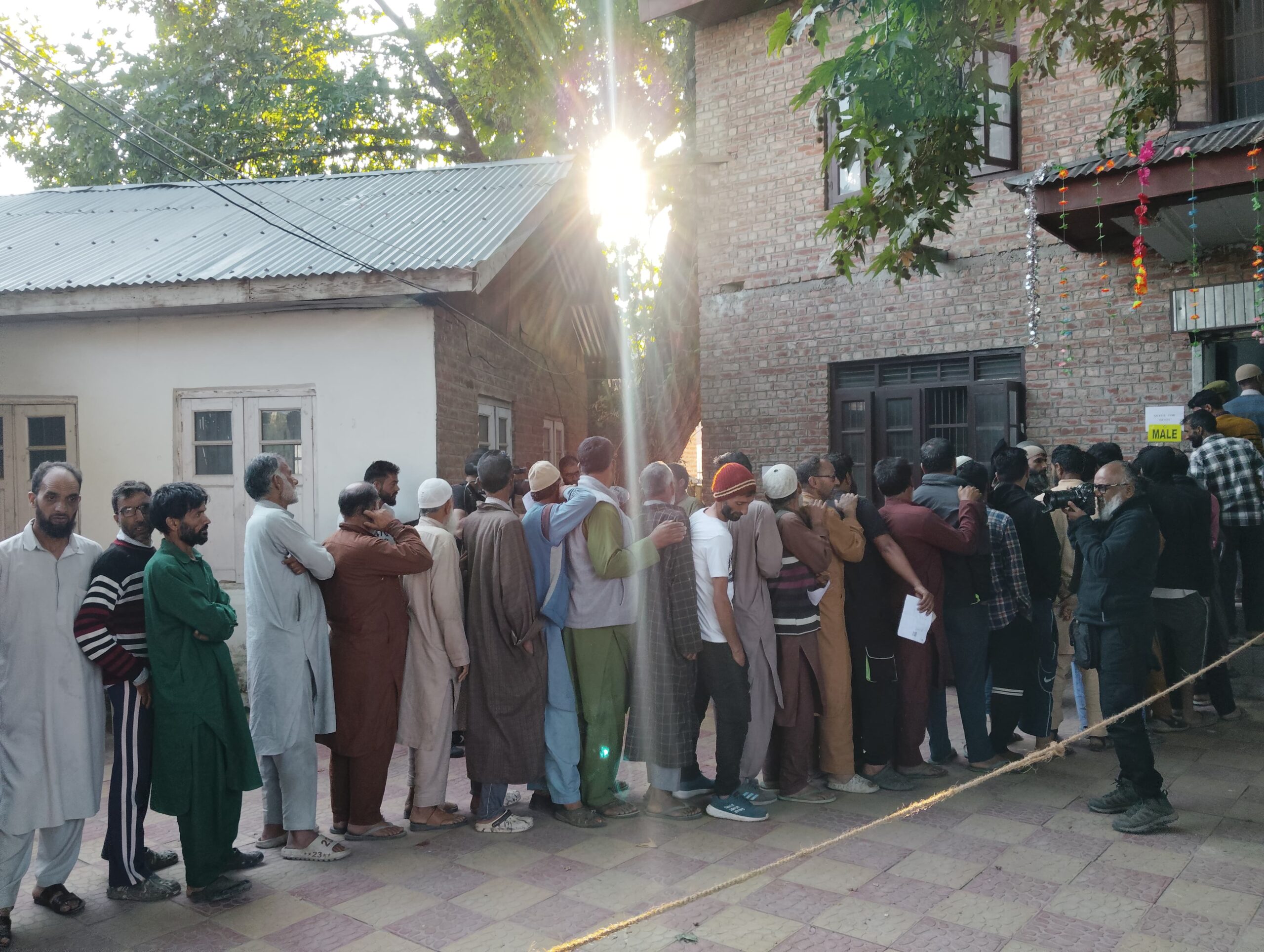
In a historic victory, an alliance of opposition political parties has won the assembly elections in the Indian Union Territory of Jammu & Kashmir. Omar Abdullah – who previously held the office from 2009 to 2014 – will make a comeback after nine years.
The election outcome is significant for one of the world’s most militarised zones, which is holding its first assembly elections for the first time in a decade. Voters turned up in historic numbers to elect 90 members for the union territory’s Legislative Assembly.
The Kashmir region is at the heart of conflict between India and Pakistan. Both the nuclear-armed countries govern parts of the region but claim it in its entirety. For the last three decades, an armed separatist movement in the Union territory of Jammu & Kashmir has led to the deployment of around 130,000 military personnel, of which around 80,000 are stationed at the country’s border with Pakistan. The fate of Kashmir is an international issue and many of India’s powerful allies, including the US, avoid taking sides while maintaining that the two countries should consider the wishes of the people of Kashmir.
In August 2019, Indian Prime Minister Narendra Modi and his ruling Bharatiya Janata Party (BJP) revoked a long-held autonomous status – secured within Article 370 and 35A of Indian Constitution – of Jammu and Kashmir. For the BJP, it was an election promise meant to restore India’s administrative control over India’s only Muslim-majority state. For the Kashmiris, the move led to rising unemployment, continued violence and free reign by the federal government over its profitable natural resources.
These elections came three years after the timeline promised by the Modi government, and were held after the Supreme Court issued an order last December. In the past few decades, Kashmiris have boycotted elections in the region as a protest against the demotion of Kashmir.
Autonomous or not, Kashmiris exhibited their electoral choices after a long time this time.
Changing face of Political Participation
The election saw Modi’s BJP pitted against an alliance of the National Conference (NC), the Indian National Congress (INC), National Panthers Party and Communist Party of India (Marxist). The NC and its dynastic Abdullah family have dominated politics in Kashmir for decades.
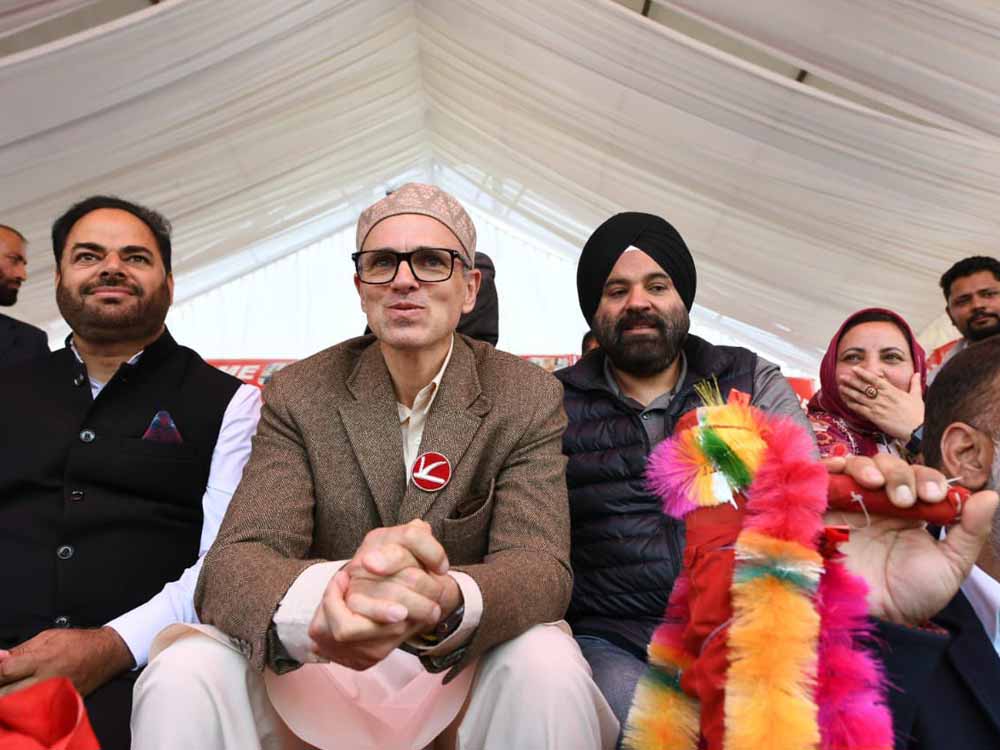
These elections also saw the rise of independent candidates, some of whom had been arrested during the protests after the abrogation of 370 and 35A in 2019. One of them is Abdul Rashid Sheikh, an independent candidate known widely as “Engineer Rashid”, who was arrested under India’s draconian anti-terror law, the Unlawful Activities (Prevention) Act (UAPA) in 2019. He defeated Abdullah in the 2024 Lok Sabha Elections and last month, he was granted bail to campaign for these elections.
As the Indian opposition accused the BJP of having “non-locals running Jammu and Kashmir”, local representatives like Rashid came to symbolise the rising political participation of Kashmiris.
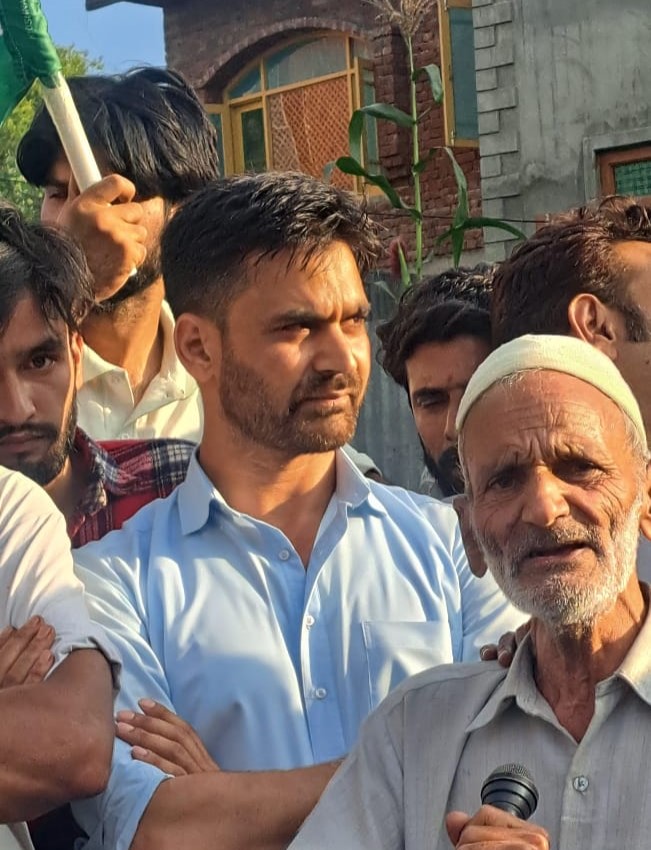
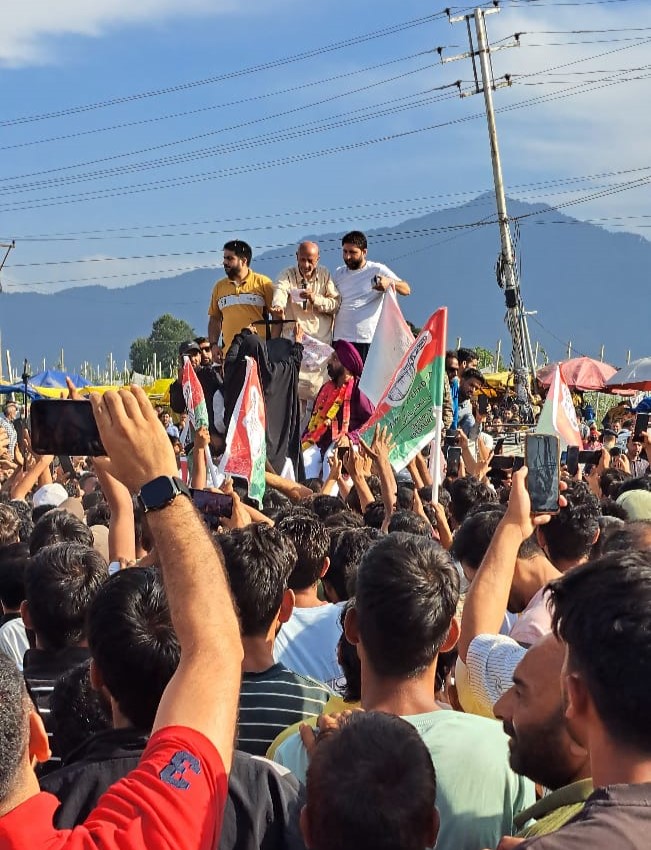
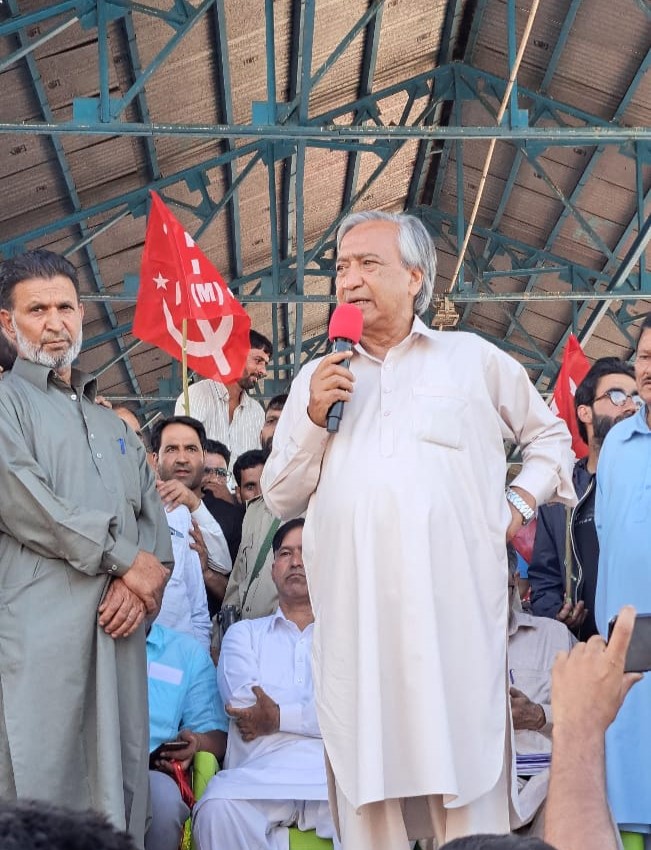
“Since 2019 particularly, a feeling of disenfranchisement has run very deeply in the Kashmiri psyche,” Yaqoob-Ul-Hassan, a research analyst at the Indian government-funded think tank Manohar Parrikar Institute for Defence Studies and Analyses, told Asian Dispatch. “[The Kashmiris] may dislike the NC or the PDP as entities, but they still see the representatives from these parties as one of their own.”
For Sumantra Bose, a comparative political scientist and author of Kashmir at the Crossroads: Inside a 21st Century Conflict, the popularity of representatives like Rashid is a gesture of protest. But it also reflects Kashmiris’ dissatisfaction with legacy parties.
“Both Omar Abdullah and the NC party have a long history of what many in the Kashmir valley regard as collaboration with Indian authorities,” Bose told Asian Dispatch. “Even though NC is the historic party for the region, Omar Abdullah was Chief Minister during the stone pelting uprising of 2010, which was suppressed very harshly.”
In 2010, Indian Army soldiers killed three Kashmiri civilians, citing it as an anti-militancy operation against Pakistani infiltrators but was later found to be staged. The incident triggered state-wide protests demanding reduction of troops. The Indian government grants special privileges to the armed forces in Kashmir – under the The Armed Forces (Jammu and Kashmir) Special Powers Act – to operate under impunity and emergency powers. The 2010 protests killed over a hundred people – mostly civilians.
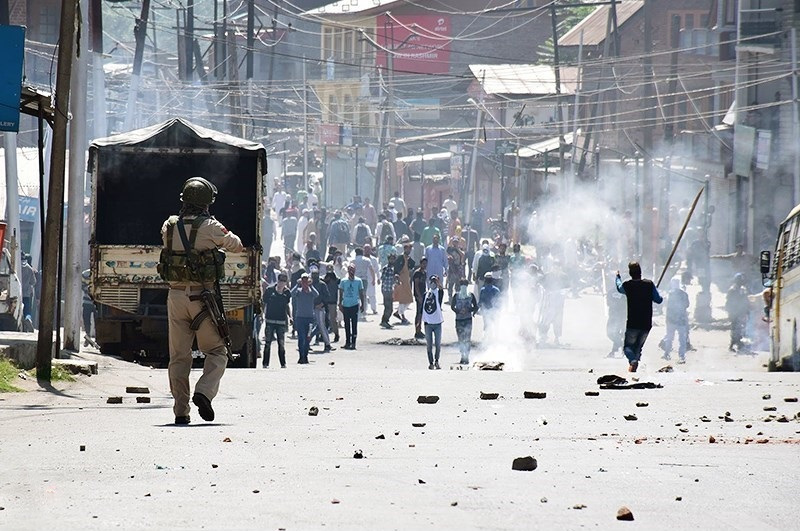
Bose added that other legacy parties including the People’s Democratic Party (PDP) and its leader Mehbooba Mufti are similarly infected too. Mufti was the chief minister during the violence of 2016-17. At that time, her party’s failed coalition with the BJP left the region at the mercy of federal rule.
However, Waheed Para, the PDP candidate from Pulwama constituency who won the seat by over 8,000 votes yesterday, reaffirmed the popularity of his party and told Asian Dispatch that these elections are different.
“For the first time, all sorts of ideologies met at the ballot box. From the so-called ‘anti-nationals’ to the UAPA-accused, to the detained people to mainstream— all political ideologies are participating in the process,” said Para. “Today, democracy is seen as defiance and a means of resistance. It is not about violence anymore. So young people are inspired to vote.”
Bose added: “Rather than the product, it is the process that is more important. The people are getting to vote again, and the turnout over three polling days has been significant. It signals the return in some form of normal cognitive politics.”
In the Hindu-majority Jammu region, the BJP dominated and won 29 seats out of 43. However, that win doesn’t dilute the misgivings Kashmiris have about the events of 2019.
An election in the shadows of 2019
In 1947, when India gained freedom from British colonisation, the state of Jammu and Kashmir was granted special autonomy that allowed self-governance on issues ranging from transfer of land to defining permanent residents and granting state benefits. The provision has been at odds with successive governments, who used presidential orders to gradually reduce those privileges. In August 2019, when the BJP abrogated Article 370 and 35A, it created the Union Territories of Kashmir and Ladakh, which places the region directly under the federal government.
Since then, human rights watchdogs such as Amnesty International have highlighted consistent efforts by the federal government to crush political participation that opposes the BJP. Activists, journalists and academics have been detained and harassed arbitrarily. Dissenters are widely punished through the ambiguous public safety laws. The federal government has announced many plans to bring private investment in, which is likely to be a double-edged sword for a region that is also on the frontlines of climate change.
“Grassroots political activity was stifled through fear and persecution. Even the likes of Omar Abdullah and Mehbooba Mufti have been imprisoned for considerable periods,” said Bose. “The agenda was to virtually erase competitive politics from Jammu & Kashmir.”
The current election, locals told Asian Dispatch, may have fuelled local political participation. But 2019 looms large in public memory.
INC’s Suhail Bukhari told Asian Dispatch that the people have clearly indicated that the central government’s actions in Kashmir are unacceptable, and that the results favour anybody who stands against the BJP and the Rashtriya Swayamsevak Sangh, BJP’s ideological parent.
“Generation after generation, Kashmiris have given so much to this country. By blood and conviction, we’re Indian — and yet, we are treated differently,” Nasir Khuehami, the National Convenor of the Jammu & Kashmir Students Association, told Asian Dispatch. “Our leadership was stripped away, ignored and detained, and if the condition of local politicians and activists has been so terrible — think of the common man.”
What next?
In the lead up to the current elections, the rhetoric of Naya Kashmir, or “New Kashmir”, has dominated mainstream Indian media narrative, which is in line with the BJP’s co-opting of the 1944 manifesto that outlined the autonomous status of the region. Modi’s government turned the term around to signal massive changes as part of its campaign to dominate regional politics in Jammu and Kashmir.
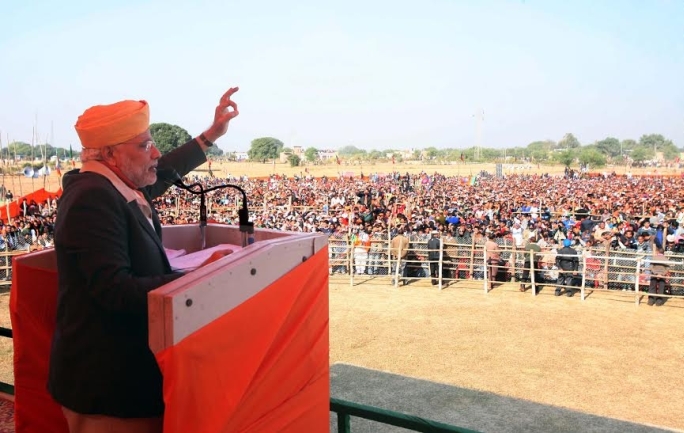
Khuehami told Asian Dispatch that many issues such as high levels of unemployment, especially among the youth, directly counter the Naya Kashmir narrative. Since 2019, the Modi government has also been hosting foreign diplomats and dignitaries for guided tours of Kashmir, which critics say is designed to establish an insincere global narrative of a supposed normalcy and acceptance of the BJP’s 2019 ruling among the people.
“[The Modi government] brought all these sheikhs from Dubai, these big businessmen, with promises of jobs and recruitment. But on the ground, the reality is very different. Where is the prosperity? Where is the development?” said Khuehami.
Hassan, the research analyst, says that the BJP’s proclamation of Naya Kashmir isn’t entirely false. “The violence has gone down, there are no protests or strikes, and tourists have been coming in great numbers,” he countered before adding, “But militancy going down does not mean it won’t come back. We’ve seen the decline of insurgency [in Kashmir] in the past also,” he said. “But with some sort of a click, it could go up again. It’s down, but not gone.”
Violence and deaths in Kashmir has continued, with spikes in militant deaths and no sustained decline in civilian deaths, but official figures claim an era of peace. Bose says that figures of declining violence is a myth and artificially generated.
“It’s true that stone-pelting has declined post-2019 but that’s because of extremely draconian repression. There’s no guarantee that just as insurgency hasn’t gone away, that kind of uprising won’t come back,” he said. “(The decline) should come about through a genuine improvement in people’s situations.”
In the current elections, almost all parties promised restoration of statehood in some form. After the results, Abdullah reiterated that his party would work with the central government to bring back Article 370. Previously, Modi had also promised to reinstate statehood too but that “only the BJP will fulfil this commitment”.
National Conference spokesperson Tanveer Sadiq told Asian Dispatch that the people have reaffirmed their faith in them, and they look forward to doing everything to restore Kashmir’s political status while also ensuring jobs and work on everyday issues. However, Safiq added, a working relationship with the Center is vital for any of that to happen.
“The BJP-led government in the Center has to understand that now that people have given the mandate to the NC-Congress alliance, it becomes incumbent on the Central government to have a cordial relationship,” said Sadiq. “The Center and State need each other to ensure that states like Jammu & Kashmir become prosperous.”
Khuehami is optimistic about the question of accountability in the state. “We know that if they don’t stand up for us, we can vote them out. This is why people came out and voted,” he said. “We kept aside our political differences to preserve our identity, to get back our dignity—through this vote.”