
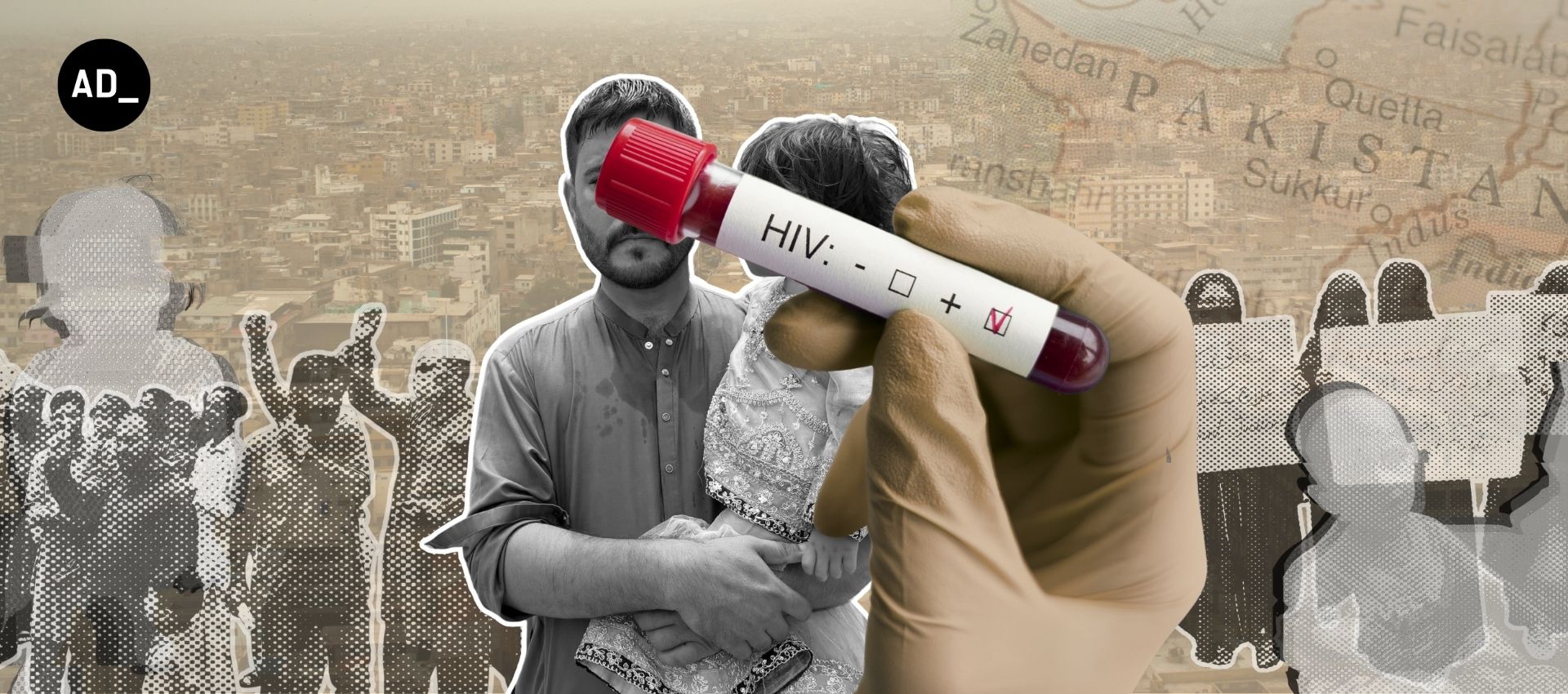
“Everyone avoids my children. No one comes near them. Even my own brothers do not visit my home because they say my children have a terrible infection,” says Aftab, a factory worker in Karachi, Pakistan.
Aftab is a father of four children — all of whom have tested positive for HIV.
He tells us that he admitted his two sons, Farhan, 12, and Rizwan, 10, to the government-run Kulsoom Bai Valika (KBV) Hospital in July 2025 because they had malaria. His other two children — three-year-old Rehan and seven-year-old daughter Aiman — were also unwell and were admitted to the same hospital at the insistence of the doctors.
Later that year, Aftab and his wife, Aisha, a homemaker, found out that all of their children were HIV positive. Rehan, their youngest, was just 2.5 years old at the time of diagnosis.
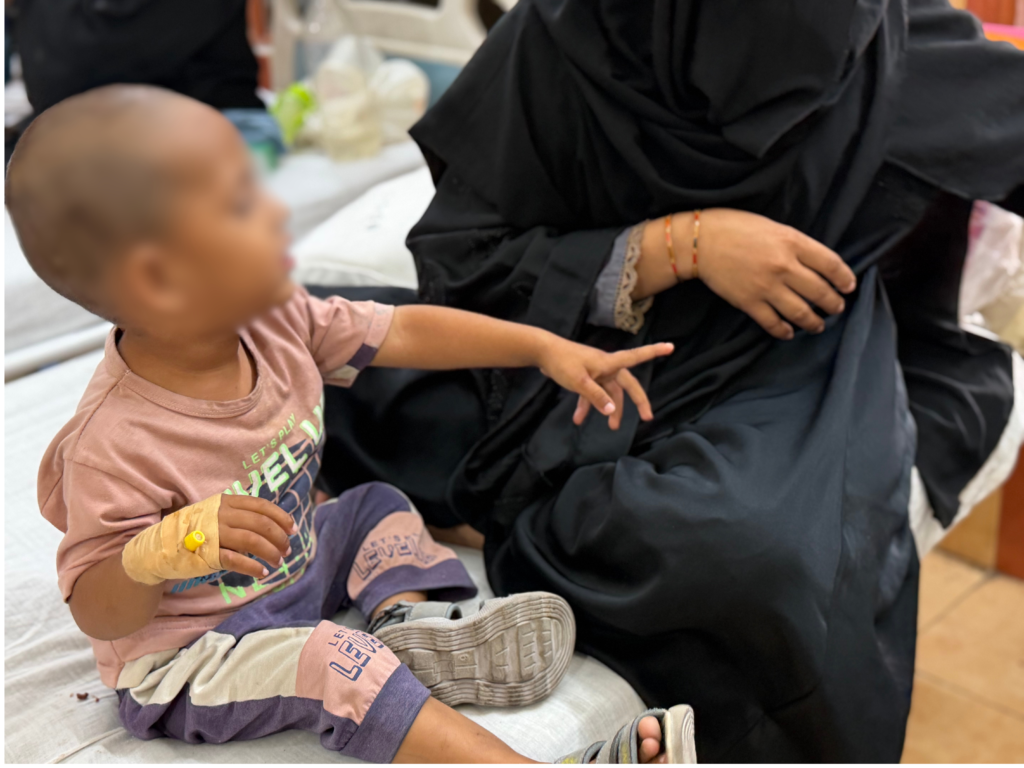
Speaking to Asian Dispatch, Aisha says that Rehan has been in the hospital for the past 20 days due to high fever.
“If the children had HIV from birth, then both of us would have had it too. We don’t have HIV, but my children have it. If they caught this from outside, then it should have happened to one of them and not all,” Aisha questions.
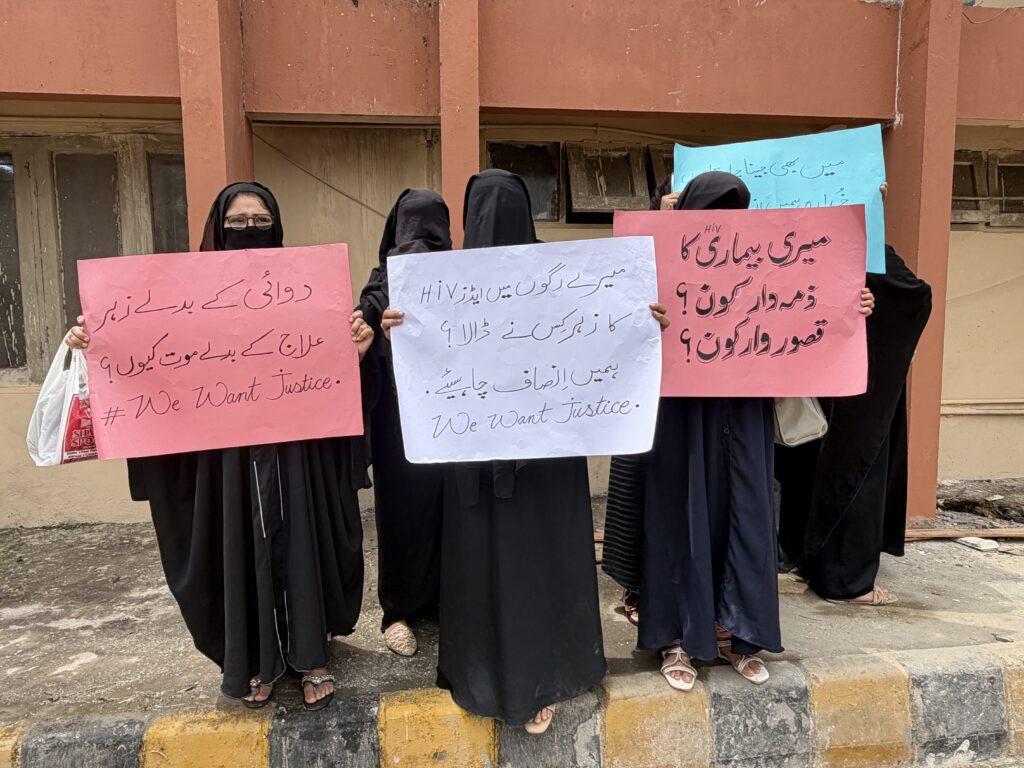
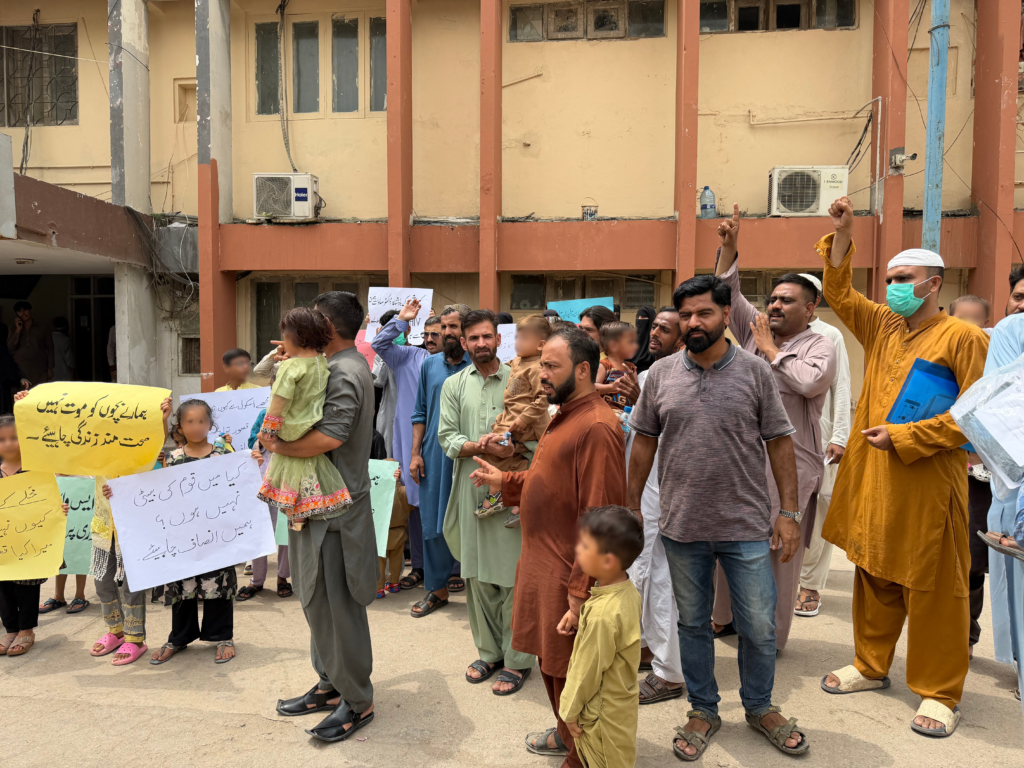
Aftab and Aisha are not the only parents asking this question. This outbreak has impacted 120 families, of which 94 are reportedly minors, living near the Kulsoom Bai Valika Hospital in Karachi.
What Caused the Outbreak?
Nishat, 33, a homemaker, and mother of two-year-old Afnan, blames the hospital for reusing a single-use syringe on multiple patients. “They used a single syringe. After injecting my son, they injected my sister-in-law’s daughter and then another child on the next bed,” she says.
Later, both Afnan and his cousin were diagnosed with HIV.
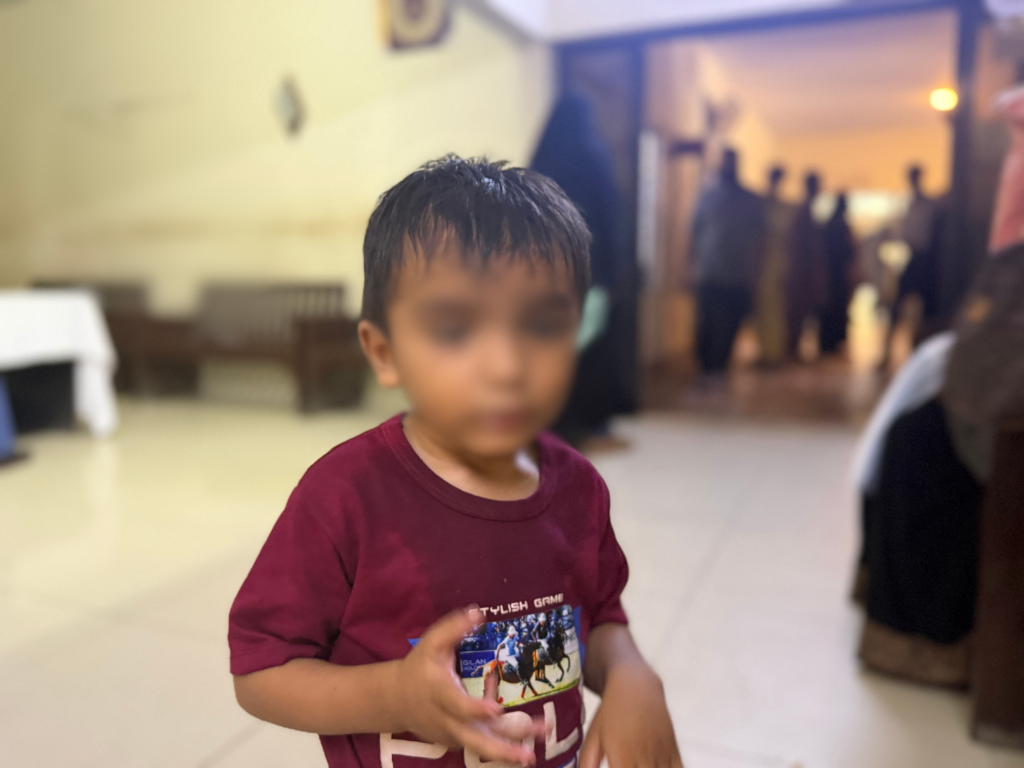
Aisha, too, alleges that a single syringe was being used by the hospital staff for the entire ward.
“There was one 10cc syringe and one bottle of Provas. The same syringe and the bottle was used for the entire ward. We saw it with our own eyes, but didn’t say anything,” she says, adding that she wasn’t aware of the consequences of using the same syringe on multiple children.
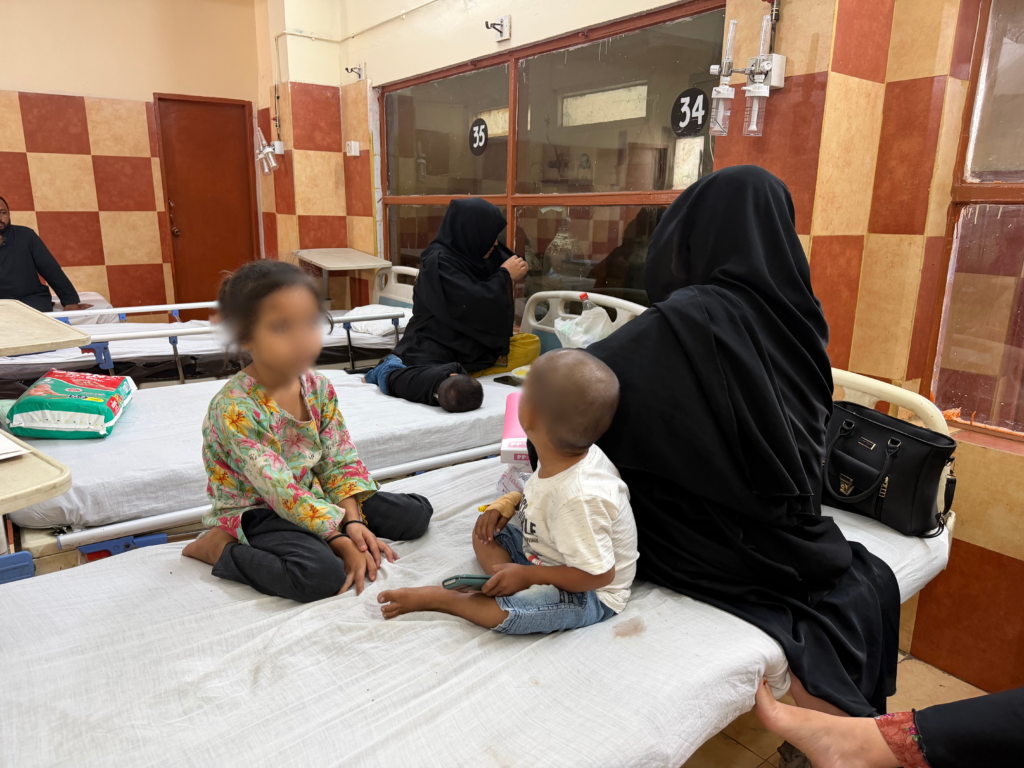
She says that there were 27 beds in the ward, with three children on each bed.
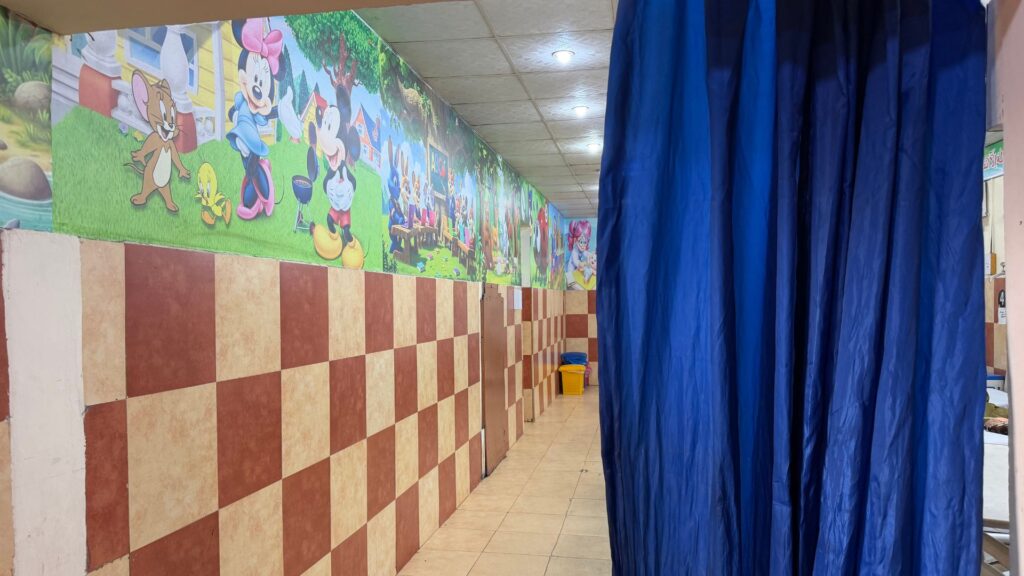
We reached out to Dr. Muhammad Ghayasuddin, medical superintendent (MS) and a general surgeon, KBV hospital, who said that as the matter came to light, two inquiry committees were set up and the report has been submitted to the court.
“The second committee’s 700-page report was completed over a period of two and a half months. The matter is now before the court. The report was submitted to the court, Sindh Healthcare Commission, and the police,” he said.
The committees were tasked with finding out the reason behind the outbreak and to identify if there was any medical negligence. This second report was submitted on June 19, 2026.
On July 28, the Sindh Employees’ Social Security Institution (SESSI) Commissioner Hadi Bakhsh Kalhoro issued a show cause notice to the audit officer at the hospital.
However, Sindh Labour Minister Saeed Ghani has denied the claims of syringe reuse. In a press conference on July 14, 2026, he said, “In all our hospitals, we use auto-lock syringes except 10cc. So, any syringe except 10cc cannot be used again. But, the doctors have also given us more reasons that could have caused the outbreak. Syringe [reuse] only is not the reason…”
Social Exclusion and Mental Agony of HIV
Awais, 40, used to work as a labourer at a garment factory in a neighbourhood located in Karachi. His one-year-old son Azan died on April 17, 2025 after he was diagnosed with HIV. Awais’ ten-year-old daughter Zoya is also HIV-positive.
He alleges that the KBV hospital knew that Azan had HIV, but they concealed the information from him. “I had begun to suspect something because Azan was experiencing the same symptoms as the other children admitted to the ward,” he says.
Awais then wrote a formal application to the then medical superintendent (MS) of KBV hospital requesting his son’s complete medical records. He is yet to receive them.
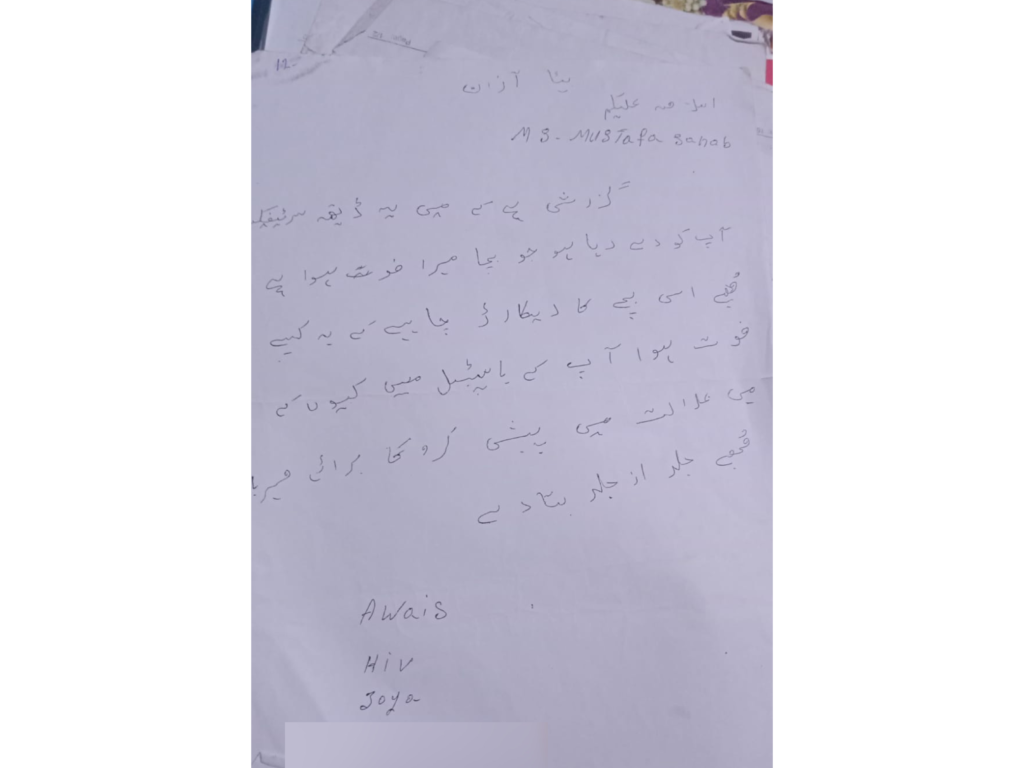
Awais says he was evicted from his rented accommodation and lost his job, following his children’s diagnosis.
“I was fired from my job saying that I have HIV. When I went back to rejoin, they [his employers] told me that they would not let me enter if I were ever diagnosed with HIV. I showed them my reports.”
Awais, parent
He also claims he had to take several leaves from his job for Zoya’s hospital visits, which was another reason why the company asked him to leave.
Even though he has shared his medical reports with his employer, Awais is yet to rejoin his workplace.
“There are no earning members in the family at present, my younger brother has a part-time job where he earns PKR 15,000-20,000 (USD 54- 72) per month,” he says.
The struggles for families do not end with the financial burden and hospital visits.
After Zoya’s diagnosis, her school did not allow her to attend classes because they feared more children would become infected, Awais claims.
Awais later took Zoya back to her school after learning HIV cannot be transmitted through physical contact. However, he says that the school refused to let her sit for examinations, but said that they will promote her.
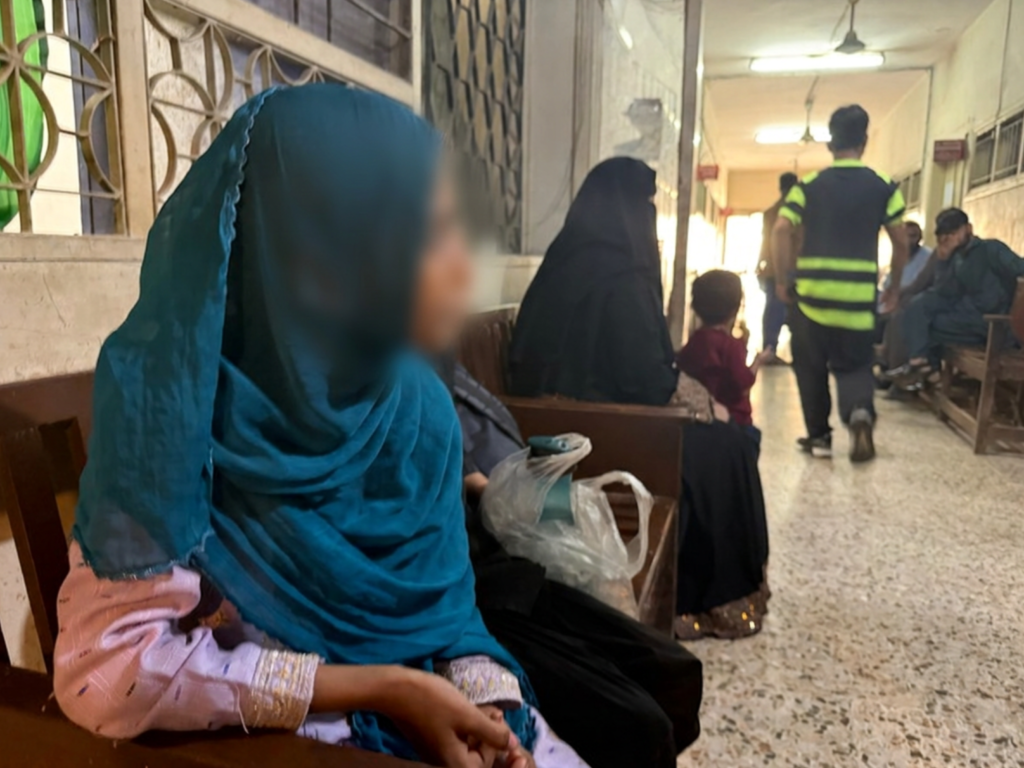
Speaking to Asian Dispatch, Aziz Ansari, principal, Kada Government Primary/Secondary School, said, “According to our information, no student has been permanently expelled by the school on the basis of an HIV diagnosis or the incident of being affected at Valika Bai Hospital. If any administrative matter related to a student’s attendance or admission arose, it was dealt with only in accordance with the instructions of the relevant authorities and the circumstances, and not on the basis of illness.”
Aftab and Aisha say that their two eldest children faced a similar situation. Aftab says that the children were expelled from a private school in December 2025, citing their HIV diagnosis. The school has now shut down.
Their children also attend the Khalid Bin Waleed Madrassa and Aisha says that the madrassa also told them to not send their children because of their infection. The family was asked to furnish a written document from a doctor confirming that HIV could not be transmitted by sitting together.
Even after providing the confirmation, Aisha says that her children are being treated differently.
While the madrassa’s head Maulana Amir Saeed confirmed that the children were being made to sit separately inside the classroom, he denied expelling them.
Psychologists say that such exclusions often discourage children from participating in education and recreational activities that are essential for their development.
Bilal Arif, psychologist and pre-doctoral research fellow at the Pakistan Institute of Living and Learning, said, “This can result in long-term emotional difficulties, including chronic anxiety, depression, social withdrawal, poor self-worth and difficulty trusting others.”
Seeking Justice in Court
Human rights lawyer Mansoor Tariq took cognisance of the news reports talking about increasing HIV cases at the KBV hospital that began surfacing in August 2025.
Initially, Tariq had sent a legal notice on March 31, 2026 to the relevant authorities including the Pakistani Prime Minister’s Office. He received a reply from the secretary labour, Government of Sindh, where the commissioner was directed to file a comprehensive report.
After receiving no update till May 15, 2026, Tariq filed a petition before the Sindh High Court stating that a law regulating the disposal and use of syringes passed in 2010, was still not being implemented on the ground.
On July 2, 2026, the lawyer submitted a preliminary list of around 78 children along with their test reports to the court. He sought an immediate inquiry report and necessary action from the inspector general Sindh and the secretary, Government of Sindh.
“The fundamental rights of these children have been seriously infringed and till date there has been no action, they are not given equal treatment, no rehabilitation, and culprits have not been penalised till date and no inquiry report has been shared,” Tariq says.
Raids conducted in April 2026 found that banned reusable syringes remained available in the markets in Pakistan. Some of them were also falsely branded as ‘auto-disable’.
What Steps Has the Hospital & Govt Taken?
In July 2026, the SESSI approved the constitution of a PKR 2 billion endowment fund (USD 7.2 million) for the treatment of children affected by HIV.
The provincial authorities suspended around 37 employees working at the hospital. Their names were specifically mentioned in the second inquiry committee report. Previously, show-cause notices were issued to 10 individuals in connection with the outbreak in November 2025.
The Need To Adopt Safe Measures & Promote Awareness
Dr. Muneeba Ahsaan Sayeed, head of department, Sindh Infectious Diseases Hospital and Research Center (SIDHRC) and Adult ART, told Asian Dispatch that the rising HIV cases among children in Pakistan were partly linked to unsafe medication administration practices, which included use of same syringe, unscreened blood transfusions, and use of instruments, which aren’t properly sterilised.
She stressed on the need for the implementation of proper infection prevention and control policies.
“It’s very important that all healthcare facilities get allocated a budget for Infection Prevention and Control (IPC). Training and education is equally important…There has to be a monitoring and evaluation system in place, be it from the Sindh Healthcare Commission or the health department.”
Dr. Muneeba Ahsaan Sayeed, Head of Department, Sindh Infectious Diseases Hospital and Research Center (SIDHRC) and Adult ART
She mentioned that the old mindset about how HIV is transmitted has to change. Dr. Sayeed highlighted the need for promoting community awareness and informing people about the different ways HIV can be transmitted.
Arif, too, says that schools and communities play a vital role in fostering a safe and inclusive environment. “Teachers should be educated about HIV transmission and children’s rights so they can prevent bullying and discrimination. Community leaders, healthcare professionals, and the media should promote accurate information that HIV cannot be spread through everyday social contact. Inclusive policies and supportive attitudes help children develop confidence, maintain school attendance, and participate fully in society,” he says.
The children are currently on antiretroviral treatment, however, their deteriorating health is difficult for parents to cope up with. Aisha says, “Day by day, they are weakening. Whenever I look at them, my heart breaks. Where did the health of my children go?”