

On the way to Kheri Naru, a village approximately 14 kilometres from Karnal city in the North Indian state of Haryana, vast, lush green agricultural fields stretch as far as one can see. On the narrow road leading to the village, no youngsters can be seen. The sound of chirping birds and the occasional motorbikes break the calm.
But glimpses of elderly men lingering on corners, and women walking through crop lands and lanes remain.
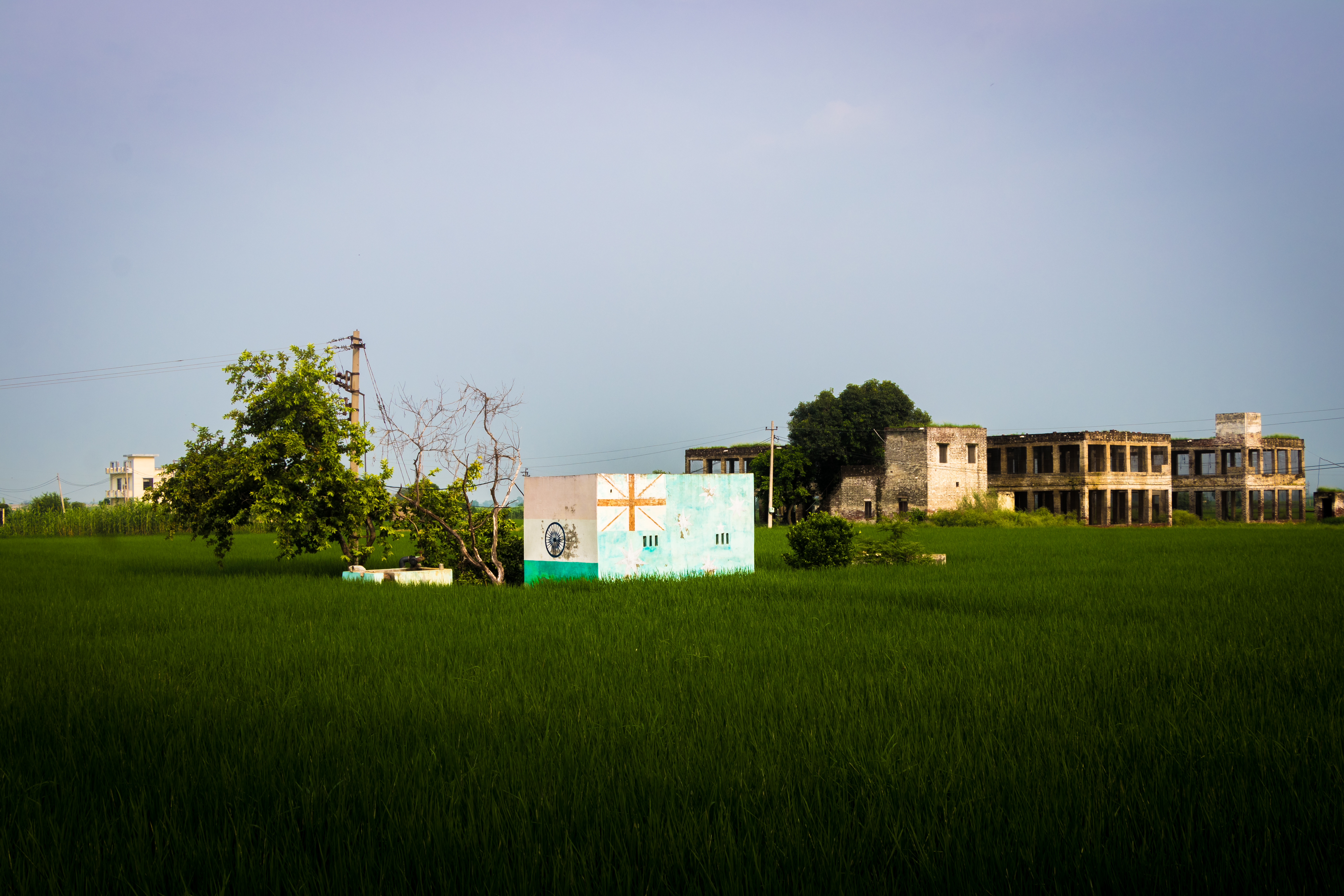
In the middle of the fields by the roadside stands a kothri (locker room), painted with Indian and Australian flags, symbolising a transition in the younger generation’s perspective towards their future. The youth that once dreamt of joining the armed forces or excelling in sports, today aspire to fly abroad.
The unemployment rate in Haryana was at 6.2 percent, above the national average at 5.2 percent, for the July-September 2025 quarter, according to the Periodic Labour Force Survey (PLFS). The consecutive state governments have not been able to create long-term opportunities for the young people, prompting many to seek opportunities beyond the borders of their country.
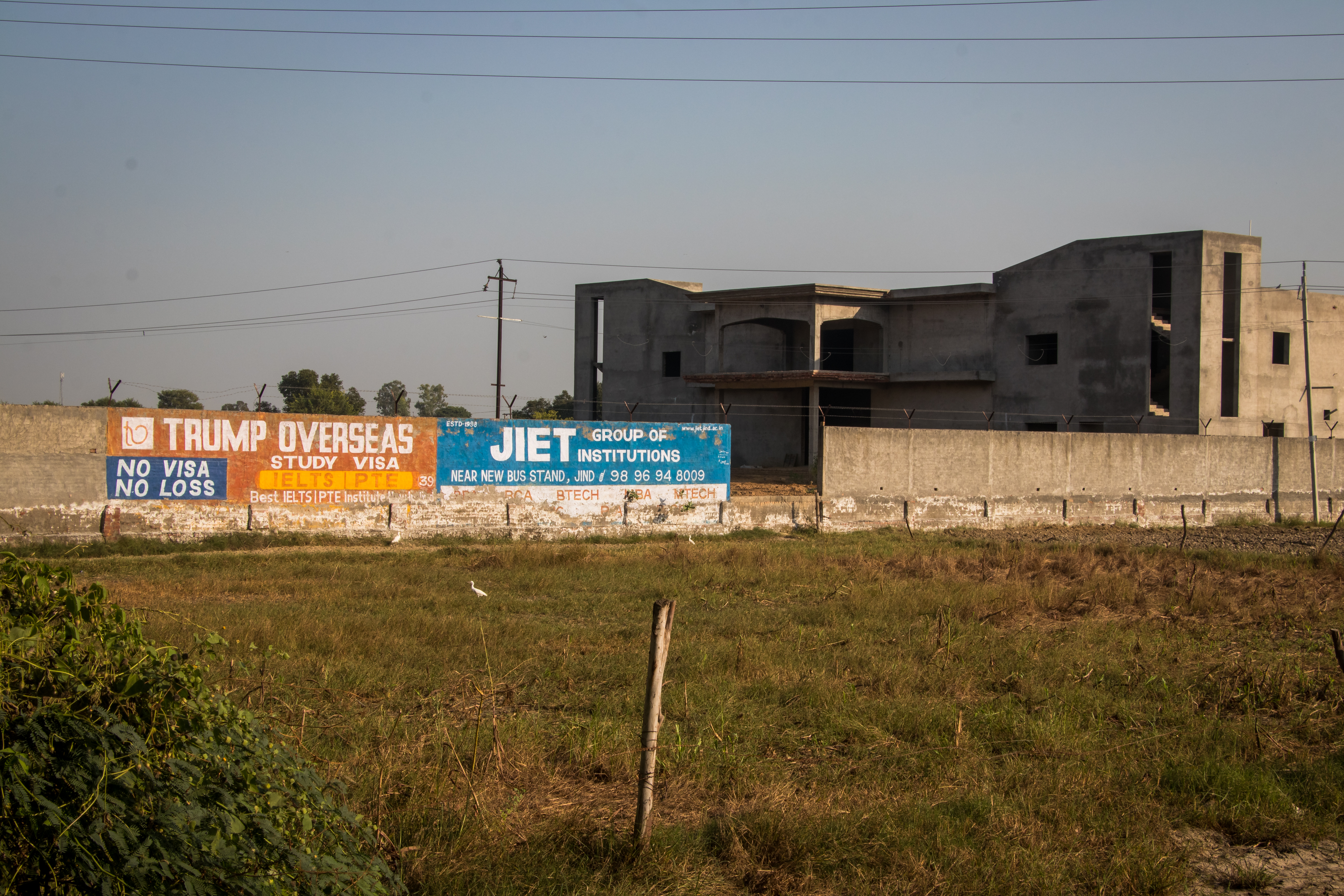
Mirroring a trend of foreign migration in the neighbouring Punjab, youth from Haryana are increasingly taking the illegal “dunki” (local pronunciation of the word donkey) route to travel abroad.
According to data presented in the Parliament by the Ministry of External Affairs, as on January 1, 2025, nearly 18.8 lakh students from India were studying across 153 foreign countries. While the state specific numbers were not presented, this shows the number of students who travelled abroad legally; the illegal immigration numbers remain undocumented.
In the most recent deportation carried out by the Trump administration in October 2025, 50 of the 54 deportees were from Haryana.
Of the 1,703 individuals deported between 20 January and 22 July 2025, 620 were from Punjab, followed by 604 from Haryana. Locals told Asian Dispatch that the families and youth are investing between Rs. 40-50 lakhs (USD 45,107-56,384) to reach the U.S. through unauthorised and illegal means.
Broken Aspirations
Sitting on a sofa at his friend’s house in Kheri Naru, 27-year-old Amit Sharma* remembered the good old days when his village echoed with the laughter and energy of its youth.
With a gleam of nostalgia and enthusiasm in his eyes, he speaks of how he used to train relentlessly to join the armed forces. From running miles across open fields to spirited games of kabaddi, his days were filled with hope, discipline, and a sense of camaraderie.
Born into a lower middle class joint family, he grew up believing that perseverance and hard work were the only ways to rise above the financial hardships his family had long endured.
“There was a passion among the youth back then,” he recalled with pride. “Almost every teenager would join us on the ground. Watching elders run and exercise inspired us all. We shared one dream: to wear the uniform, to serve in the army or police like our brothers. A government job meant respect and reputation in the village and the chance to do something meaningful for our families.”
After several failed attempts, Sharma’s hopes of joining the army ended when he crossed the age limit (21 years) in 2018. To support his family, he became a computer operator at a local printing company. But as his own dreams faded, his younger brother Divanshu Sharma* began preparing to join the armed forces.
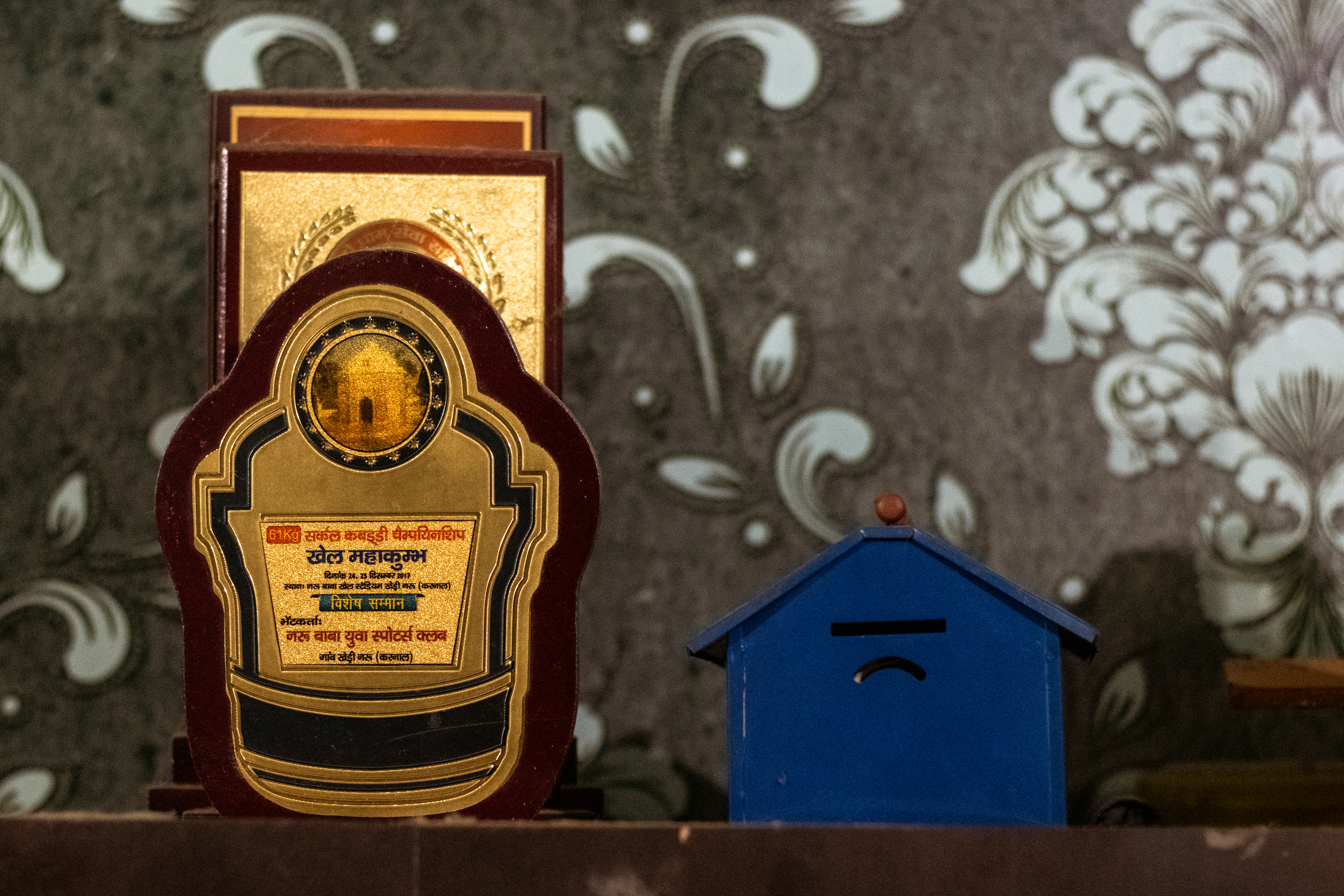
A state-level kabaddi player and a bright student like his elder brother, in 2020 Divanshu cleared the physical tests several times but consistently fell short in the written exams.
Divanshu still had age on his side. But in 2020, the COVID-19 pandemic abruptly halted everything and changed the course of his life completely. Despite losing two years to the pandemic, Divanshu was once again ready to give his all for what would have been his last chance to join the army.
But his dreams came crashing down as the Union government announced the Agnipath scheme in June 2022. For Divanshu it wasn’t merely a policy change, it was the collapse of years of hard work and a long-fought dream that had defined his youth.
Announced by the Ministry of Defence on 15 June 2022, under the Agnipath scheme, individuals (male and female) aged between 17.5 and 21 years are eligible to be recruited into the tri services — the Army, Navy, and Air Force — for four years, below the officer’s rank. After the completion of this tenure, 25 percent of each batch would be eligible for continued service in the regular cadre, while the remaining 75 percent will exit, receiving a lump sum amount with no pension and further government benefits. This announcement led to widespread frustration among aspirants who had viewed the armed forces as a stable career offering long-term engagement and assured benefits. As soon as the scheme was introduced, it was met with massive protests across India, along with petitions demanding the resumption of cancelled or pending recruitments under the previous system.
“Divanshu’s aspirations were broken, but we were still hopeful. Moreover, he was deeply affected by it, which made him think about going abroad ultimately,” said Sharma, recalling how his brother, who had never imagined leaving his family and country, began considering moving to the U.S.
Initially, Divanshu attempted to proceed legally. After passing the International English Language Testing System (IELTS) proficiency test, he applied to a college in Poland to pursue higher studies. However, his admission letter was delayed due to issues with his vaccination record—the college required three doses, whereas Divanshu had only two, in line with India’s policy in 2022.
Frustrated by bureaucratic hurdles on one hand and seeing his peers successfully making their way to the United States illegally on the other, Divanshu decided to move to the U.S. illegally.
In November 2022, he embarked on his journey. After two failed attempts, he eventually crossed into the U.S. through the Mexico border in 2025, leaving his family burdened with a debt of Rs 35 lakh (USD 39,468) borrowed from relatives.
Those days were full of struggle. Our family was worried for my brother’s safety. There were times when we wouldn’t hear from him for days. At the same time, we had to reassure our relatives that we would return their money once he would reach his destination. – Amit Sharma
Sharma steadies his emotions, “Now things are better,” he added, “The loans have been paid, and most importantly, my brother is happy. He is doing well. The sacrifices we made were worth it.”
Twenty seven-year-old Ankur Narwal*, who trained for the army alongside Sharma, shared his younger brother’s story.
With nearly a decade’s age gap between him and his youngest brother, Narwal points to the massive social and cultural changes sweeping through villages due to the influx of money from foreign migration. This sudden prosperity, he said, has fuelled a rise in drug use, crime, and violence, eroding the traditional social fabric of village life.
“Social media and songs have a huge effect on today’s youth, who are easily swayed by what they see online,” said Narwal.
In 2022, Ankur’s younger brother, Navneet*, 14, fell into bad company, which deeply worried the family, especially their elderly father. Growing up in an agricultural household with a sizable landholding of 10 acres, he was expected to live a peaceful life with his family.
However, his frequent mischiefs and fights became a growing concern, prompting their father to find a way to distance Navneet from the rest of the family so his behaviour wouldn’t affect the others.
“I had intended that both of us would either farm here or take up a government job. Otherwise, we could have started our own business. We could have lived a good life, but given the situation my father had to make a decision,” explained Narwal, recollecting how his father decided to send their youngest son far away to a foreign land.
Narwal had disagreed with his father’s decision and suggested waiting until Navneet turned 18, but his objections were overruled as his father’s deteriorating health became a cause of concern for the family.
Moreover, the popular belief that sending a child abroad could transform even the most wayward youth into a responsible adult, overpowered the minds of his family members.
“The entire village convinced my father that if my brother was like this, the only solution was to send him abroad. And when the whole village thinks that way, it becomes everyone’s belief, including my family’s,” he added, noting the social pressure that impacted their decision.
Navneet went to the United States in 2022 at just the age of 14 through an illegal route. To fund his passage, the family sold one acre of their land for Rs. 30 lakh (USD 33,830) and borrowed another Rs. 10 lakh (USD 11,276) from an aadhti (grain commission agent) to support his journey.
Believing this to be a solution for the greater good of the family, Narwal and his family looked forward to Navneet’s stable future. However, fate had other plans. While Navneet was midway through his journey, their father was suddenly diagnosed with cancer.
“We concealed my brother’s two mid-journey setbacks [indefinite halts by agents due to border security] from our father. But once our father found out, it impacted him gravely,” Narwal said. “We spent Rs. 10–12 lakh (USD 11,304-13,565) on his treatment. But despite everything, our father passed away on May 17, 2024.”
His words reflect his worry for his brother far away and the decline of his father who held them together.
After a long period of grief, Narwal’s family slowly began to recover when Navneet finally reached the United States in March 2025, after a grueling two-year journey.
Now an adult, Navneet has taken on the responsibility of supporting his family. Standing in his brother’s room, Narwal speaks of this transformation with visible relief.

“Our financial situation became fragile. There were days we survived only on chutney (a kind of Indian sauce) and roti (Indian flatbread). When he reached, it took him some time to adjust, but something positive happened. He realised that in a foreign land, there would be no one to stand by him or save him. He is alone, left to confront and correct his own behaviour and habits.”
While Divanshu and Navneet made it to the United States, many others were not as fortunate.
The American Dream
Sumit, 24, who fought hard to reach his destination, had to return home after being caught in a vicious cycle for three years. Watching fireworks light up a terrace just a 100 yards away from his own, Sumit feels a quiet sense of defeat, wondering if he will ever get the chance to soar through the sky toward the land of his dreams.

Three years ago, after Sumit cleared his senior secondary exams he heard about the dunki route and unfortunately got pulled into the world of quick money and a flamboyant lifestyle.
Full of curiosity, he was captivated by the American dream, especially after seeing almost all his neighbours heading abroad, unsurprisingly, many through the dunki route.
Sumit’s father, Subhash Verma, who earlier owned a jewellery business and a car travel agency, now drives a rented car. The family lost all its investments and assets to support Sumit’s journey.
“I have seen many people travel abroad and some of my friends’ sons have also gone abroad through dunki. They told me that everything is safe and there’s nothing to worry about. With that assurance, I gained confidence in my son’s decision and I met an agent who had come to an acquaintance’s house,” says Verma, 48, who reluctantly agreed to send his son abroad through the dunki route.
The deal was made with the condition that no money would be paid to the agent until Sumit reached the Mexico border.
But things didn’t go as planned.
As soon as Sumit left for Kenya, the agent demanded Rs. 5 lakh (USD 5,572). After a few days, he again asked for the same amount but this time to be handed over in Jaipur [the capital city of the North Indian state of Rajasthan]. I went there and paid, hoping my child would be safe. Later, when Sumit got stuck in Kazakhastan, the agent demanded another Rs. 5 lakh as ‘show money’, which I had to borrow from my boss at work. Then he asked for Rs. 1.25 lakh (USD 1,413) more which I paid. After that, my son’s passport was taken in Ethiopia, and I suddenly had to send another Rs 1.50 lakh (USD 1,670). Wherever he sent my child, he demanded money and I had no choice but to comply. – Subhash Verma

The demand for money never stopped and Sumit never made it to the Mexico border.
“My child was stuck in a room for 17 days. He was unable to go out because his visa had expired and was unable to communicate with anyone. He had to survive by eating banana peels. One day, he gathered the courage to escape, where he met some people from Gujarat who recognised him as one of their own from India and offered him shelter. Through them, he called me and told me everything. I then got his visa renewed and paid the fine required for him to travel through the airport. Only then I was able to bring him back,” explained Verma, describing how he managed to rescue his son from Egypt after nearly three years of wandering across India and abroad.
Sumit, who had left home in January 2022, finally returned in November 2024, exhausted, disillusioned, and carrying the weight of an ordeal that had upended his youth.
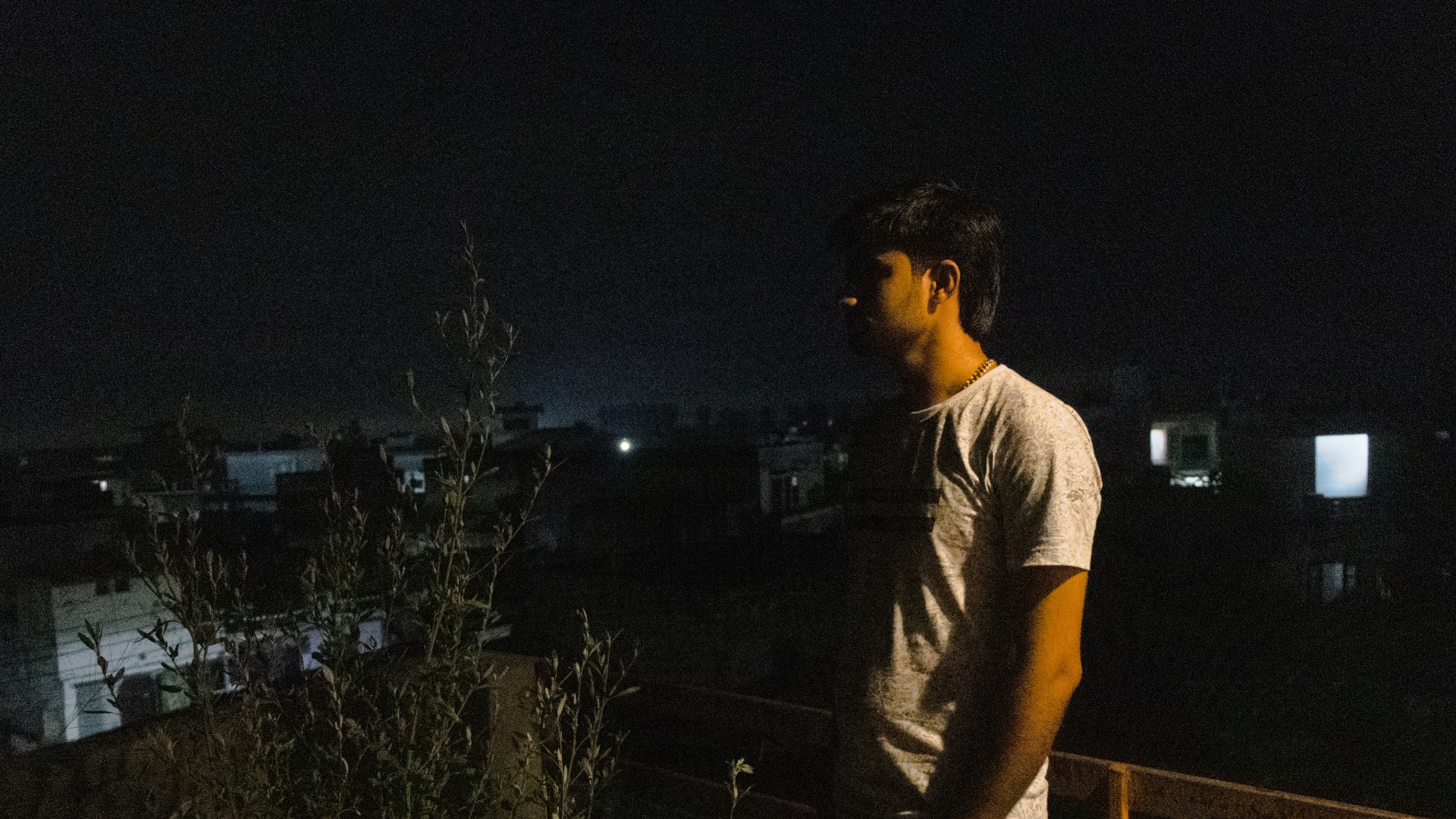
Sumit’s family lost Rs. 32 lakh (USD 35,641), including two plots worth Rs. 44 lakh (48,995.67 USD), sold for merely Rs. 18 lakh (USD 20,047.09), seven kilograms of silver, and two cars sold at a meagre price, all to meet the agent’s relentless demands.
Verma is now left trying to piece together the remnants of his lost capital and time. But he is thankful that his son has returned.
Earlier, in 2020, a special high-risk charter mission conducted by the U.S. Immigration and Customs Enforcement (ICE) had repatriated 132 undocumented migrants from Haryana and Punjab, of whom 76 were from Haryana.
In March 2025, the government of Haryana introduced the “Haryana Registration and Regulation of Travel Agents Bill” to regulate the travel consultants facilitating youth abroad. However, cases of illegal migration and scams continue to persist in the state.
*****
Dhatrath is another village in Haryana’s Jind district that stands out for illegal migration. Sprawling over 2,087 hectares along Safidon Road, the large village wears a deserted look.
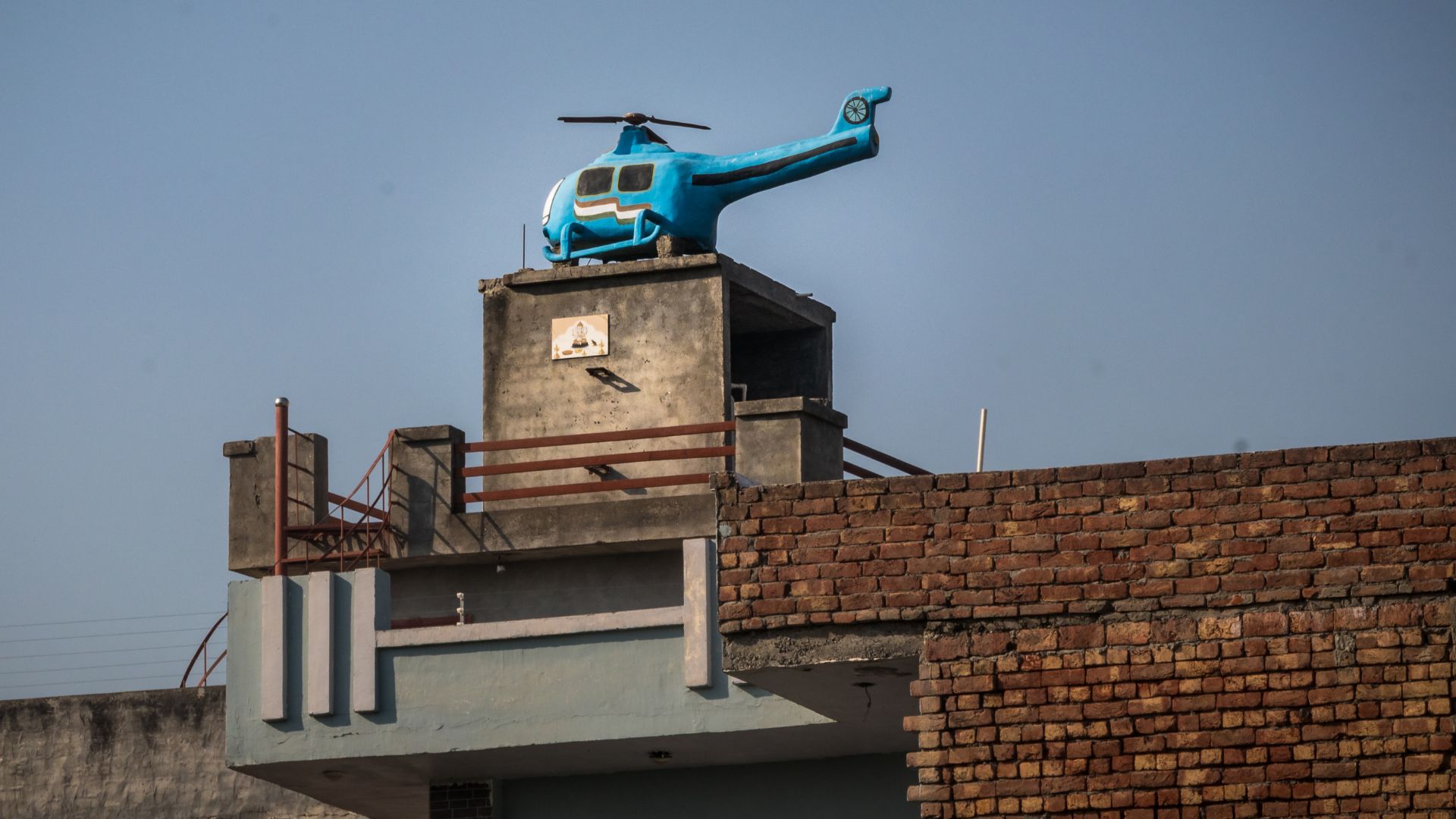
Grand mansions have risen amid vast fields, each with distinct designs and symbols, silent testaments to the success stories of those who made it to the West. Yet, what remains scarce are people.
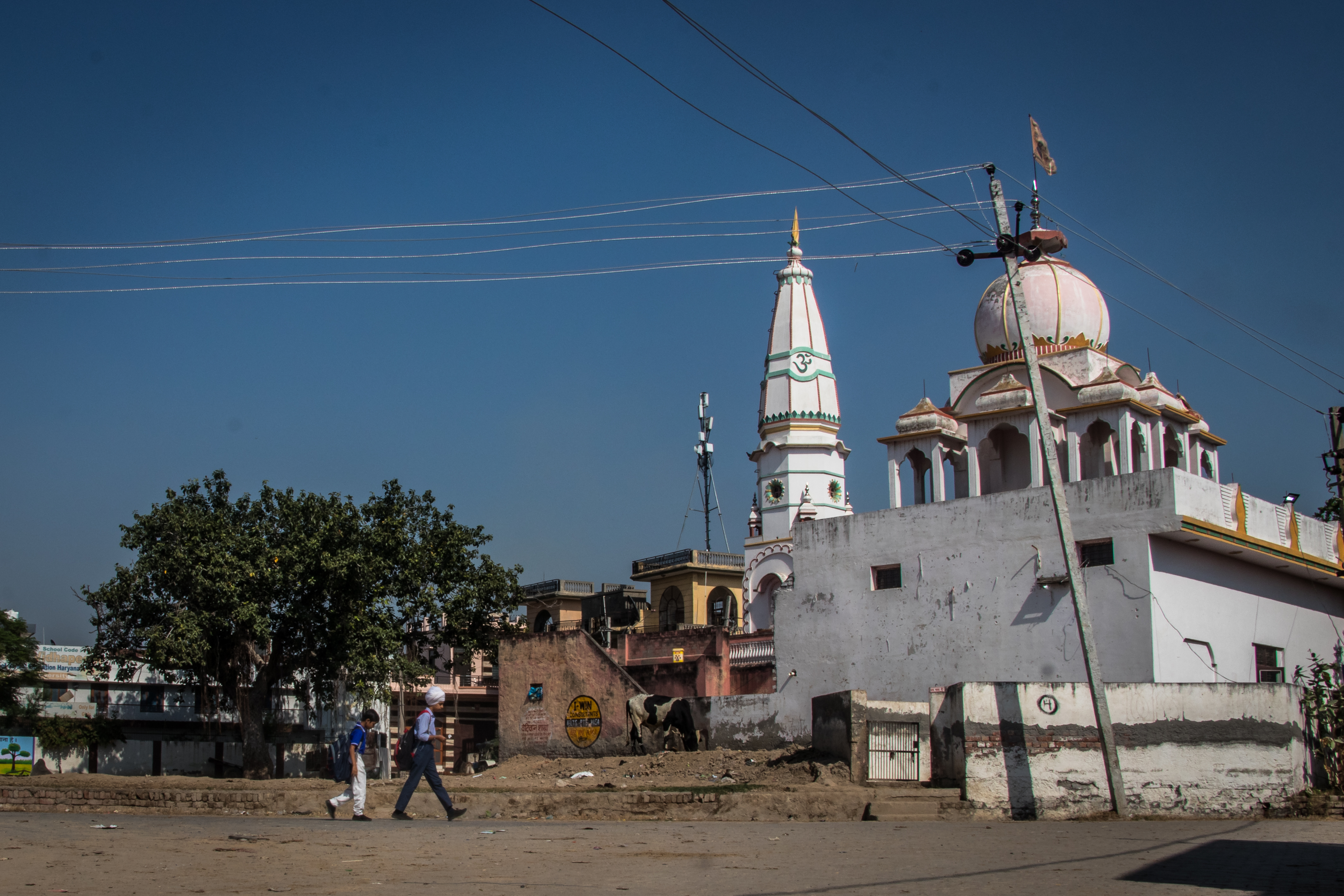
Twenty one-year old Nainpreet Kaur* is one of the few young residents left in Dhatrath. She is currently pursuing B.A. at a government college but has already made up her mind to move abroad.
Kaur lives with her mother and younger brother. Due to financial constraints and responsibilities, she had always dreamt of becoming a school teacher as it seemed like a stable and a respectable career option. However, the discontinuation of the JBT (Junior Basic Training)/D.El.Ed (Diploma in Elementary Education) course from the 2023-2025 academic year broke her hopes of becoming a teacher in her own state.
“I don’t see a future or any good opportunity to become one [a teacher] here as there are no vacancies and corruption is at its peak. That’s why I need to look for opportunities elsewhere,” said Kaur, expressing her disappointment with Haryana’s education system. “My friends who have gone abroad tell me about a better life. I also have to take care of my family, and we don’t have any assets to depend on for long.”
When asked whether she would choose the legal way or the dunki route, she paused and said, “I haven’t thought about it yet. But I would take the legal route first; the rest, time will tell.”
According to a BBC Hindi report, out of Dhatrath’s total population of 12,000, more than 1,000 young people have left the village, raising questions about the future of a village that appears transformed from the outside but feels hollow inside.
Those Who Decided to Stay
Some young individuals who remain rooted in their homeland worry about the dire situation unfolding around them.
Govind Dhiman, 26, a native of Dhatrath, set up his own digital marketing company after finishing studies. In 2025, he shifted his base from Karnal to his village, envisioning a future where he could empower local youth by sharing his skills and creating employment opportunities. But to his dismay, not a single young person from his village was interested in working at his digital marketing agency.
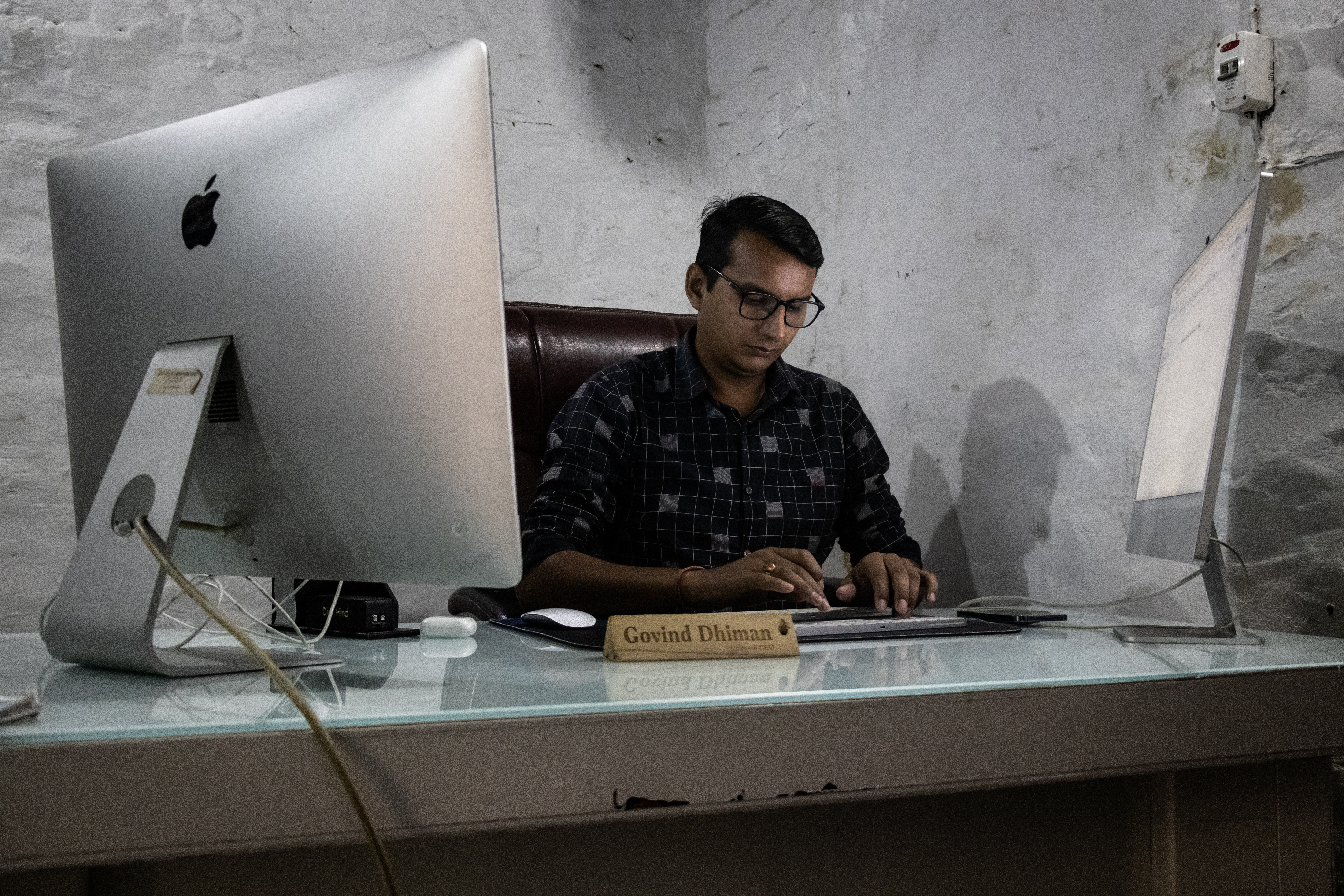
“There is no counselling here because no one has ever focused on building a foundation for the youth in their formative years. Even when resources exist, everyone aspires to go abroad, simply because others have done so,” said Dhiman.
“It is also the mindset within the village setup that discourages young people from pursuing their own career paths. If someone tries to build something here, they are dismissed. But when people go abroad and do the same kind of work, they are praised and celebrated,” he added.
Pointing toward a nearby neighbourhood, Dhiman notes that no marriage has taken place here in the past two years as all the young men and women of marriageable age have already migrated abroad.
For years, the West has sought a cheap labour force from the East, and states such as Haryana, Punjab, and Gujarat have become fertile grounds for this migration.
Dr. Lakhwinder Singh, professor of economics at the Thapar School of Liberal Arts & Sciences in Patiala, Punjab, believes that one of the reasons behind migrations is lack of good quality job opportunities for youth in their country.
As Haryana has emerged as the number one state in India in terms of per capita income, it has raised the expectations of its youth. When these expectations are not met, young people take desperate steps to move toward places where they believe their dreams can be fulfilled. The growing concentration of income and wealth in a few hands, coupled with the declining working and living conditions of the majority, compels youth to look for alternatives elsewhere. – Dr. Lakhwinder Singh, Professor of Economics, Thapar School of Liberal Arts & Sciences
Focusing on the need to improve the conditions of employment, he suggested, “Regulation of the private sector and improving security of jobs with possibilities of upward mobility are basic and immediate policy steps may be taken by the government. Public jobs are a benchmark and it should be compulsory for the private sector to follow. A substantial institutional change such as improving education and health facilities can be a step in the right direction. Reversing adverse terms of trade between agriculture and industry and linking agriculture with agro-processing not through the corporates but through the cooperative sector may help to retain youth with remunerative options.”
However, he emphasised that migration is “an essential part of the modern development process” and it is expected to continue in desired directions.
“Various countries are facing skill shortages and therefore are making immigration laws to selectively allow immigration in skill shortage areas. In general human capital in the aging countries is short in supply so migration is the only source to fill the gaps,” he said.
Haryana continues to move, its villages and towns breathing out aspirations that seem to hang in the air like oxygen for its restless youth. But beneath these dreams runs a quiet ache: the lack of opportunities at home and the rising ambitions of a generation that no longer wants to inherit resignation. But the dreams that once felt liberating, weigh heavily with longing, as hope and fear travel together across oceans.
For Divanshu and Nainpreet this journey is for social mobility, for Navneet’s family it’s a hope for transformation, and for Sumit it is about following a dream that refuses to fade.