
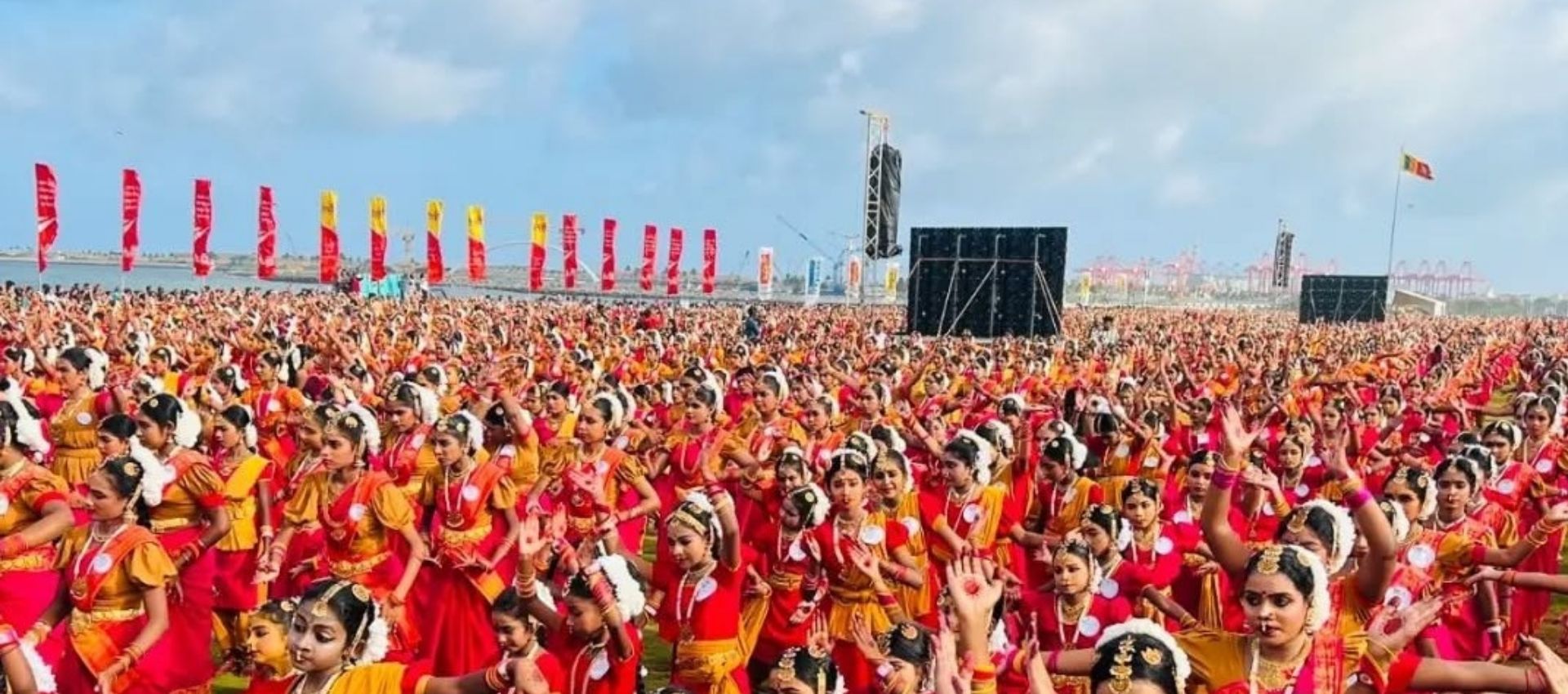
What was promoted as a landmark cultural celebration that brought together nearly 5,000 Bharatanatyam dancers at Colombo’s Galle Face Green has now become the subject of a sweeping complaint alleging possible financial irregularities, abuse of public office, and misuse of government influence.
A complaint filed with the Commission to Investigate Allegations of Bribery or Corruption (CIABOC) calls for a comprehensive investigation into the organisation, financing, and administration of the “Sangamam 2026” Guinness World Record event held on June 14.
The event organised by a private entity, Sangamizh Liya Holidays in collaboration with Sangamam Global Academy saw 4,988 dancers successfully set a new Guinness World Record for the largest Bharatanatyam dance lesson.
The complaint asks investigators to determine whether the event involved violations of Sri Lanka’s Anti-Corruption Act, including the alleged misuse of public office, financial irregularities, conflicts of interest, or other unlawful conduct.
Complaints From Parents, Teachers
The complaint was filed by Rajkumar Rajeevkanth, an activist affiliated to the People’s Struggle Alliance, who said he was prompted to act after receiving numerous complaints from parents and Bharatanatyam teachers across the country.
According to Rajeevkanth, many teachers declined to speak publicly because they feared repercussions.
“I received numerous complaints from parents and teachers. Most of them were from Eastern province and Malaiyaha community and were unwilling to disclose their identities because they feared the consequences,” he said.
After reviewing payment records, participant communications, and other documents, Rajeevkanth said he began questioning both the financial arrangements behind the event and the role played by government officials.
Minister’s Role Questioned
Central to the complaint are public statements made by Sundaralingam Pradeep, deputy minister of plantation and community infrastructure, on his official Facebook page.
According to the complaint, the deputy minister has stated that he initiated the program after discussions during an official visit to India, that the event was organised under his guidance and advice, and that he received the official Guinness World Record certificate following the event.
Rajeevkanth argues these statements warrant scrutiny into whether government influence or official resources were used in support of what he describes as a privately organised commercial venture.
He also questions why organisers with Indian links were selected to spearhead the initiative when, he says, Sri Lanka possesses the expertise, teachers, and infrastructure to organise a similar event independently.
“We have the teachers, the students, and all the necessary resources in Sri Lanka. My question is why a private company from India was brought in to organise an event that could have been conducted locally,” he said.
Millions Collected From Participants
The complaint alleges that organizers recruited more than 100 Bharatanatyam teachers, encouraging each to bring between 10 and 15 students, eventually assembling approximately 5,000 performers.
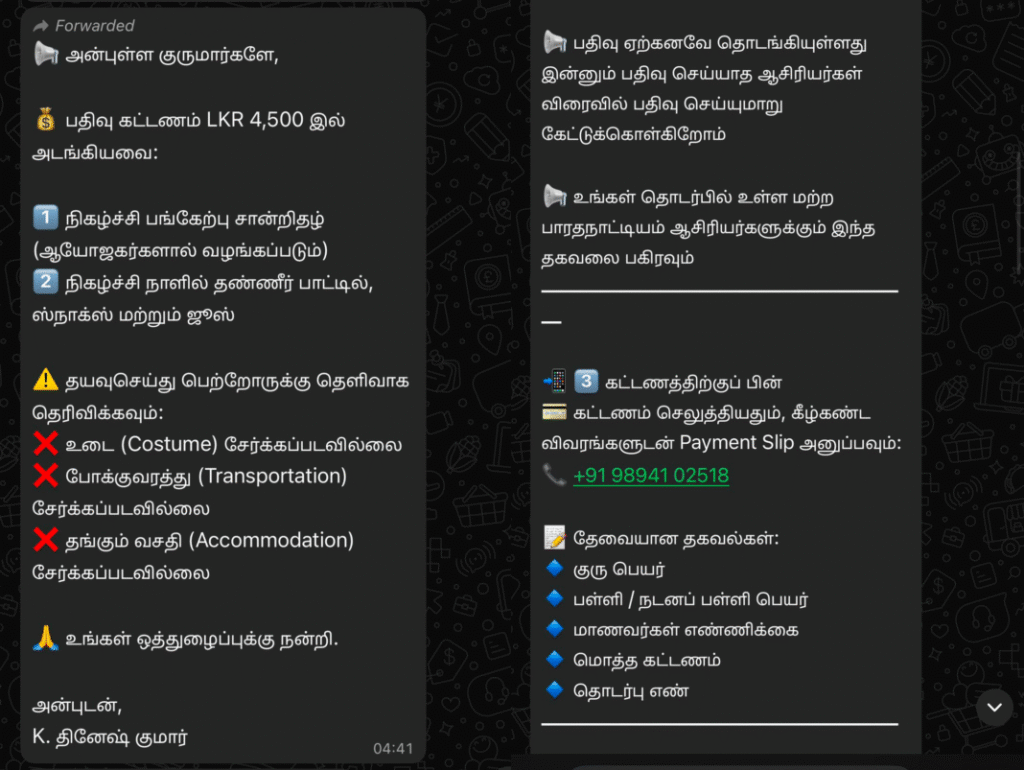
According to the complaint, participants paid registration fees ranging from USD 13.40 to USD 18.
Families were also responsible for purchasing costumes and jewelry, paying for transport, accommodation, and rehearsals, meaning the overall cost per participant was significantly higher than the registration fee alone.
Rajeevkanth estimates organisers collected between USD 60000 – USD 74000 through registration fees alone.
“The students, teachers and parents bore almost every expense themselves. They paid the registration fee, purchased costumes, arranged transport and accommodation, and participated in the performance, yet the official Guinness World Record recognition was issued to private organisations rather than to the participants,” he alleged.
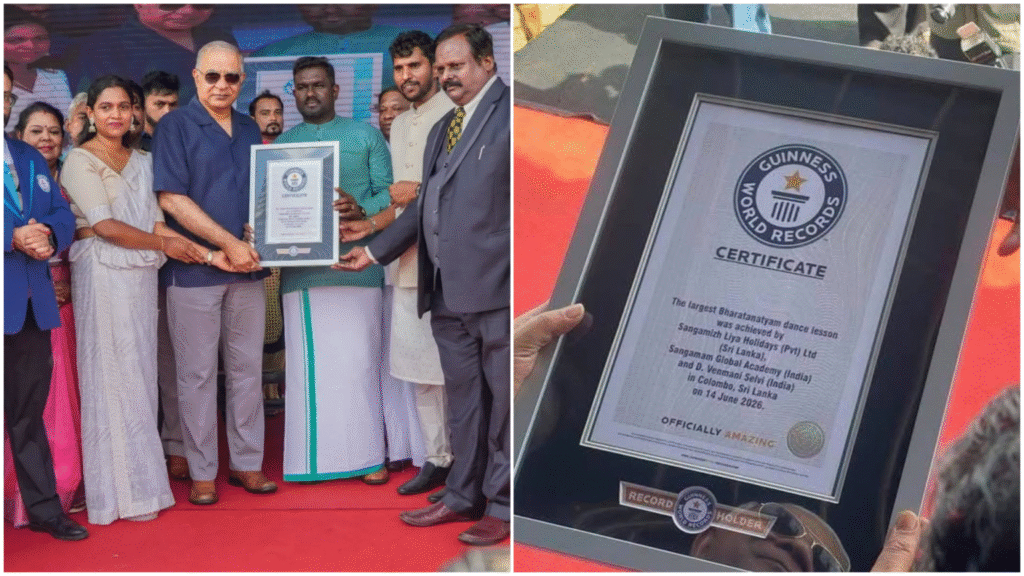
The Guinness World Record states, “The largest Bharatanatyam dance lesson consists of 4,988 participants and was achieved by Sangamizh Liya Holidays (Pvt) Ltd (Sri Lanka), Sangamam Global Academy (India), D. Venmani Selvi (India), and Bharatanatyam teachers and students in Colombo, Sri Lanka on 14 June 2026.”
The complaint asks investigators to determine how much money was collected, who controlled the funds, whether proper accounting records exist, and whether any public officials directly or indirectly benefited.
Private Bank Account, Additional Charges
Another allegation centers on how participant payments were handled.
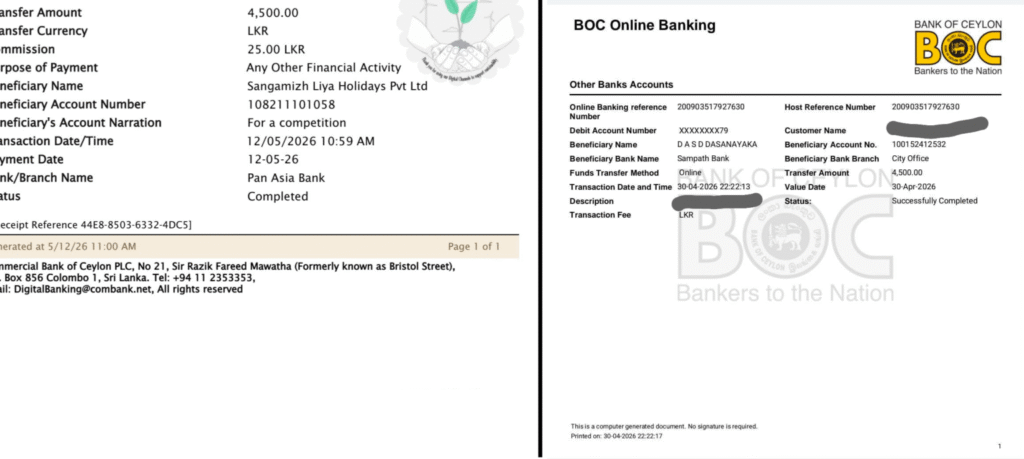
The complaint claims registration fees were deposited into a private bank account instead of an official government account. It asks investigators to determine who controlled the account, whether the collections complied with taxation and financial reporting requirements, and whether any public officials facilitated the arrangement.
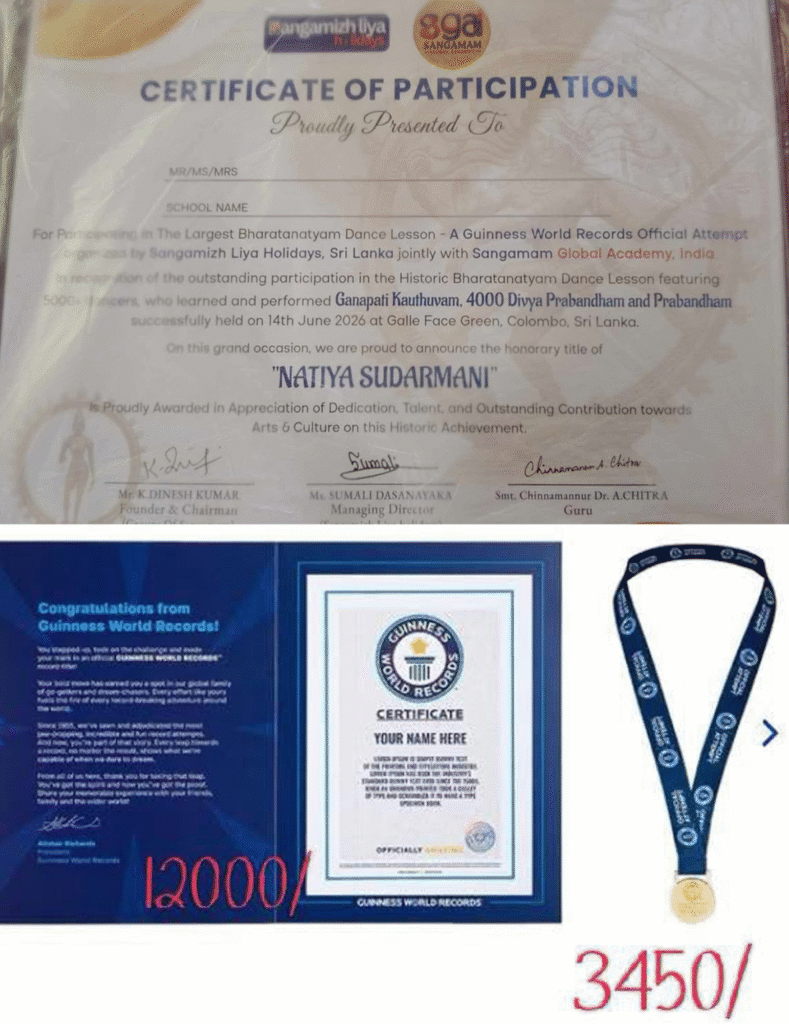
Rajeevkanth also alleges participants were later asked to make additional payments to obtain medals, participation certificates, framed certificates, and other Guinness-related memorabilia.
The complaint asks whether these additional costs were disclosed before registration and whether the collections were lawful.
Guinness Recognition Questioned
The complaint also questions how the Guinness World Record recognition was ultimately awarded.
According to the complaint, the official certificate recognises Sangamizh Liya Holidays (Pvt) Ltd of Sri Lanka, Sangamam Global Academy of India, and D. Vennmani Selvi of India as the record holders.
Rajeevkanth argues that despite thousands of Sri Lankan students and teachers participating in the performance—and bearing much of the financial burden—they were not recognised on the official certificate.
The complaint seeks an investigation into any agreements between the organisers and these entities, ownership of any commercial rights arising from the record, and whether participants were informed beforehand that the recognition would be issued in those names.
Call for a Financial Investigation
Among other requests, the complaint asks CIABOC to obtain bank records relating to participant payments, examine agreements involving organisers, government institutions and foreign organizations, determine whether public resources were used, and investigate whether any offenses under the Anti-Corruption Act or other applicable laws may have been committed.
Rajeevkanth said he has submitted payment slips, participant communications, official announcements, photographs, and copies of the Guinness World Record certificate to support his allegations.
“I believe this amount to a serious deception. This is not how an event involving thousands of children should have been organized,” he said.