
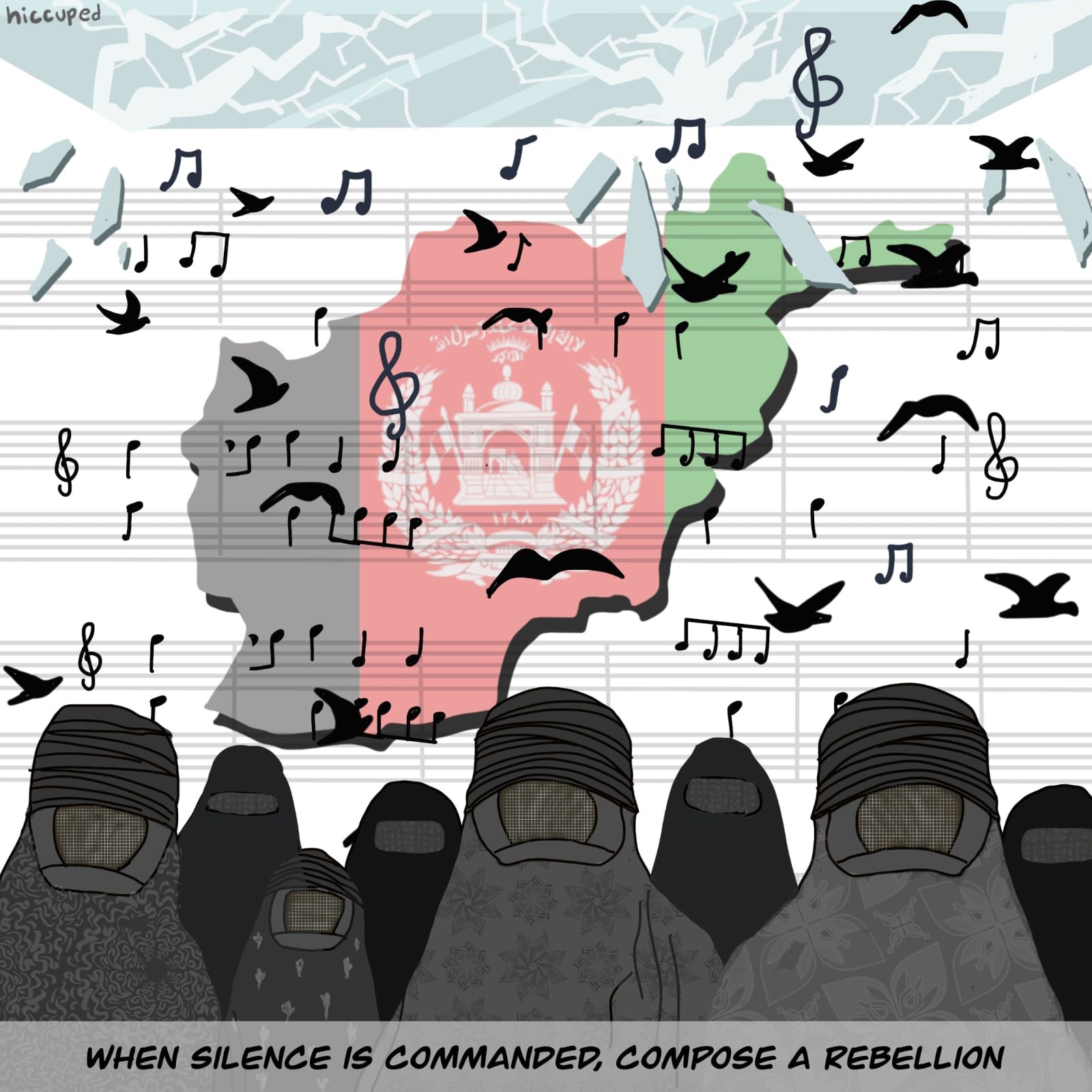
Early this week, Hollywood actor Meryl Streep called out the Taliban at the UN headquarters in New York, accusing their government of allowing more rights to “cats” and “squirrels” than women and girls in Afghanistan. The Taliban took great offense at this comment and said they “highly respected” women and would “never compare them to cats.” But one only needs to look at Afghanistan’s current government’s “morality laws”, the first such law to be codified ever since the armed militia took control over the country in August 2021, to understand which statement is closer to reality.
The 114-page code, published by the Ministry of Propagation of Virtue, Prevention of Vice and Hearing Complaints, enforces many restrictions on men and women but it goes as far as to impose literal silence on women. Women aren’t allowed to show their faces and bodies when they come out in public in order to “avoid temptation and tempting others.” In a country that ranks last in the Global Gender Gap Index (2023), the law not only deprives women living there of an identity but also effectively erases them from public life. However, soon after the law came into effect, Afghan women uploaded videos of themselves singing. By singing songs, the women have not only brought global attention but also inspire more women to stay resilient in the face of such adversity.
Today’s ‘Double Take’ – in which this journalist probes deeper into the socio-political events in Asia from an intersectional gendered lens – takes off from these small acts of resistance in Afghanistan, and looks into how women in other parts of Asia too have resisted oppression through art, music, and culture.
Women in Iran are prohibited from singing or performing in public and yet they defy such bans by performing at underground concerts and online.
Chuu Wai Nyein is an artist from Myanmar who chose to empower Burmese women in a society marked by harassment and abuse through her artwork. Her revolutionary art serves as a form of resistance against the ongoing military coup in Myanmar.
In India, men and women of the Dalit community – considered outside the stringent Hindu caste hierarchy and once deemed “untouchables” – have been using art forms like rap, gaana (music genre that originated in north chennai as the expression of the oppressed), and street theater (koothu) to fight caste and gender oppression.
Iranian visual artists Mahdieh Farhadkiaei and Atieh Sohrabi have used their art as a form of protest, boldly challenging oppressive norms such as their dress laws and advocating for freedom and change through their powerful, thought-provoking work.
As bold and empowering as these movements and actions may be, they often come with severe repercussions. Throughout history and even today, countless women who dare to speak out or create revolutionary art are censored, silenced, or even met with violent retaliation. From artists having their works banned to activists facing imprisonment or exile, the path of dissent against oppressive systems is fraught with risk. Yet, despite the dangers, these women continue to rise, their courage inspiring others to challenge the very forces that seek to suppress them.
As political activist and street artist Banksy aptly puts it, “Art should comfort the disturbed and disturb the comfortable.”