
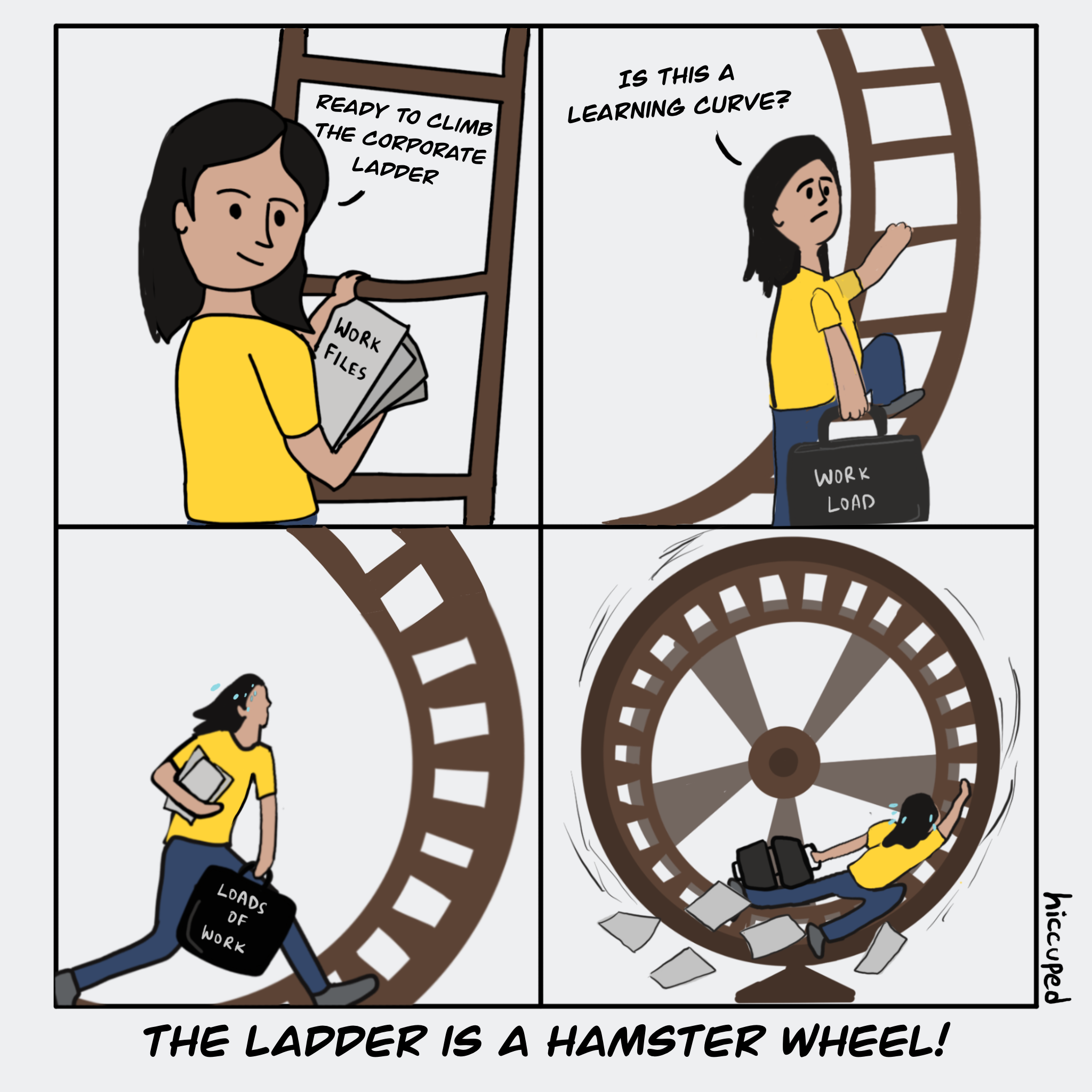
A report by the World Health Organization (WHO) and International Labour Organization (ILO) revealed that long working hours were responsible for thousands of deaths from stroke and heart disease, with a large number occurring in Southeast Asia and the Western Pacific region. The rise in fatalities linked to overwork reflects a broader trend in Asia, where burnout is often accepted as the cost of success. These figures don’t even include rising suicide rates from excessive workplace pressure, highlighting the grim reality of sacrificing physical and mental health for career achievement.
In India, 26-year-old Anna Sebastian Perayil tragically died just four months after joining one of the world’s leading accounting firms. The cause? Overwork, exhaustion, and burnout. She pushed herself beyond her limits, driven by the hope for a better future — a promise we’ve all been sold: “Work hard now, so you can relax later.” But when does this elusive “later” ever come? For Anna, like many others caught in the grind of toxic hustle culture, that moment of rest never arrived. Instead, she became another victim of a system that prioritises profit over people, perpetuating the myth that success is worth sacrificing your health.
The Japanese have a term that describes such deaths: “Karoshi”, which means “overwork death”. This refers to loss of life or an impairment caused by overwork which was the case with Miwa Sado, who was a journalist from Japan and died due to burnout. The Koreans term this as ‘Gwarosa’ which also means death by overworking. The praise and glorification of endurance to prioritise delivering consistently over well-being traps employees in a cycle of overwork and exhaustion, which often lead to tragic consequences. The “996” work culture in China demands employees to work from 9 AM to 9 PM, six days a week, or 72 hours a week. Employees in China, especially in the tech industry are bombarded with relentless expectations of availability and productivity, with little room for rest or personal time. Research shows that about 600,000 Chinese people die every year because of “Guolaosi” – death by overwork.
Anna Sebastian’s mother’s letter to her employer after her death highlights the painful reality of how employees become disposable. Her grief is compounded by the fact that no one from Anna’s office even attended her funeral, reflecting the dehumanising nature of corporate culture. In South Korea, families facing similar losses not only endure emotional pain but also legal struggles to prove death by overwork (Gwarosa). This adds financial strain, leaving them to bear the burden of losing both a loved one and a primary breadwinner.
In Asia, hard work isn’t just encouraged—it’s a way of life. From early childhood, students face immense pressure to excel in highly competitive environments and prepare for cutthroat exams that determine their future. Securing a job in an unforgiving market is the next hurdle, but it doesn’t end there. These challenges serve as training grounds for the relentless pressure, long hours, and uncertainty that dominate the workplace. The culture of striving for success, combined with societal expectations, conditions employees to accept stress as a norm, blurring the lines between dedication and self-sacrifice. This pervasive mindset shapes not only individual behaviour but the entire work culture across Asia.
We are conditioned to celebrate overwork and to glorify burnout as a form of ambition. The concept of “work-life balance” is merely an illusion, as the line between work and personal life has become increasingly blurred. Terms like “grind” and “hustle” have infiltrated our vocabulary and subconscious, tricking us into believing that working overtime is a heroic endeavour. In a capitalist setting, even the death of an employee due to burnout will only prompt the HR to “touch base” on the importance of mental health, so together they can “synergise” and “recalibrate” strategies that will then turn to “circling back” on some wellness initiatives and maybe plan a team-building activity that will quietly fade away due to more deadlines. In the end, nothing really changes — just a lot of words designed to “move the needle” on corporate image, but not much for the employees.
Rosa Luxemburg once said, “Those who do not move, do not notice their chains.” This is true in the context of today’s toxic work culture. We often fail to recognise the invisible chains that bind us to the sense of false belief that hard work must mean overwork. It’s time to break away from this notion. True progress isn’t about pushing ourselves to the brink—it’s about knowing when to pause, prioritise our health, and reclaim our well-being from a system that too often exploits us.