
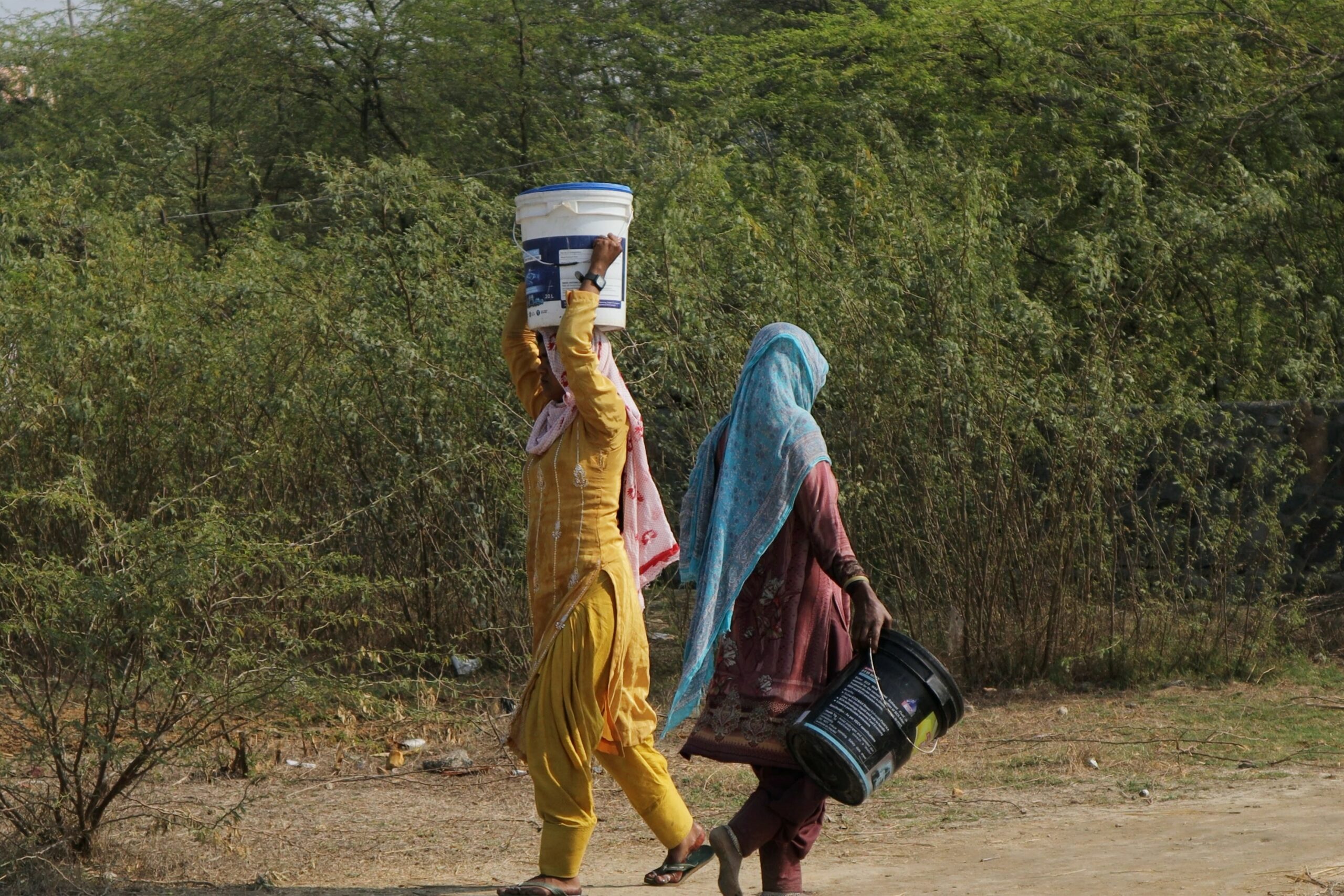
As the sun rises, women and girls in Malab, a village in the Nuh (Mewat) district of the northern Indian state of Haryana, begin to gather around an underground water tank with pots and buckets in their hands.
These underground tanks, locally known as kundas, are the only source of drinking water for this village of nearly 12,200 people. Due to water salinity, groundwater is not considered fit for consumption. And while the state government claims that they have provided tap water connections to all rural households under the central government’s Jal Jeevan Mission — Har Ghar Jal, we found that either there is no water in these taps or the pipelines haven’t reached all the houses.
Shakeela, 82, was only 17 when she got married and settled in this village. She lives with her two sons and says, “There were wells in the village back in the day. The water was sweet, but over the years, it has become saline. Taps have still not made it to our houses. I have spent my entire life carrying buckets on my head. My head feels weak now.”
According to the Annual National Groundwater Quality Report 2025, released by the Central Ground Water Board under the Ministry of Jal Shakti, Haryana ranks third in ground water salinity. The report mentions that regions such as Rajasthan, Punjab, and Haryana have a high rate of evaporation which leads to concentration of salts in groundwater. “When water evaporates, salts in the soil or groundwater become more concentrated, contributing to higher EC (Electrical Conductivity).”
These underground water tanks are constructed and maintained by the sarpanch (elected head of a village council) as a work around solution. They carry up to 18,000 litres of water and are refilled on a need basis.
“A year ago, we had to walk long distances to get water, but now the underground tanks installed nearby have reduced the distance but not the physical labour,” says Maqsuiya, a 60-year-old woman we met at the tank.
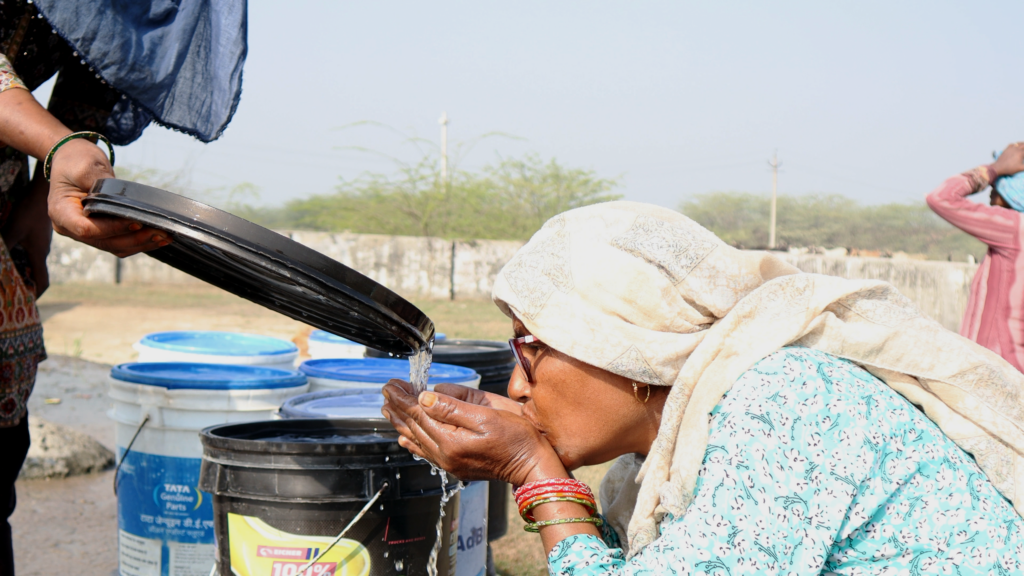
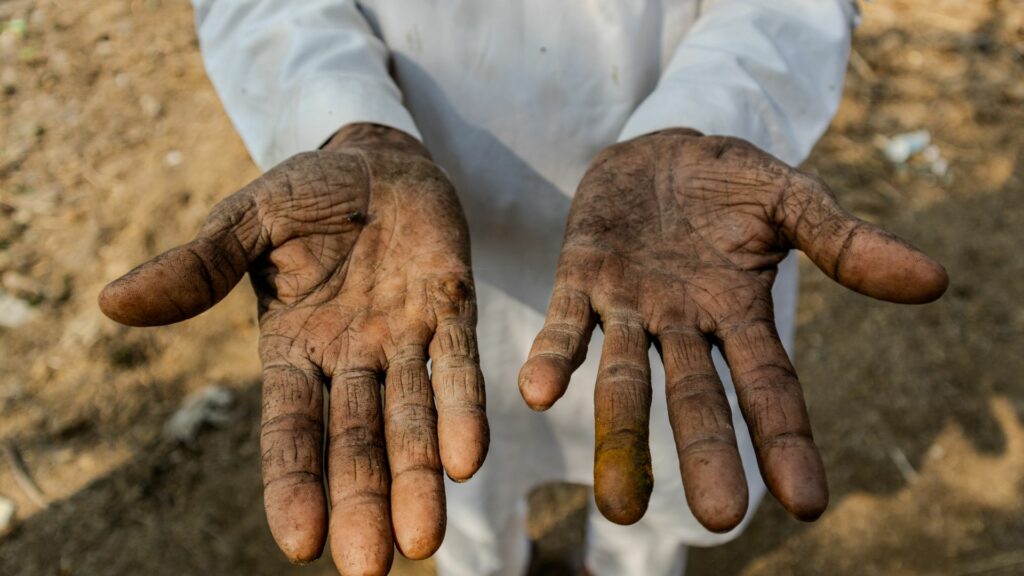
However, some residents point out that there’s often a long queue at these tanks and on days when no water is left, they have to travel to nearby villages to get water, which leads to exhaustion, heat stress, fainting, and frequent dehydration. The residents also highlight that young girls and women bear the brunt of this shortage the most.
‘If I Want to Drink Water, I Must Lift’
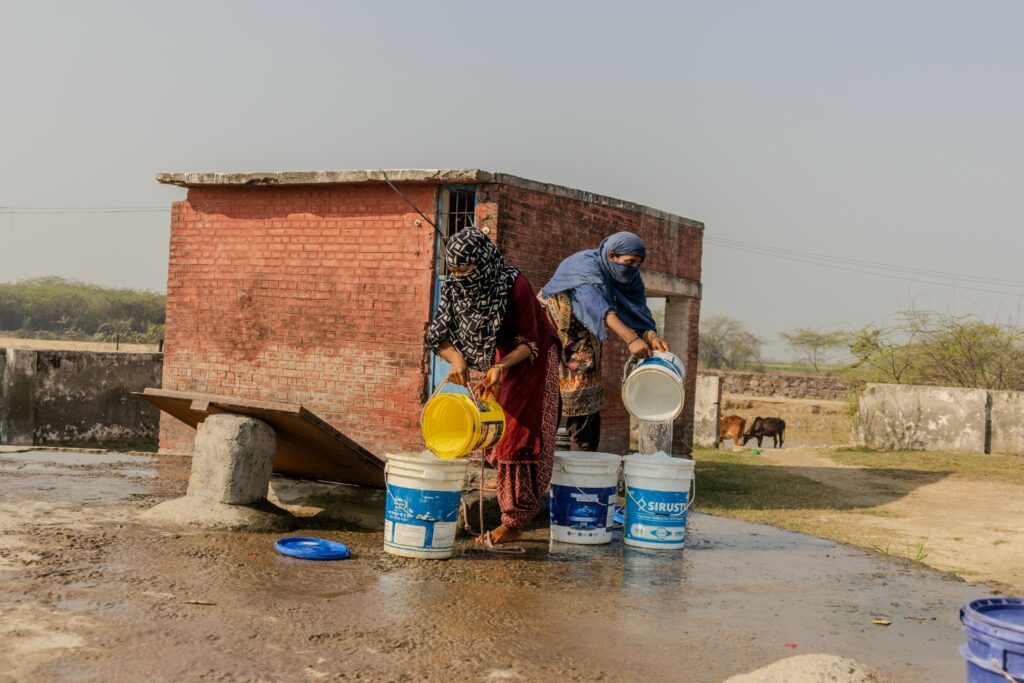
Twenty six-year-old Arshi is seven months pregnant and has been told not to lift anything heavy but she comes to the underground tank daily to get water for her family.
“My family goes out for work and water is everything. If I have to drink water then I must lift these heavy buckets,” she says, as she continues to draw water from the tank.
As the household demand for water increases with the summer heat getting worse, women say that they make multiple trips to the underground tank.
Maulik Sisodia, executive director, Tarun Bharat Sangh (TBS), an NGO working on water conservation for the last 50 years in India says, “This has a profound impact on women’s lives. They have to manage the household water supply and arrange water even in this scorching heat.”
“Most of their lives are consumed in the search for water,” he adds, noting that many women continue to carry water just days away from childbirth and many suffer from chronic back pain. “Pregnant women often make multiple trips to the tank to ensure that the family has enough water for the days when they can’t go to the tank,” he says.
Families often disallow young girls from going to school as they help with household tasks such as filling water.
The school dropout rate in Nuh has worsened over the years. It stood at 12.84 against the state average of 3.05 in 2025-2026, reported The Indian Express. While water scarcity isn’t the only reason behind the increasing dropout rate, experts say that it does directly impact girls’ education.
A report by TBS on water scarcity in the Nuh district notes, “If the school itself lacks a dependable water source and clean toilets, absenteeism turns quickly into dropout.”
Speaking to Asian Dispatch, Nuh MLA Aftab Ahmed said that he has raised this concern in the Legislative Assembly on several occasions but claimed that the water supply is not enough to meet the demand.
Acknowledging the crisis, Vinay Prakash Chauhan, executive engineer, Public Health Engineering Department, Haryana said that the government is working on different infrastructure projects in Malab. “We are undertaking separate projects specifically for water supply and sewerage systems,” he said, adding, “we are setting up a dedicated water boosting station to provide 135 litres of water per person.”
Hygiene and cleanliness of the underground tanks is another concern.
Avida, another resident of the village, says, “The surrounding area is not cleaned,” adding, “our guests refuse to drink the water we survive on, they say ‘we won’t even wash our hands with the water you drink’… but what can we do? We have no other option.”
According to the Bureau of Indian Standards, under the Ministry of Consumer Affairs, Food & Public Distribution, the Total Dissolved Solids (TDS) for drinking water should be below 500 mg/L, but it also states that in the “absence of an alternative source” TDS up to 2,000 mg/L is “permissible”.
The water in these underground tanks has a TDS of 451 mg/L, which is within this “permissible limit”.
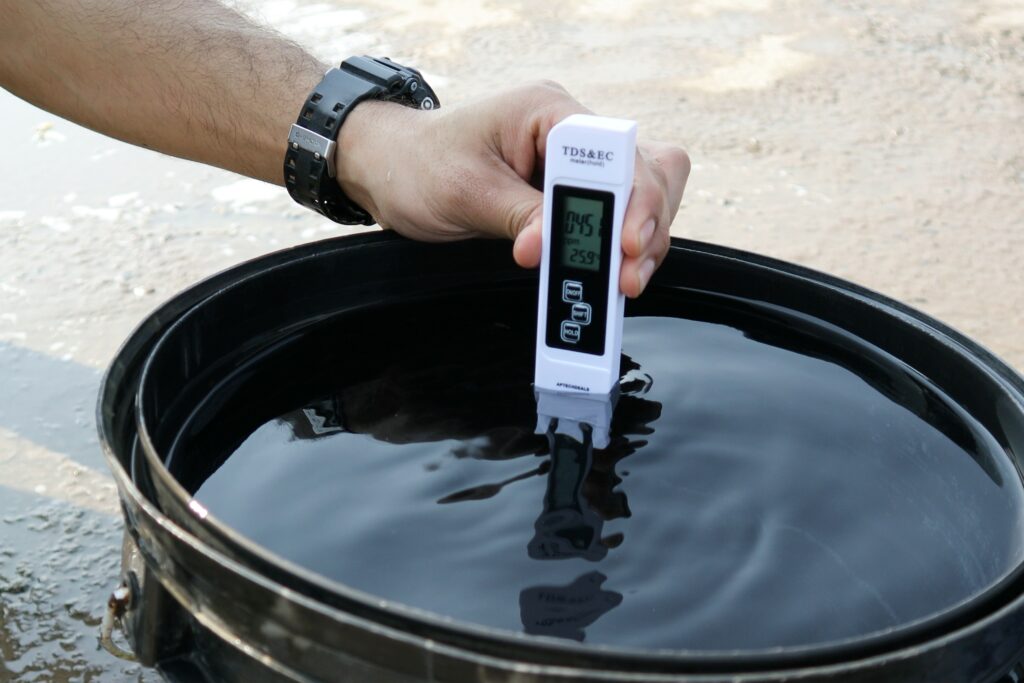
But is it Safe to Consume This Water?
Dr Subarna Goswami, senior public health specialist, Department of Health and Family Welfare, Government of West Bengal, says, “TDS should ideally be between 50–150 mg/L. 150–300 is acceptable, and up to 500 mg/L is the maximum allowable limit. Beyond that, water quality declines, and above 1200 mg/L it is not potable.”
He says that while 451 mg/L is within the allowable limit, it is close to the threshold. “Continued consumption over years can still have health consequences such as hypertension, cardiovascular diseases, strokes, and kidney problems.”
The salinity in the water is due to various reasons such as geographical and historical factors, urbanisation, and climate change. Sisodia explains that the area once lay under the sea and as water receded over millions of years, “the salinity remained embedded within this entire topography.” He says that the situation has worsened over the years due to human activity.
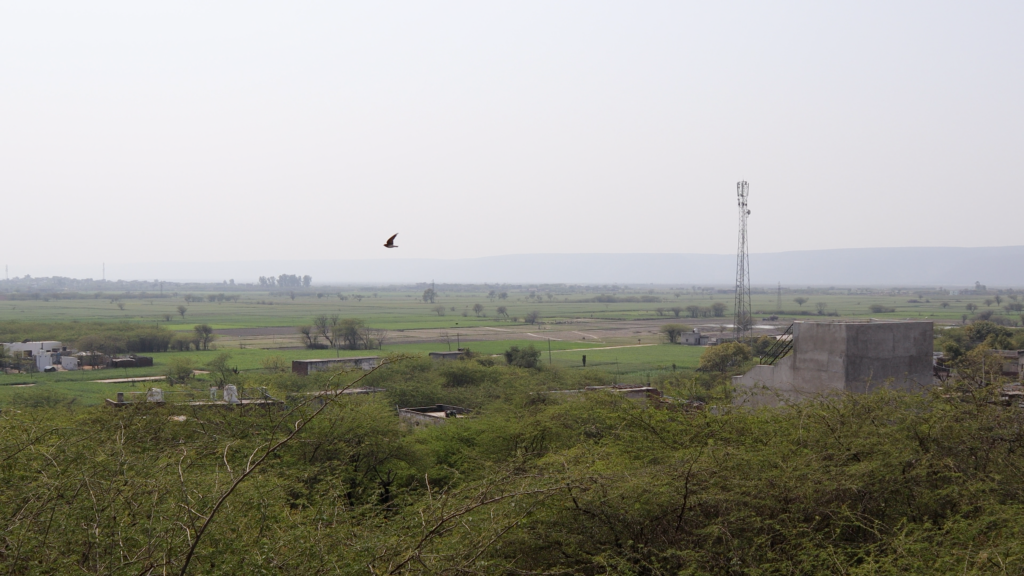
“Rainwater used to seep into the ground and push the saline water deeper. But we have disrupted this natural process,” he says, adding, “At the same time, rapid urbanisation and excessive groundwater extraction in nearby regions such as Gurugram have accelerated the problem. The rate of water extraction has been so intense that the underlying salinity has begun to rise steadily upward.”
Growing urban demand and climate change are other key factors behind the declining groundwater quality and water scarcity.
“Urban cities depend on water coming from rural pockets but those areas themselves continue to face scarcity,” Eshwer Kale, thematic lead (water policy and governance), Watershed Organisation Trust (WOTR) notes. “As much as water is being used, the same proportion is being wasted as sewage. Unless we regulate water use through measures like metering, this problem will not be solved.”
Nuh (erstwhile Mewat) was carved out of areas of Gurugram and Faridabad in 2025. While the two have grown exponentially, Nuh is ranked 20th among the 112 most under-developed districts, according to NITI Aayog’s Aspirational Districts Programme.
Taking Matters Into Their Own Hands
Some villagers in Malab have constructed underground tanks at their homes but it’s an expensive solution for a village where most people rely either on farming or manual labour for income.
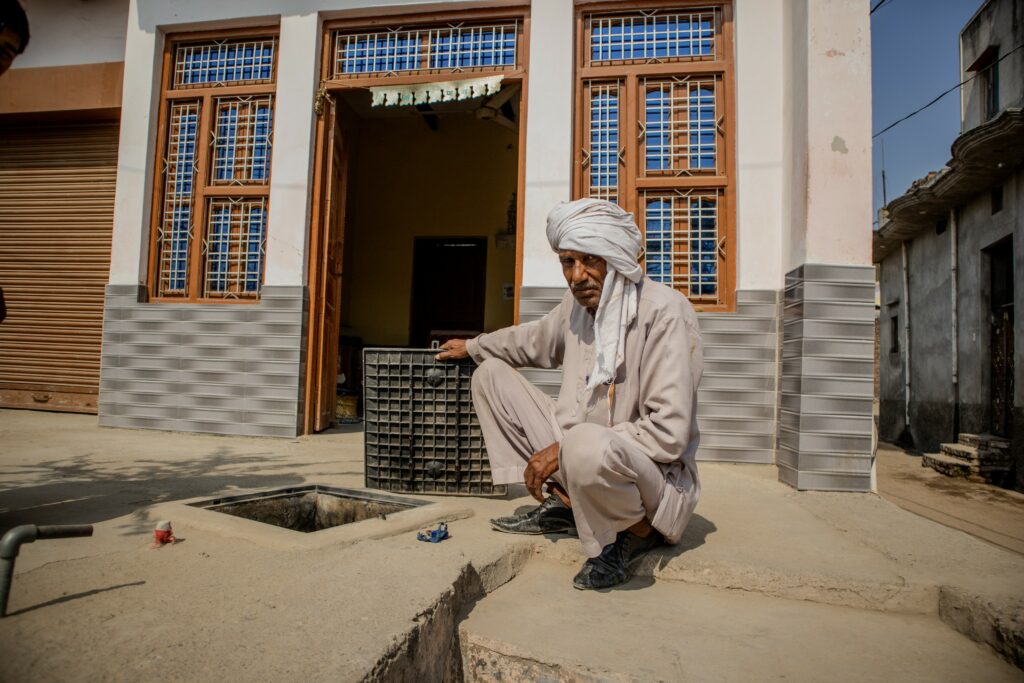
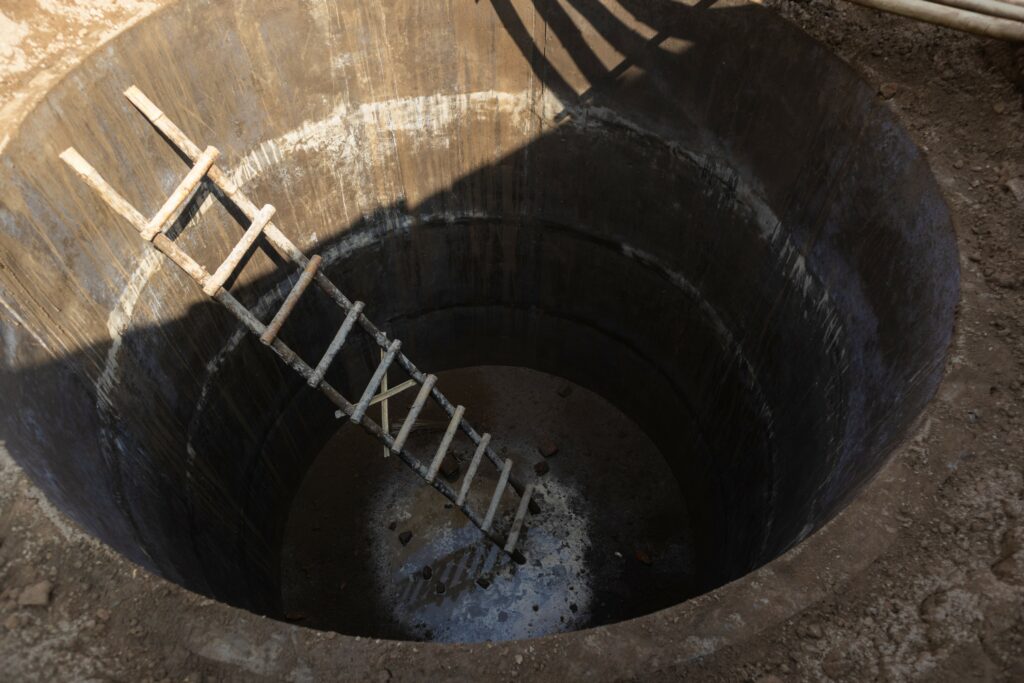
Sajid, a farmer, lives with his family of five, and says “To make a tank, we had to spend INR 70,000 to 80,000.” He said that eight-nine families in the neighbourhood shared the cost of construction so that they could avoid travelling to the common underground tank in the village.
But the cost of refilling these tanks once is approximately INR 2,000. With summer fast approaching, the frequency of refilling will increase and so will the monthly expenditure, for a village where the average income is about INR 10,000 to 12,000 in a month.
“It’s difficult to keep up with the cost. Most families in the village split their water and the money,” says Sajid.
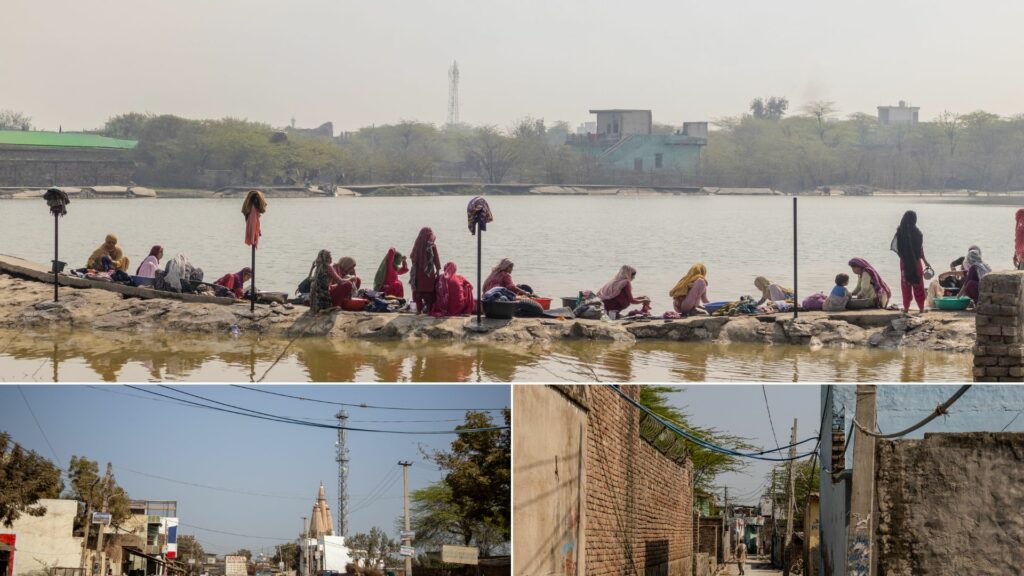
Those who can’t afford to build these personal tanks either rely on the overheard water pipelines installed by the locals that carry saline water from the borewell to parts of the village or they go to the pond for household chores such as cleaning, bathing, and washing clothes. However, the pond water is highly contaminated and has a TDS of 2683 mg/L.
Dr Goswami says that TDS as high as this is highly unsuitable even for washing and cleaning. He adds that prolonged exposure may lead to skin diseases.
The Way Forward
Experts opine that the solutions must go beyond infrastructural development.
Sisodia says that initiatives such as the Jal Jeevan Mission can’t solve the problem. “The mere act of laying pipes does not automatically guarantee that water will flow.” With groundwater already saline in regions such as Nuh, he stresses that the bigger challenge is the source of water and not just its delivery.
Kale, too, points out that the sustainability of the drinking water systems depends on maintenance, which doesn’t seem to be a priority at the moment. He points out that while forming village water supply and sanitation committees is mandatory, “we need to understand the quality and effectiveness of these committees… how they are responding and whether they are capable, whether they are honestly taking efforts at the village level.”
A report published by Social and Political Research Foundation (SPRF), a Delhi-based think tank, focuses on building systems to improve community-based water harvesting and modernising traditional knowledge to improve the situation.
Ashish Ambasta, program manager, SRIJAN, a non-profit working on water, agriculture, and rural livelihoods, says, “Keep the community in the front. Involve them in planning, contribution, and decision-making.” For him, the how is clear: continuous engagement, local ownership, and behavioral change. Without that, he says, “structures may be built, but they won’t sustain”.
To improve access to safe drinking water, Gurujal, with support from the Azim Premji Foundation, is also planning a three-year intervention in two villages of the district — Malab and Ghasera.
Shubhi Kesarwani, co-founder and CEO, Gurujal, says their focus is to close the governance gap as both the villages face severe drinking water scarcity, high salinity, and lack of a functional tap-water supply.
Gurujal proposes regular NABL-certified water testing for effective water audit and planning. For long-term sustainability, the plan includes construction of kunds, rainwater harvesting structures, rejuvenation of ponds, and the installation of RO plants under a public-private model to improve source, sustainability, and water quality.
However, this water crisis is not just limited to Malab, Nuh, Haryana, or India. With changing weather patterns and ground water depleting across South Asia, access to clean water is a severe challenge in the region.
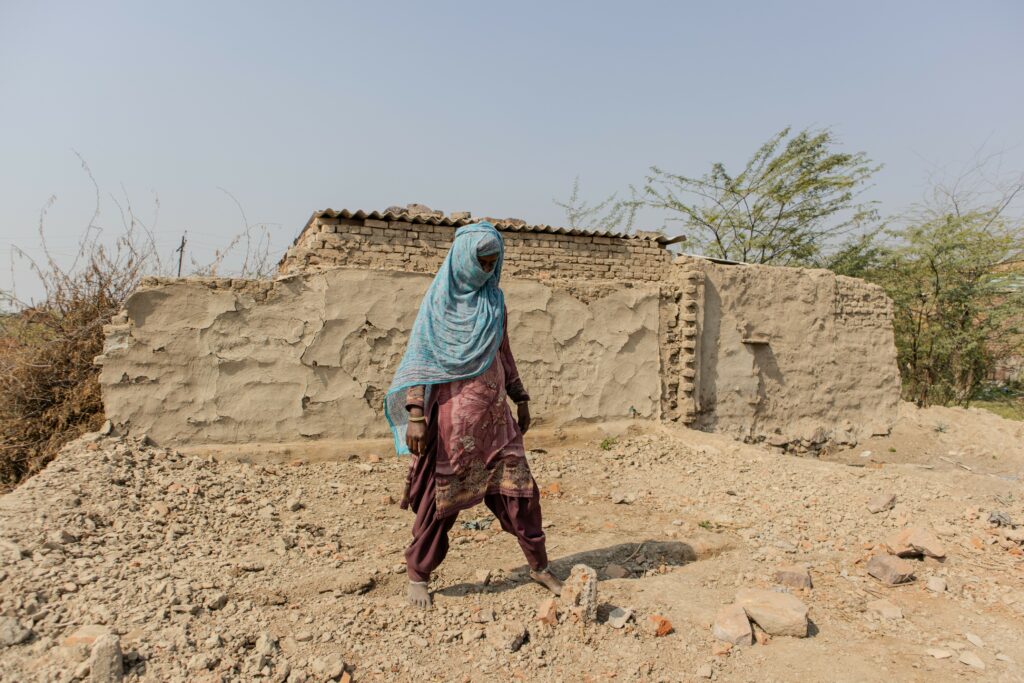
According to UNICEF, nearly 34.7 crore [347 million] children under 18 are exposed to high or extremely high levels of water scarcity in the region. Water pollution and salinity affect large parts of South Asia.
In India, around 1.93 lakh sq km is impacted by salinity and 119 districts across 19 states report water contamination because of the presence of fluoride. In Bangladesh, 3.5-7.7 crore [35-77 million] people are exposed to arsenic-contaminated water, while in Pakistan about 36 percent of the population in Sindh and Punjab are exposed to contaminated water, as per an article published by the Observer Research Foundation. The situation might not be as alarming in Nepal as in other countries, but arsenic poisoning is becoming a serious issue in the Himalayan nation.
While communities in Malab wait for water to reach their homes, their struggles reflect a larger reality across South Asia, where access remains uncertain and the question about the future of water security looms large.