
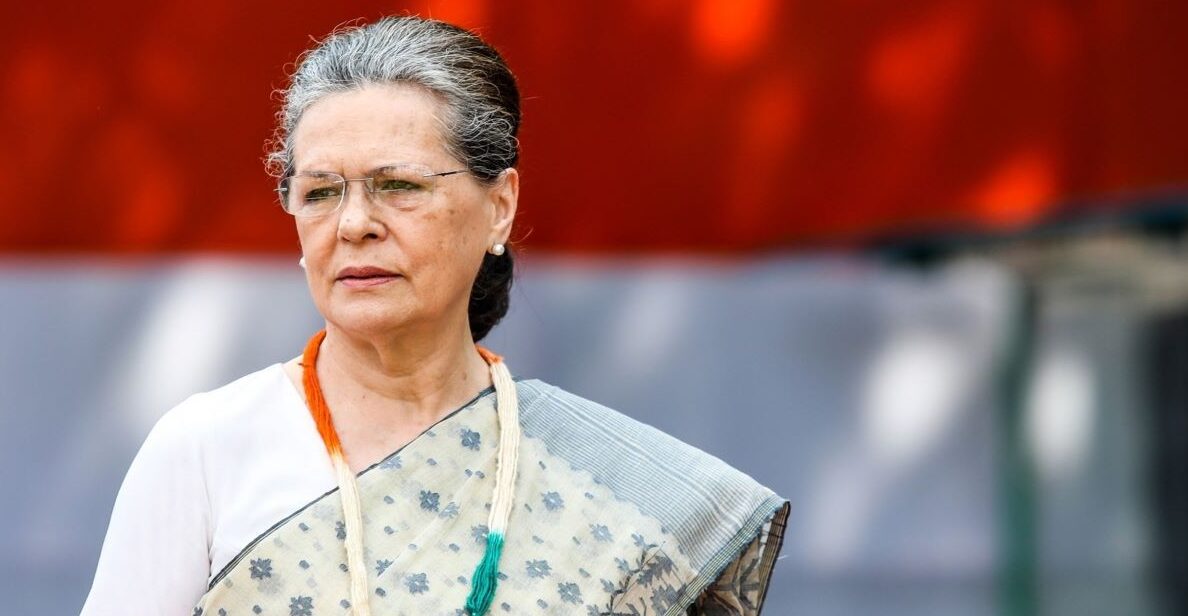
“You must know, Sonia beti, child, that in this country it is not what you are that counts, it is what people think you should be,’’ Harivansh Rai Bachchan cautioned Sonia Gandhi when she had first arrived in India in 1968 and was staying with them.
This warning stayed with her, she writes in Belonging: A Journey of Love—a book that made news even before it hit the stands on November 10. It left her wondering, she writes, whether he meant that she can never be herself. Almost sixty years after she has lived a very private life in the glare of the public in India, Sonia Gandhi is finally coming out in the open.
Belonging, the first-ever memoir written by Gandhi, is an attempt to answer just that question.
It is her crafting her legacy. In many ways, it is also setting the narratives for her children. Like Michelle Obama’s motto “we go high, when they go low”, Sonia has chosen to demonstrate that her children and she stand for civility and dignity—old fashioned etiquettes— ‘brand Gandhi’ of restraint, versus the brash brand of new India politics.
This is a memoir, a remarkable story of a girl who fell in love, moved across the world to India to become a part of a powerful political family.
When she is writing about her life as a bahu (daughter-in-law), new and with a seat at the most powerful dining table in India, she is best.
She sketches their lives, the people who surround them vividly. Or as Rajiv’s wife watching him step into the political arena. It is the private life—which has filtered out only as stories passed down over the years by close friends or family—that is the riveting part of the memoir, even if some of it may be known.

She writes compellingly.
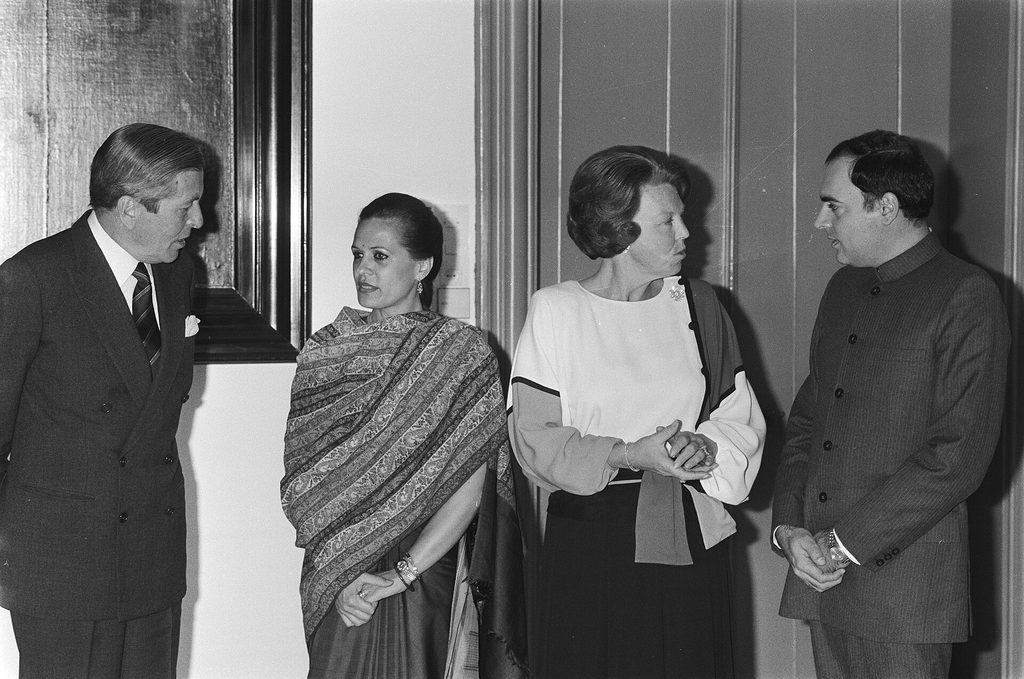
She describes with giddy detail the first time she met Rajiv Gandhi in Cambridge—a day that would change her life. The air so crisp that it stung her cheeks, a sky azure, with “puffy clouds like Tiepolo fresco,” conjuring it up immediately for readers.
There is grief, heartbreak—palpable when she writes about her Rajiv, her “beloved”—a beautifully old-fashioned word that she repeats often—dying, of her never seeing pictures of the assassination, their courtship, the first day that they met—told breathless almost giddily—immediately conjuring a young Sonia up.
Her father’s disapproval of the match, his temper, Rajiv’s temper, which involved tearing his sherwani buttons when he found the media at their wedding which was meant to be a private affair, and their settling down in India.
Perhaps, she is at her bravest when she is frank about her first impressions of India.
The Year Was 1968
She arrived at 5:15 am on January 13, 1968 in Delhi, after her 21st birthday to “see things as they really are” as Rajiv writes to her to be driven straight to Teji and Harivansh Rai Bachchan’s house at Willingdon Crescent.
She couldn’t sleep at night with the jackals, the night guards and then when she fell back asleep be awakened by “what sounded like a long loud moan”. It was Uncle Bachchan, she writes, “awakening the gods in the morning” or the smell of Indian food and spices that had a “devilish way” of getting into her hair and her clothes.
She missed her home, her family, pasta, cheese, and her breakfast of caffe d’latte and cornetto pastry. Instead she had to face yoghurt, papaya, and eggs, “distasteful” to her in the early hours of the morning. It is not only the food—which she finds hellishly hot—but hordes of bicycles that filled the streets like giant black moths, “gaunt scarred cows”, “women and children in rags asking for money”, and “blood-red stains on corner walls”.
There is no doubt that this will give trolls more ammunition to prove her foreignness. But it is more proof that she is determined to have a version of authenticity to her memoir.
If it was instant chemistry with Rajiv—their marriage is possibly one of the most equal relationships in the political circle in India—there is a tenderness when she writes about Indira. It is clear that Sonia and Indira were close.
There is the legendary temper—so much that even Dr. Mathur, their family doctor would inquire about whether the mood was “theek” (fine) before he came in—her way of showing displeasure by refusing to grant an appointment to see her when she was miffed. (That is the extent of the criticism of her mother-in-law.) It was a tactic that she employed in her politics too, she writes.
Another numbing blow came, she writes, about what to do with his remains. He couldn’t be cremated because according to Hindu tradition, a newborn was to be released into the river, she writes. “No, I couldn’t do that to my baby, no matter how sacred the river was, I said, breaking into sobs,” writes Sonia. It was her first assertion in the family—a battle she won.
The baby was finally buried under bougainvillea bushes on their farm in Mehrauli.
For a family that has been so private this is the first telling of their life. And Sonia has chosen to not paper over some differences. Stories that were part of the Delhi drawing room gossip find confirmation.
The rift between Rajiv and Sanjay. There is no doubt that Maneka is to blame. The two brothers had a showdown over Zabul, their Afghan, who had to be taken to the vet to be stitched up after Sanjay’s Irish wolfhound bit him.
The Feroze and Indira split is also dealt with honesty.
My mother-in-law told me that when Feroze developed a more serious relationship that she found very painful, they had come to the point of considering a formal separation after a stormy fight.
Sonia Gandhi writes in her memoir
There is a mention of a woman being present at the time when Rajiv went to his father’s home. But he never mentioned her name, she writes. It is revealing details like this that make the book compelling.
The 1984 Riots and The Emergency
Sonia tackled 1984 head on.
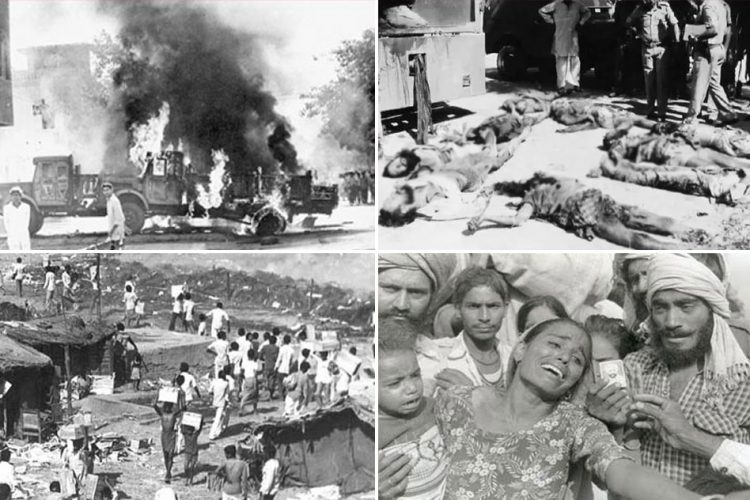
This is perhaps the most political aspect of the book. The massacres of Sikhs that followed Indira Gandhi’s assassination—a stain on the Congress that is difficult to wash away. She acknowledges the brutal acts of violence. It is evident that the “cataclysmic” upheaval had broken the system, she writes. But it is also evident that some in charge must have looked away and even in some instances stoked passions, she writes.
“The 1984 riots remain a tragic and shameful chapter in the history of our nation,” she writes. We cannot forgive ourselves, she writes quoting Rajiv Gandhi’s speech in the parliament later.

She has also distanced herself and Rajiv from the Emergency. She writes about her and Rajiv’s differences over imposing the Emergency. Sanjay’s role in decision-making during the Emergency period “despite lacking a constitutional locus standi” for his decisions. The distance they kept over the decision. And Sanjay being a man in a hurry.
There are things that don’t always land like she would like them to—making it seem a little Romanov. Their life in “baara number” once Indira lost as a period of strain, the cutting back of staff, and being sent meals or being lent a car by friends.
The date of the death of Ahmed Patel, the loss that she mourns deeply, is incorrect. He died in 2020, when the book says 2022—a detail that should have been checked. She also gets the name of the landscape architect involved with Vir Bhoomi wrong. It was Professor Mohameed Shaheer, not Shahid—minor quibbles of course, but could suggest that the minor doesn’t matter—and that defeats the point of the book.
The Political Life
For those looking for political bombs, there are none, leaving you wondering what Penguin Random House wanted her to tone down.
Her public political life is confined to the last few chapters—the least interesting bit of the book. The struggle before she stepped into a leadership role in the Congress Party after she was invited by Sitaram Kesari at the 80th Plenary Session in 1997, the “worsening” situation of the party, the BJP dream of “absolute power” after the demolition of Babri Masjid.
She was moved by the Bhagavad Gita and what it says on duty. (She had lessons by Professor Vachaspati Upadhyay coming in handy, which carried on till 1998 when she took the plunge. She trots out the Gita, the shastras, Indian myths on occasion—leaving you with no doubt that she is not just pulling it out of a hat, like her critics would like everyone to believe).
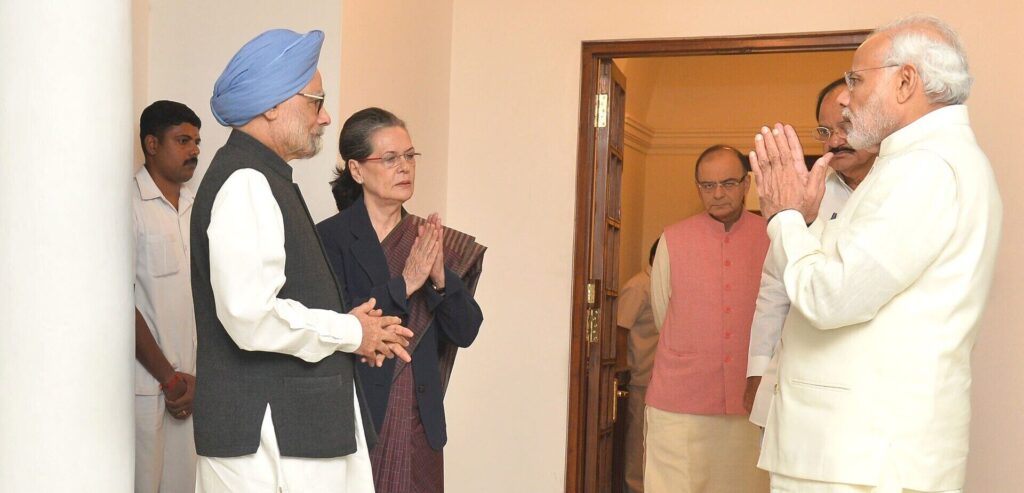

She has chosen to spare no punches with world leaders. In many ways, choosing to set a large global stage for her readership.
“Old habits die hard,” she writes about Bill Clinton, who was “surreptitiously sizing up” women at a banquet thrown in his honour by Prime Minister Vajpayee, President Nicholas Sarkozy held forth in an “arrogant manner” about what India should do to Manmohan Singh, and Prince Edward, the vice-patron of the Commonwealth Association in 2010, greeted her and then, turned to the Indian dignitaries—cabinet ministers—first in the line-up and said, “And you lot—who are you?”. A stunned silence follows, she writes. Till Pranab Mukherjee, stiffly, tells him that he is the finance minister and the others were the cabinet. Edward remains unfazed.
It is these observations—sharp and amusing—that allows the reader to actually break through the famous Gandhi-reserve, and see the real Sonia Gandhi.
Not the Sphinx as she was called, but a woman who can be amusing. There is a sort of fan-girl moment with Princess Diana too at a salon. “Hysterical black” is what she dubbed the colour of Dhirendra Bramhachari— Gandhi’s yoga teacher—hair and long beard. A shade too black to be natural. A “fount” of gossip, she writes and says that it was only later that they came to know of his wheeling dealing, she writes. Possibly not completely true, but amusing anyway.
And for that it is possibly an important political memoir in India in an age where content that aims to rage-bait and take pot shots counts as political wins. It refuses to engage with score settling. It is old-fashioned in that way, naïve perhaps, but dignified—a word that has lost its lure in Indian politics.