
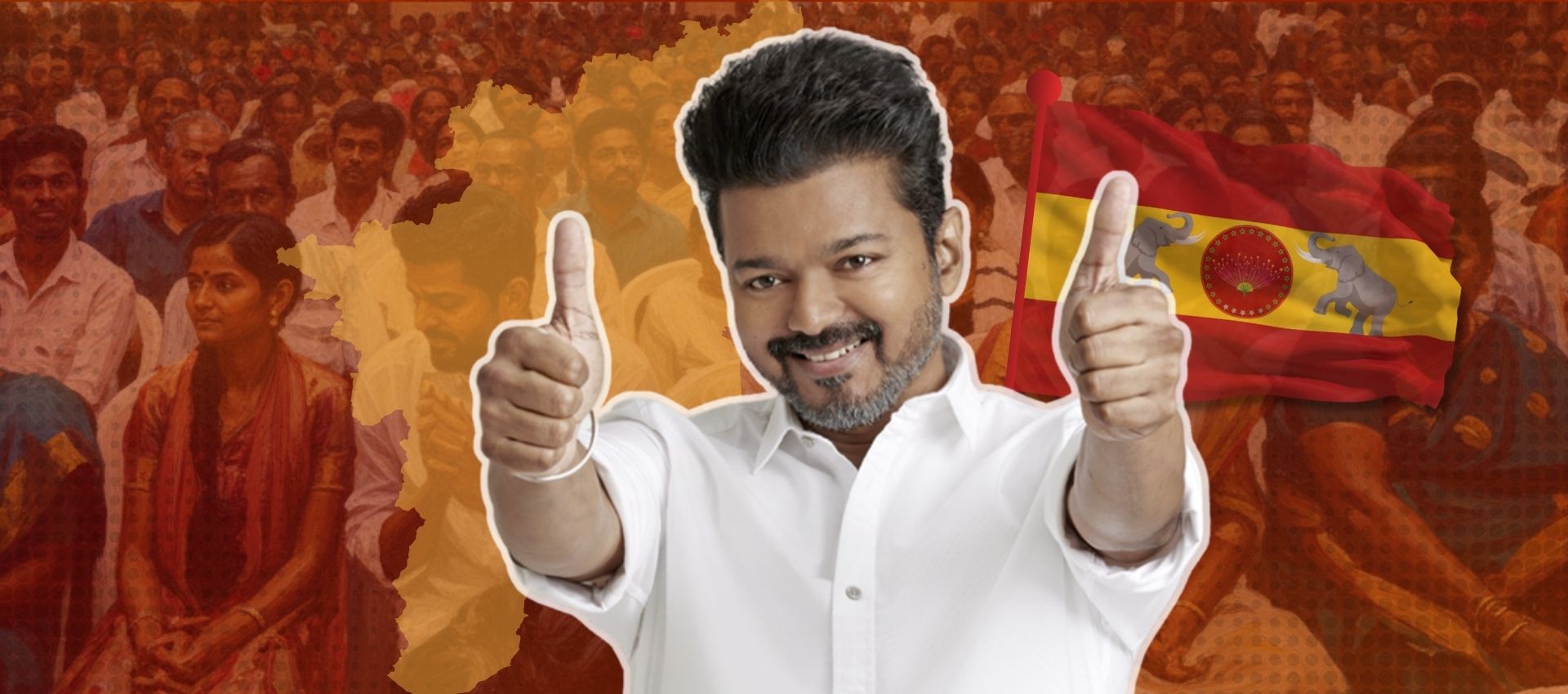
There is a useful paradox at the centre of Tamil Nadu’s May 2026 Assembly verdict.
The outgoing government presided over economic growth of nearly 11 percent, the largest direct cash-transfer programme to women in the state’s history, and a record on health, education and federal political assertion that few other state governments in India could match.
The political tradition the government represented, Dravidianism, has, over six decades, produced human-development outcomes that place Tamil Nadu consistently among India’s top performers. By every conventional benchmark of welfare-state competence, the incumbent Dravida Munnetra Kazhagam (DMK) had a defensible record.
Yet, it lost decisively.
The Tamilaga Vettri Kazhagam (TVK), a party founded only two years ago by film actor Vijay, secured 108 seats in the 234-member Assembly. The DMK won 59 and the All India Anna Dravida Munnetra Kazhagam’s (AIADMK) tally stood at 47. Vijay is expected to assume office as the chief minister at the head of a coalition he was not, until the campaign’s final months, anticipated to lead.
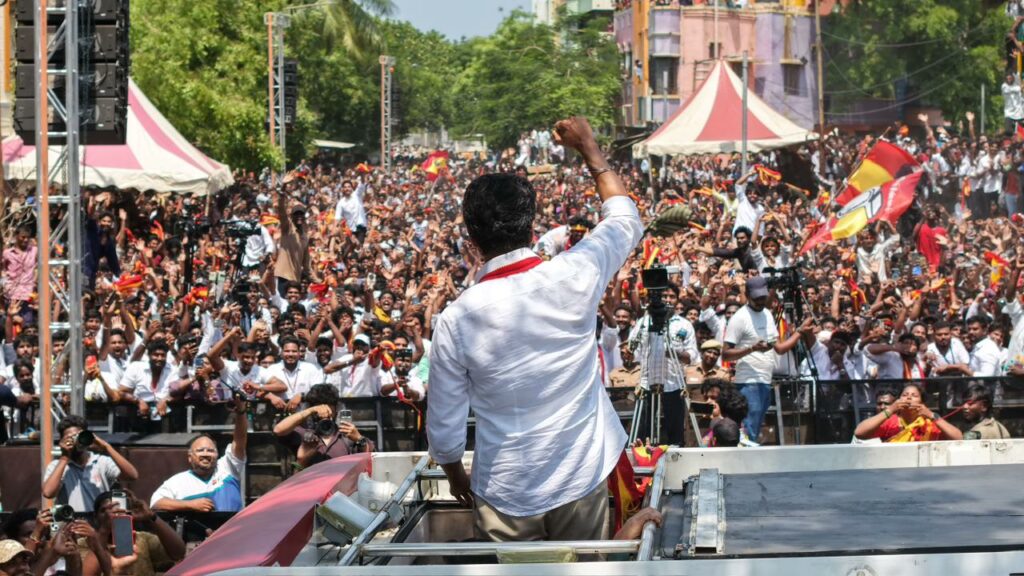
The puzzle, therefore, is not routine incumbent fatigue. It is — why an electorate that materially benefited from a political tradition chose to displace its principal electoral carrier.
The answer is that the electorate did not reject the tradition. It replaced its custodian.
The Political Positioning
The familiar script of the film star positioning himself as the anti-establishment outsider misreads the structure of this transition.
Vijay has not placed himself outside the Dravidian tradition but squarely within it.
TVK’s stated commitments—state autonomy, a Tamil-and-English language regime that excludes Hindi, and proportional social justice—reproduce core elements of Dravidian political thought. TVK’s ideological pantheons—EV Ramasamy (Periyar), BR Ambedkar, and K Kamaraj—signal continuity rather than rupture. This is not an external challenge to the tradition’s dominance. It is an internal contest over its ownership.
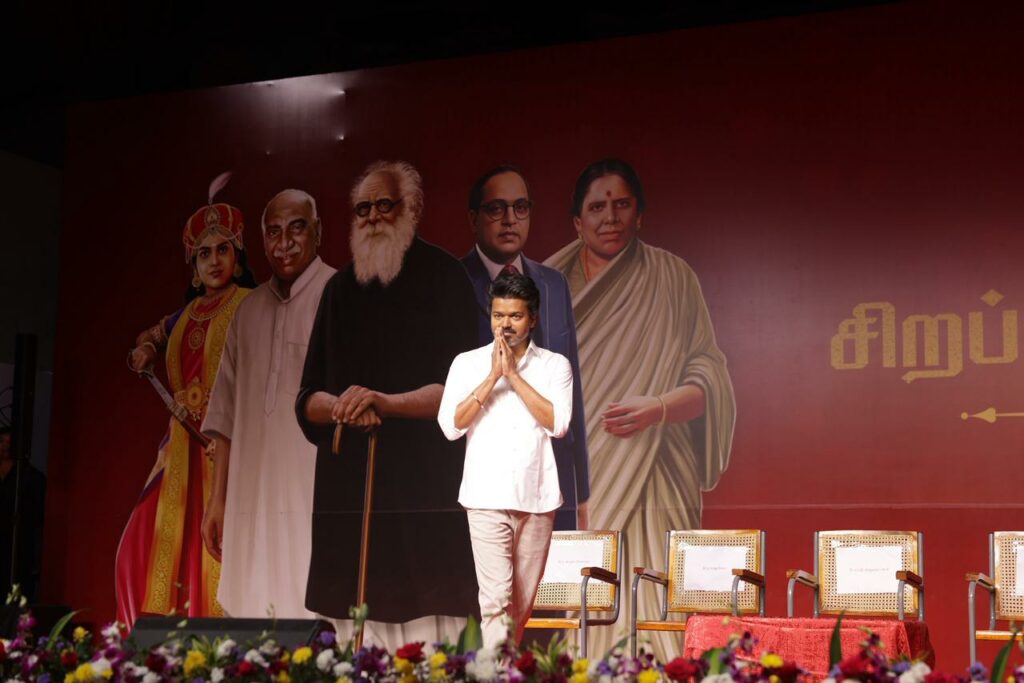
The party’s implicit claim is that the DMK has drifted from the founding commitments it once embodied — dynastic inheritance has thickened around its leadership, cultural infrastructure once responsible for converting welfare delivery into political consciousness has been allowed to wither, and that Tamil Nadu’s voters deserve a custodian more faithful to the tradition’s original purposes.
Whether this claim holds is analytically secondary. What matters is that the electoral verdict has validated it.
Dravidianism emerged in the early 20th century in Tamil Nadu as a critique of caste hierarchy and of the centralising tendencies of Indian nationalist politics, especially its consolidation around Hindi-speaking northern elites. Its focus was on recognition of particularistic grievances of multiple communities, redistribution of opportunities and resources, and representation in power to marginalised communities.
The DMK and the AIADMK, founded as electoral vehicles for variants of this political project, alternated in office without interruption since 1967. Together they produced what is now called the Dravidian development model: an institutionalised welfare state, a non-Hindi linguistic regime, a federalist political posture, and a public culture organised around social-reformist rationalism alongside secular theism.
The 2026 verdict is best understood not as post Dravidian but as post duopoly. The rupture is institutional, not ideological.
The Youth Connect
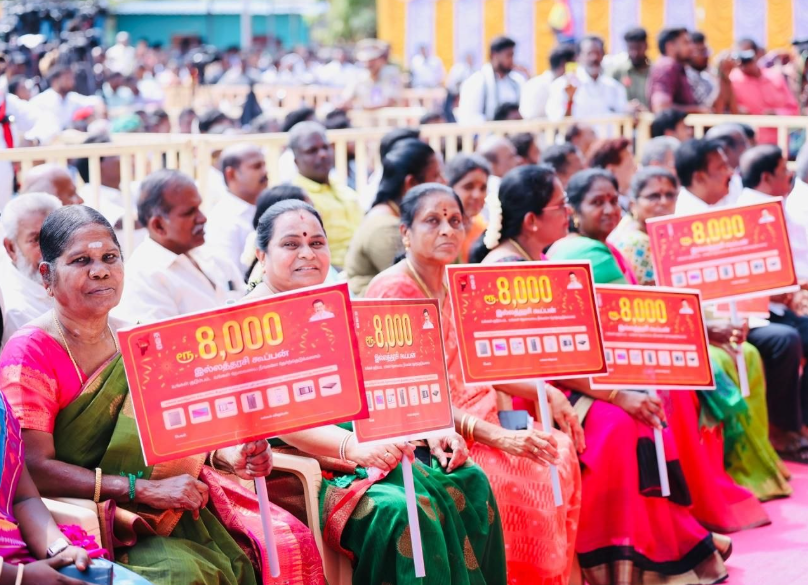
The DMK’s defeat did not stem from a failure of welfare delivery but from a breakdown in political transmission. Its flagship cash transfer to women reached beneficiaries, but the framing that anchored it in urimai—entitlement grounded in citizenship rather than gift by a benefactor—failed to travel from manifesto to household.
The cultural infrastructure that once carried such ideological transmission, including small-circulation Tamil magazines, local cultural halls and reading rooms, and cadre-led conversations in district towns, has thinned to functional inadequacy.
There is also a digital dimension that has been under-discussed.
Evidence from Twitter (now X) discourse (November 2018 – December 2022) suggests that in Tamil Nadu film star-fan accounts formed the largest bloc in political hashtag participation, with pro-BJP and anti-DMK narratives achieving disproportionate amplification. The DMK was not merely struggling to communicate; it was being outpaced in the arenas where younger voters’ political sensibilities were being shaped.
Vijay has also entered politics at a more advantageous age than Rajinikanth or Kamal Haasan, with a younger fan base and a longer political runway ahead of him and his supporters.
Kamal (technocratic centrism) and Rajini (vague spiritualism) asked voters to enter a new conversation with them. Vijay told people he was the rightful heir to a vocabulary they were already aware of. That is an easier task given his popularity.
TVK’s organisational advantage lay in pre-existing affective networks. Two decades of fan clubs, embedded across districts, were already in place before the party’s formal registration in 2024.
Unlike the politicised fan infrastructure that MG Ramachandran built into the AIADMK, Vijay’s networks had remained largely apolitical. By the time of his political entry, the most extensive mobilisation platform available to any contemporary Tamil actor was already active in digital political discourse. The network existed, Vijay only had to tap into it. Vijay provided electoral direction to an infrastructure that did not need to be built from scratch.
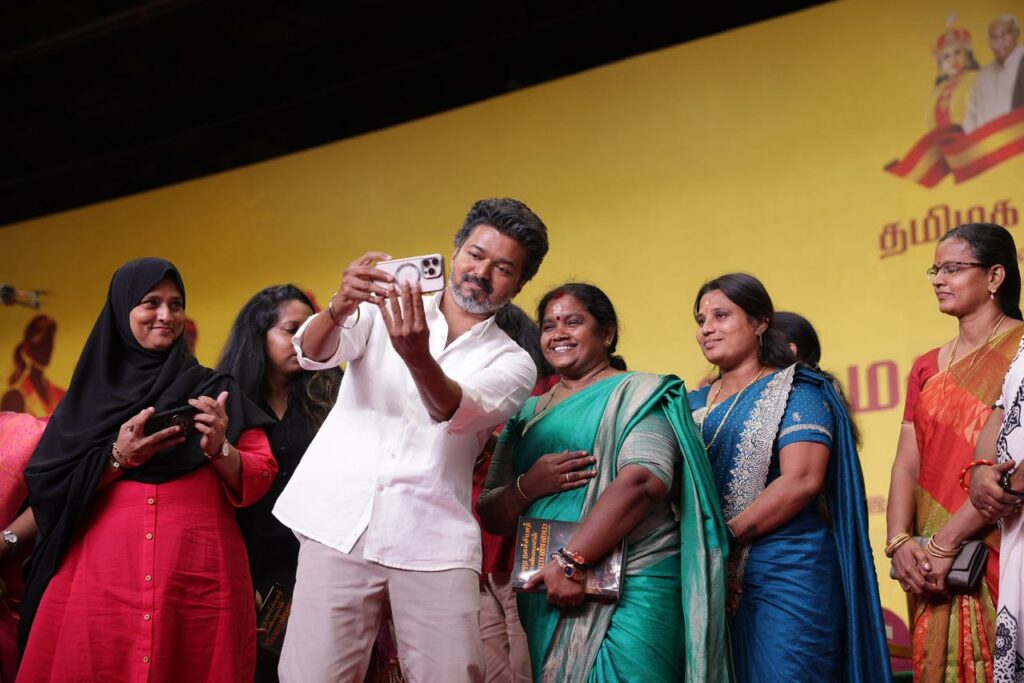
Vijay’s pathway differs from how other Asian celebrity-politicians have entered electoral politics. Thaksin Shinawatra built Thai Rak Thai from scratch as his own party, Imran Khan rebuilt the existing Pakistan Tehreek-e-Insaf (PTI). In the Philippines, celebrity figures typically run through established parties rather than founding new ones.
Vijay built a new party, but the machine it ran on was the cinematic fan-club network already in place, not a political organisation constructed for the purpose.
The DMK’s response compounded this asymmetry. What began as a tactical decision to underplay his emergence appears, in the campaign’s final phase, to have hardened into analytical underestimation.
The Challenge Ahead
The geography of the results, however, clarify both the scale and limits of this shift.
TVK’s surge was concentrated in Chennai and the expanding peri-urban belt—constituencies shaped by salaried employment, real-estate expansion, and accumulated impatience for a change. The wave did not flatten the state.
The AIADMK retained a resilient presence in the Kongu belt of western Tamil Nadu, the Thevar belt of the south, and segments of Vanniyar-dominated northern districts. What persists is a caste-regional floor that resists even strong anti-establishment mobilisation.
Vijay consolidated the residual vote outside the Dravidian majors, the under-politicised and impatient youth vote, and a cross-caste populist constituency, while also drawing sections of upper-caste and Hindi-speaking voters who might otherwise have moved toward the Bharatiya Janata Party (BJP). He did not, however, substantially erode the AIADMK’s entrenched regional base. The mandate is expansive but not hegemonic.
The question of federalism will determine the verdict’s substantive meaning.
Since its inception, the DMK has been among the most articulate state-level proponents of federal resistance to centralisation. It retains its parliamentary presence until 2029 (the next Lok Sabha elections), ensuring that this voice is not extinguished. What has been weakened is the state-level platform from which such claims were operationalised.
Whether TVK enacts the federalist commitments it professes, or allows them to remain declaratory, will test the credibility of its claim to the Dravidian inheritance. This is complicated by internal coalition pressures: segments of Vijay’s support base are not uniformly aligned with a confrontational federal posture. Reconciling these constituencies while sustaining ideological coherence will be a central challenge of governance.
In comparative perspective, the Tamil Nadu verdict points to a third pathway in the evolution of regional political traditions. One familiar pattern is gradual decline, where dominant parties erode over successive cycles before displacement. Another is rupture, where an anti-establishment outsider overturns the system in a single electoral moment.
The 2026 result suggests a different mechanism: a within-tradition contest in which a new entrant captures discursive ground the incumbent has failed to defend. The inheritance persists; the carrier changes.
Whether this configuration stabilises depends on TVK’s institutionalisation.
As presently constituted, it resembles a mobilisation network with electoral validation rather than a fully developed party. Its legislators are largely first-time entrants, and the organisational work of building cadre, district structures, and a second line of leadership remains ahead.
If earlier Dravidian parties built their organisational depth before assuming office, Vijay must attempt that consolidation from within the government. The durability of this transition will turn on whether that inversion proves sustainable.
The DMK has lost an election. Dravidianism has not lost its idiom. A new claimant has been authorised to govern in that language.
Whether that language continues to articulate a politics of rights, federalism, and social justice or converges toward a thinner, transactional welfare populism now common across Indian states — Aam Aadmi Party (AAP) in Delhi and Punjab or Yuvajana Sramika Rythu Congress Party (YSRCP) in Andhra Pradesh being such examples — will define the next political cycle in Tamil Nadu. The implications extend well beyond it.