
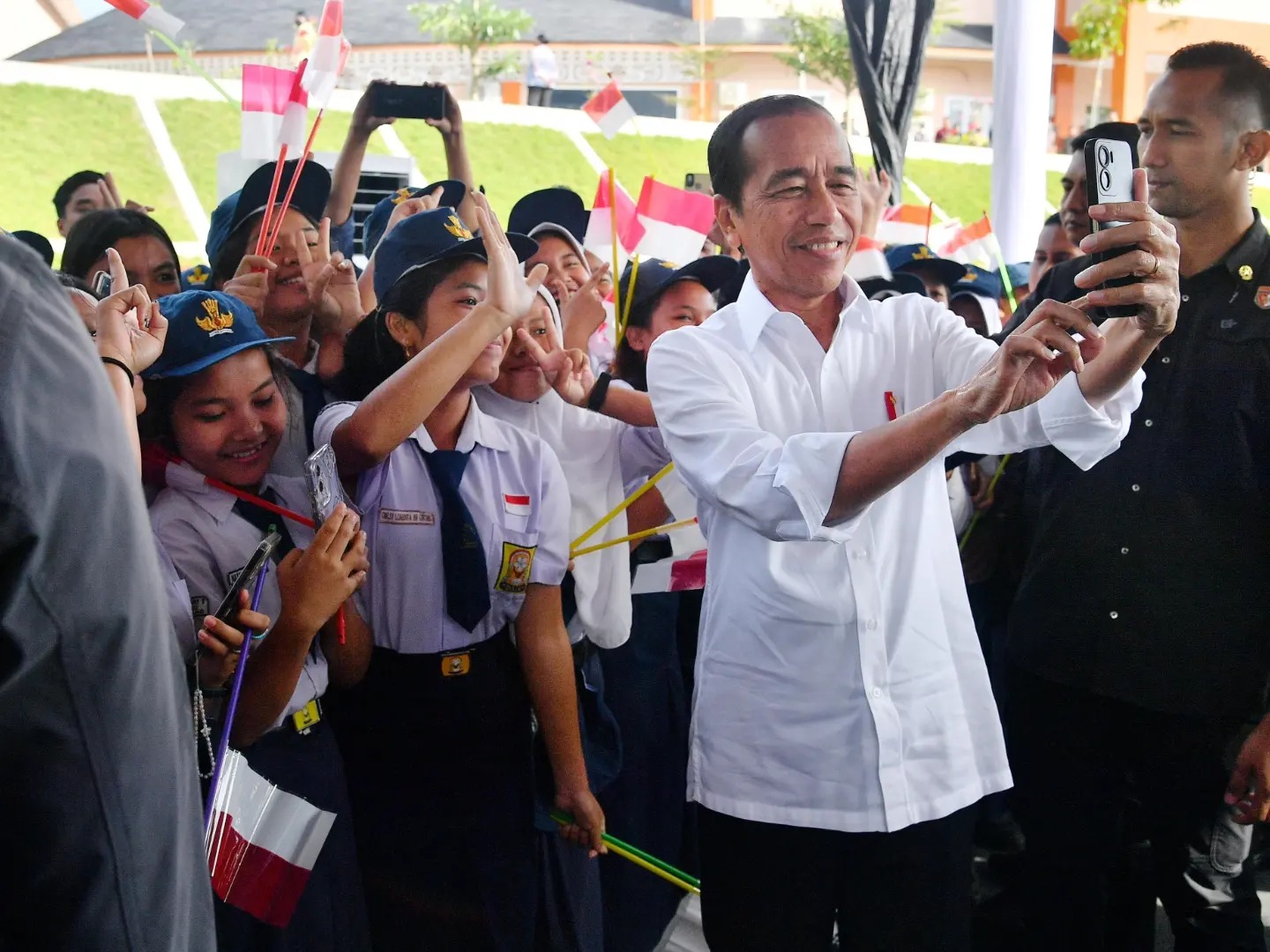
This year of elections has been nothing less than politically significant for Asia. There’s been mass protests, governments getting toppled, and new blood replacing legacy politics. But recent events in Indonesia have put a spotlight on a long-standing tradition across the world: Dynastic politics.
In the last few months, Indonesia has seen mass protests centered around its outgoing president, Joko Widodo, who rose to power on the backs of being non-elite and non-legacy in a country where the Yudhoyonos or the Sukarnos ruled the nation. Today, he’s being accused of promoting a political nepo-baby – his eldest son Gibran Rakabuming – who will be inaugurated as the vice president on October 20. The 37-year-old Rakabuming will be Indonesia’s youngest vice president.
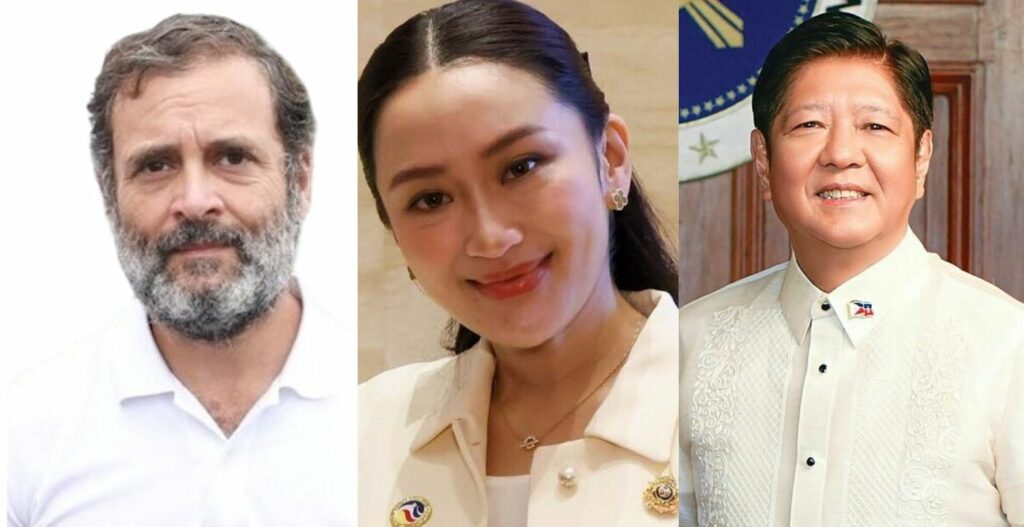
Indonesia is not alone. Political families are everywhere: In India, there’s the Nehru-Gandhi family; Thailand has the Shinawatra clan; in the Philippines, it’s the Marcos or the Aquino families; and the US has the Kennedys and the Bush family. The appeal of influential families in politics is rooted in many things, including myth-making, leadership vacuum and local factors such as conflict, economic crisis and so on. But there are strong correlations between political dynasties and stunted economic development and corruption.
On October 16, Asian Dispatch collaborated with Project Multatuli to host a webinar to find out why, despite the downsides, people continue to vote for political nepobabies. Titled ‘Dynasties and Democracy: Unpacking Indonesia’s Elections and the Future of Political Power in Asia’, the webinar featured Dr. Yoes C. Kenawas, a Post-Doctoral Research Fellow at Universitas Katolik Atma Jaya; Pana Janviroj, the former Executive Director of Asia News Network; and Endy M. Bayuni, the former Editor of the Jakarta Post. Project Multatuli’s Executive Director Evi Mariani moderated the session while Pallavi Pundir, the Editorial Lead at Asian Dispatch, provided the keynote address.
Indonesia is very significant for the world. It is the world’s largest archipelagic nation and with the fourth-largest Muslim population. The country is the driving force behind the hugely successful ASEAN and is of key interest to the US and China for geopolitical reasons. Indonesia also powers the world’s demand for key resources such as nickel.
Since his reelection in 2019, Jokowi – as Widodo is popularly called – has introduced several family members in politics. His eldest son Rakabuming became the mayor of Surakarta last year before being elected as the vice president this year. His youngest son Kaesang Pangarep, who was once a YouTuber and criticised for his lavish lifestyle, is the chairman of the Indonesian Solidarity Party. In 2020, Jokowi’s son-in-law Bobby Nasution became the mayor of Medan. Last year, Anwar Usman, a Chief Constitutional Judge and Widodo’s brother-in-law, was demoted by a judicial panel for lowering the age limit for presidential candidates, which enabled Rakabuming to become Prabowo Subianto’s running mate this year.
Official data, released by the Indonesian Ministry of Home Affairs, documented the rise of nepotism in politics and showed that between 2005 and 2014, 11 percent of candidates for the post of district chief and provincial governor were related by blood or marriage to the district head, legislator, governor, party chairman or president. That figure was 32 percent in 2020.
Here are some highlights from the conversation:
Why do political dynasties exist?
Pana Janviroj cited India as the “prototype of dynasty politics”, where the Gandhi family dug deep roots right from the day it gained independence in 1947. “The Gandhi brand still sells,” he added. “Big businesses supported the Gandhis. It’s a monopoly of politics, which decayed when you saw the rise of the Bharatiya Janata Party. This is not about democracy; it’s about power.”

Pana said that political dynasties start small, at a provincial level. Social media has made it easy for political families to brand themselves, especially for younger nepobabies. “The networking of these people makes it difficult for outsiders and independents to enter politics. This diversity affects the quality of government, whether it’s nepotism or professionalism.”
Despite knowing the ill-effects of political dynasties, how can functioning democracies platform their rule for so long? Endy M. Bayuni asked this question before noting that political families adapt to changing political times. “They were at the top, then democracy came, and they learned the rules of the game and how to beat the system,” Bayuni said. “In the case of Indonesia, they either build a political party or seize control of an old political party. Political parties are not run democratically, not in Indonesia. Power is very much concentrated in the hands of one person, often the chair.”
It is also cultural, Bayuni adds. “We live in patriarchal societies and with so-called Asian values such as deference to authority, to power, and an unwillingness to challenge that power. These political families know that, and once they’re in power, they manipulate it.”
Why do people keep voting for political nepobabies?
Global voting behaviours have shown that people are well aware of political dynasties. Often, the families or their successors openly promote their legacy, highlighting past contributions to the nation and peddling reassurances for the future.
Yoes C Kenawas, who has done extensive surveys documenting voting behaviours in Indonesia, found that people preferred political nepobabies than those candidates who rejected dynastic politics. “This was concerning because it reflects indifference,” he said. “That indifference didn’t just encourage political dynasties but also normalised them.”
Bayuni pointed to the February 2024 elections and noted how Prabowo running with Gibran won by an overwhelming landslide despite media reports of corruption. “People knew, and they still voted for them,” he said. “The same thing happened in the Philippines: Marcos Jr. came back to power – again through democratic elections. In Thailand, the Thaksin family is back in charge.”
“In Indonesia, we built democracy, had democratic elections, and somehow, today, we’re back to where we were 24-25 years ago, with a kind of authoritarianism,” Bayuni said.
Kenawas added that peoples’ vote is also shaped by the political elite and the corrupt processes they install. “[In Indonesia], what we have right now is just procedural democracy without substantive democracy,” said Kenawas.
The past 10 to 15 years has seen an increasing trend of dynastic politics at the subnational level in Indonesia, Kenawas noted, and much of it is due to regulatory policies too.
“One of the reasons why these dynastic politicians keep emerging is because there’s no regulation that prohibits politicians from building political dynasties,” said Kenawas. “Indonesia once introduced an anti-dynasty clause in its local elections law. Unfortunately, the Constitutional Court canceled it in 2015, resulting in an explosion of dynastic politicians at the national level.”
How Jokowi changed the rules of dynastic politics in Indonesia
Kenawas marks the current political developments in Indonesia as exceptional in its history after Jokowi introduced political succession at a national level. Even Suharto – the military dictator who was the longest serving Indonesian president with a term that began in 1968 and ended in 1998 – didn’t have dynastic succession at a national level, he added. The year 1998 is marked by a movement called the Reformasi, which dethroned Suharto and brought in sweeping political, economic and grassroots changes that, among others, detailed ways to eradicate corruption, collusion and nepotism. Jokowi has overturned these efforts.
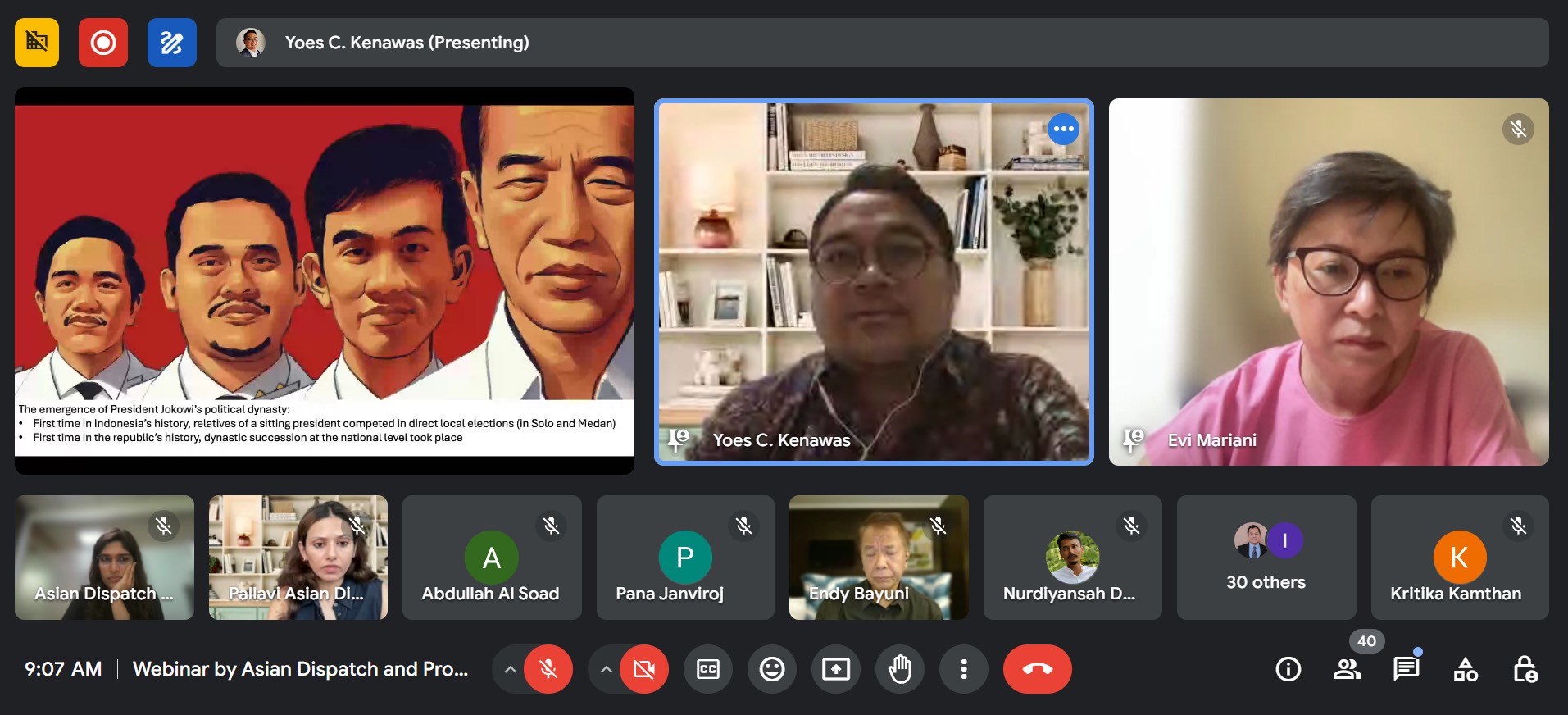
“Today,” Kenawas remarked, “What we have is the perfect example of nepotism, presented by the president himself, who was touted as the man of the people, someone who came from a non-elite background. For the first time in Indonesia’s history, [a president] has relatives who will compete in the upcoming gubernatorial election. Most importantly, for the first time in the Republic’s history, dynastic succession is taking place at the national level, with his son, Gibran Rakabuming – or Raka – being elected as vice president.”
What is the way forward?
Bayuni said that he’s a believer in democracy despite all the doom and gloom. “But democracy has effective checks and balances between the different branches — executive, legislative, judiciary— with credible and strong law enforcement,” he said. “The regulations have to ensure that these checks and balances are effective.”
Even more important, he added, is the role of the fourth estate, the independent and critical media. “This is to ensure that during elections, voters make informed decisions,” Bayuni added. “This February, the Indonesian media failed to enlighten the public. That’s why Prabowo and Gibran won the election. They had public opinion behind them.”
You can hear the recorded conversation on our YouTube below: