
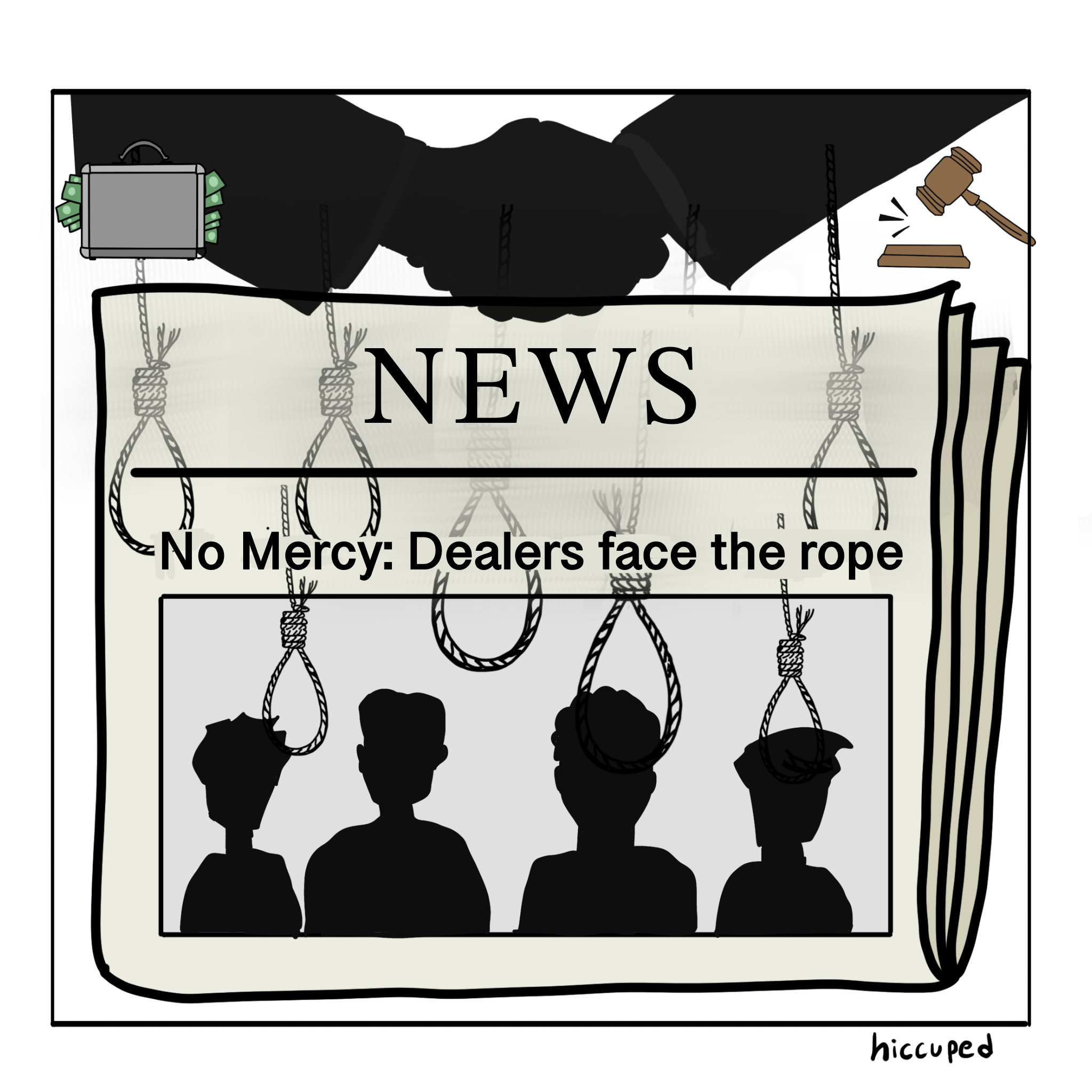
Singapore has reignited debates over the death penalty with three executions carried out in just one week. While many Asian nations consider capital punishment a critical measure against crime, the question extends beyond its effectiveness, which evidence suggests is minimal.
China is known as the world’s leading executioner, the Dui Hua Foundation, a nonprofit organisation, estimated approximately 2,000 executions in China in 2018 marking a significant decline from previous years. This reduction reflects ongoing reforms in the country’s capital punishment practices, which have led to a notable decrease in execution numbers over time.
However, Amnesty International’s latest global review indicates that the number of death sentences issued annually in China is believed to be in the thousands, surpassing the total of all other countries combined. But the exact figures remain obscured by state secrecy which the Chinese authorities maintain to prevent public awareness and scrutiny to obfuscate the scale of capital punishment practices. Despite this alarming number, research suggests that the death penalty has neither prevented nor reduced crime rates in China. The larger issue is how these nations use it as a quick fix, a way to wash their hands of complex problems by eliminating people rather than tackling the problem itself at the roots.
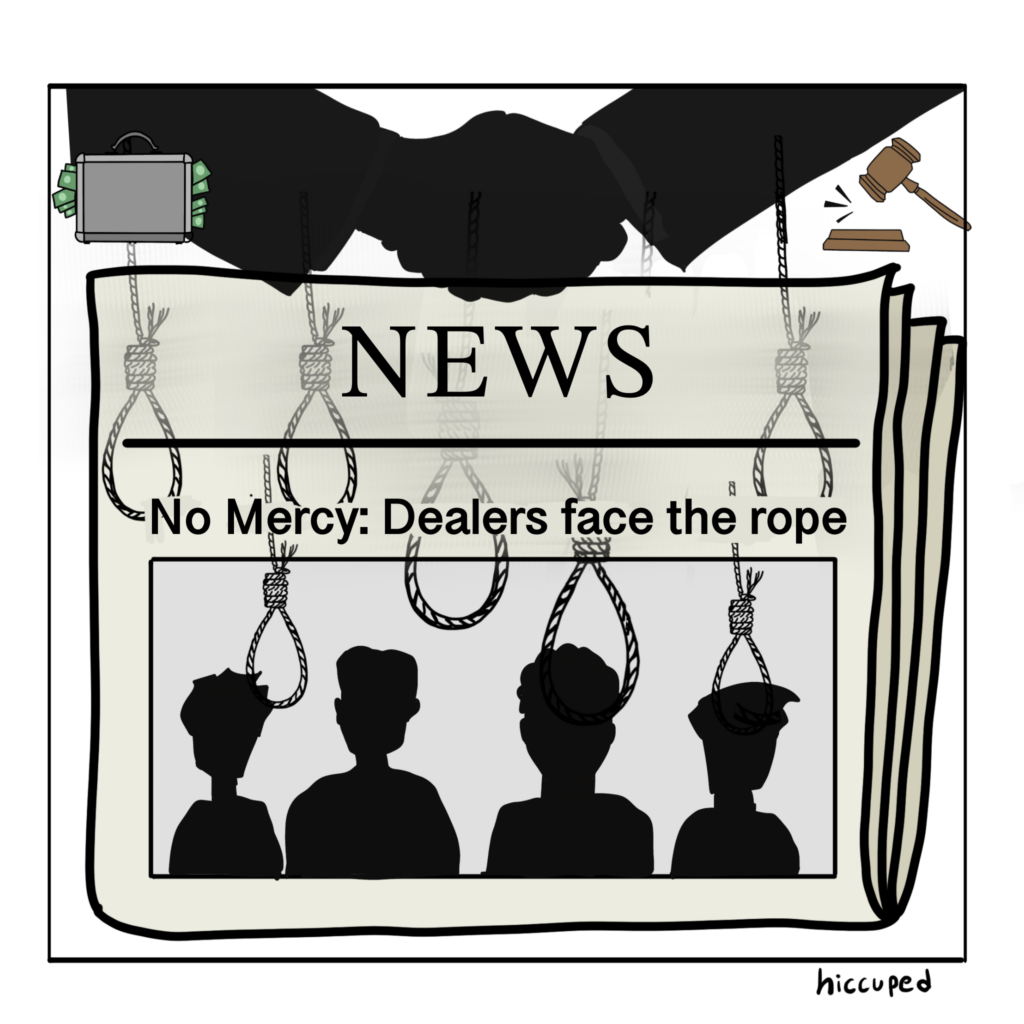
When it comes to drug trafficking, public sentiment often frames the ones executed as irredeemable ‘bad people’. With the removal of such peddlers, the society breathes a collective sigh of relief as their death is considered a societal win. But the uncomfortable question unanswered is: When was the last time a major drug lord in Asia was arrested, let alone faced the full weight of the law or capital punishment? It is not unknown that these are the individuals who flood societies with massive quantities of drugs, yet those who face the gallows are marginalized individuals from impoverished backgrounds or foreign nationals, often exploited as mere pawns in larger criminal networks.
The war on drugs carries a devastating cost, and is always borne by the vulnerable – the poor and marginalised. There are multiple instances all over the world to prove that fighting the war on drugs for governments was never just about drugs, it was a convenient mask to legitimise discrimination and reinforce stereotypes against marginalised communities. In the United States, the fight against drugs led to mass incarceration, with most of them disproportionately Black people. In the Philippines, the anti-drug campaign turned violent, with thousands of poor people gunned down by the police and unknown assailants, often without any evidence or trial. In India, indigenous tribes who rely on growing traditional cannabis have had their crops destroyed by the government, leaving them poorer and more vulnerable. In all these cases, the war on drugs never addressed the real issues of addiction or trafficking.
The irony of the war on drugs is that it’s not a lack of intelligence that spares the true masterminds of the drug trade but their power and wealth that allows them control over justice. While governments may often have access to detailed information about these powerful kingpins their connections shield them from prosecution, allowing them to evade accountability even as they oversee operations that destroy lives. They operate behind layers of intermediaries, while using their power to shield themselves and letting small-time traffickers take the fall. This raises critical questions about justice and equity within legal systems that disproportionately target the powerless while allowing the true culprits of the drug epidemic to evade consequences.
Justice should not be a tool to maintain the status quo but a force for transformation, it should uplift the vulnerable and confront the powerful. We as a society should demand more than just an illusion of control. The fleeting sense of resolution that capital punishment offers is only superficial. Are we willing to accept superficial solutions that leave structural injustices unchallenged, or do we demand a system that values accountability, fairness, and humanity?