
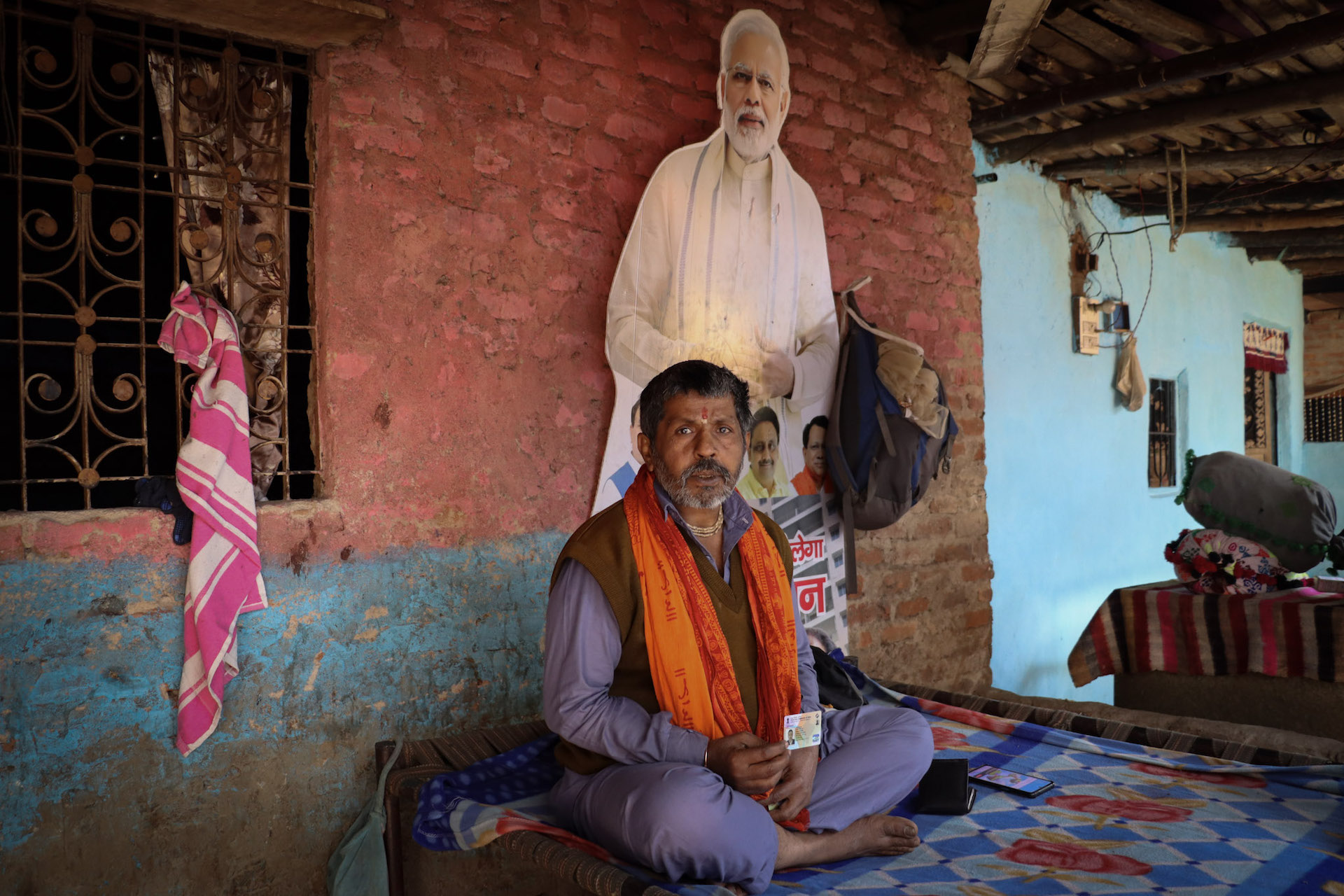
Sona Das never imagined he would leave Pakistan, the country of his ancestors where he built a home, where his children took their first steps, and where he worked as a farmer to provide for his family.
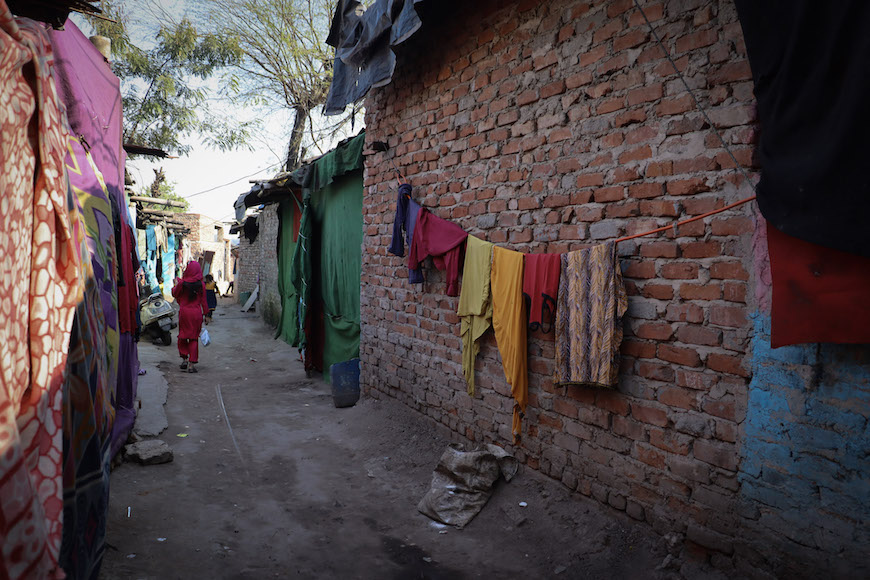
Sitting inside their makeshift home in Majnu Ka Tilla refugee colony, located in northern Delhi, Das’s wife Rani prepares a cup of tea as her husband sits cross-legged, his shoulder draped in a thin blanket. The couple recalls the day they left their home in Pakistan’s Hyderabad city, located in Sindh province, calling it a “difficult decision.”
In 2011, Das and Rani traversed the hostile borders between the two nuclear-armed South Asian countries – India and Pakistan – on a religious visa. They were among the first Pakistanis fleeing years of discrimination and religious persecution that nearly 4.4 million Hindus face in their country.
Although there is no official figure, an estimated 300 Pakistani Hindus will be a part of history and vote as citizens – the second time in India since 2022 when over 1,000 Pakistani Hindus, who were awarded citizenship by local authorities, voted in the western Indian state of Gujarat.
Today, India’s capital New Delhi went to polls where Aam Aadmi Party, an upstart party set up in 2013, will battle it out against Bharatiya Janata Party (BJP), which has, since its first election as the national ruling party in 2014, campaigned hard on issues of identity, specifically Hindu nationalism.
In fact, Das is the beneficiary of the BJP’s Citizenship Amendment Act (CAA), which grants citizenship to Hindus, Sikhs, Buddhists, Jains, Parsis and Christian refugees from Muslim-majority Pakistan, Afghanistan and Bangladesh who came to India before December 2014. The law sparked widespread protests in 2019, mainly from India’s largest religious minority, the Muslims. Muslims from other South Asian countries are not included in this safe passage.
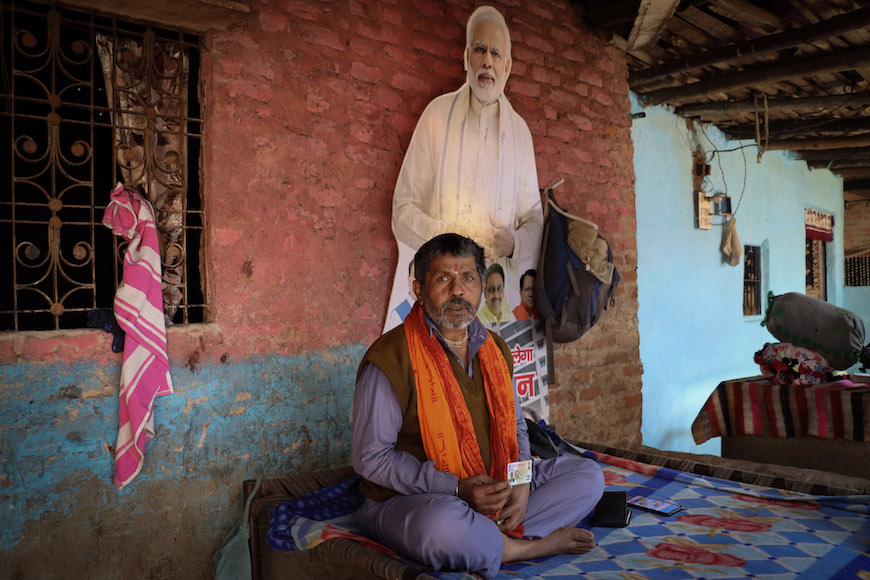
For 54-year-old Das, the CAA was a turning point. “We were uncertain about our future in Sindh,” he says. “But this law gave us a sense of belonging and hope for our children. It made us Indian.”
Sona’s story reflects the larger challenges faced by many Hindus in Sindh, Pakistan, where economic hardships, religious discrimination, and insecurity have driven countless families to seek refuge in India. A 2023 report by the Human Rights Commission of Pakistan (HRCP) documented key drivers of forced migration, including insecurity, economic hardship, threats to women, and worsening climate conditions. The report also states that much of the violence and discrimination is targeted against communities of lower castes or Dalits.
Das says that even when his family would ask for food or water, Muslims in their previous home town would use separate utensils. “At first, we endured it, thinking we could manage. But when we thought about our children’s future, we decided to leave our home,” he said.
An estimated 5,000 Hindus migrate from Pakistan to India annually, according to data presented at Pakistan’s parliament in 2014, often on grounds of deteriorating human rights conditions for the community, especially in Sindh. In Pakistan, successive governments have downplayed the issue, or denied it. A 2015 BBC report documented 1,200 people having set up camps in Delhi since 2010, awaiting citizenship.
The forced migration of Pakistani Hindus also has roots in the violent colonial history of the partition between India and Pakistan, which left in its wake a Hindu-majoritarian India, which has Muslims as its largest religious minority group, and Muslim-majority Pakistan with Hindus as the largest minority. Both religious minorities in those countries have been documented to face human rights violations.
READ: Why the 2024 Indian Election Results Shook the Nation
Assad Iqbal Butt, the chairman of HRCP in Pakistan, emphasised the need for cross-border support.
“It’s not an easy decision for our Hindu brothers to leave Sindh,” he told Asian Dispatch. “They are refugees, leaving behind their ancestral land to seek a new life in India. This is not just about asylum seekers in India and Pakistan, but about the broader South Asian region, which must foster cross-border support and cooperation.”
He also acknowledged New Delhi’s efforts in granting Pakistani Hindus the right to vote, calling it a significant step. “Granting these refugees voting rights in India is not only a lesson for Pakistan but for the whole of South Asia and many more governments to come,” he added.
For Das and wife Rani, the choice this election season is clear. Despite being housed in a makeshift settlement in Majnu Ka Tilla, which is also home to Tibetan refugees, the duo have only some pieces of second-hand furniture, some utensils and a charpai to their name. Next to their furniture is a large cutout of BJP leader and Indian Prime Minister Narendra Modi.
“There is no one like him,” Das says. “What he did for us is something no other leader or government would have even thought of. I am willing to sacrifice my years of life to extend his.”
It’s not an easy decision for our Hindu brothers to leave Sindh. They are refugees, leaving behind their ancestral land to seek a new life in India. This is not just about asylum seekers in India and Pakistan, but about the broader South Asian region, which must foster cross-border support and cooperation. — Assad Iqbal Butt, chairman of the Human Rights Commission of Pakistan.
But not all recently-coined citizens share the same perspective.
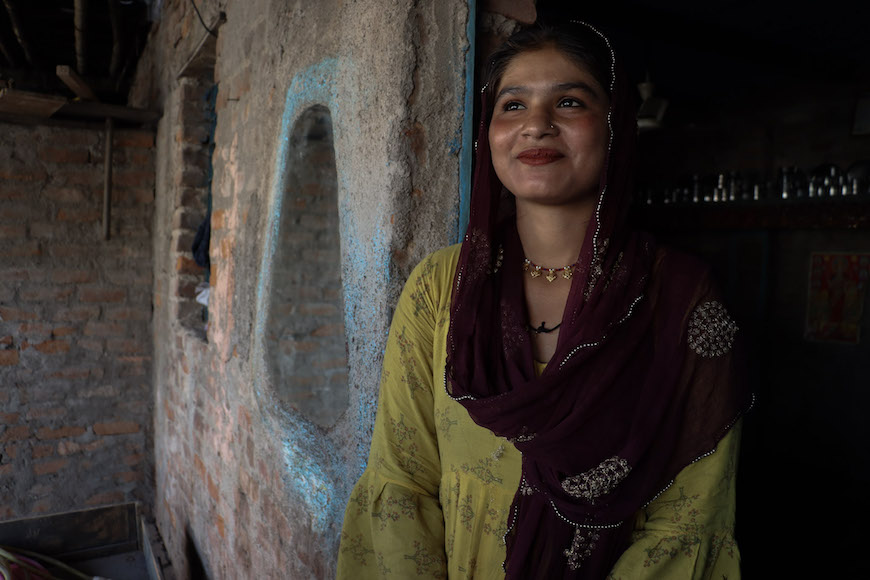
For 30-year-old Jamna, who has lived in Majnu Ka Tilla with her husband for eight years, life is a daily struggle. As she sits and sews a pillow cover – like most Pakistani Hindu girls and women in the colony – she says, “I’ve sewn every day for the past eight years. But I don’t want this life for my children. Right now, no one from our settlement has an office job or a government job. We’re surviving by either selling phone accessories or street food.”
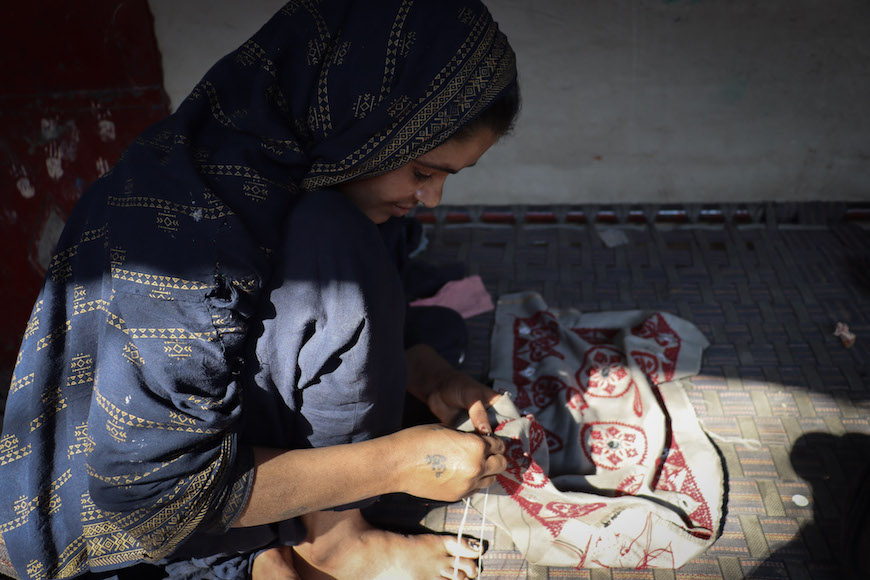
Her words reflect the struggles of young people here. Many young men remain unemployed or engage in menial labour. Young women, on the other hand, are confined to their homes, with parents focused on getting them married early.
Rajkumari Gulab, 18, spoke to Asian Dispatch with a sense of defeat even as she prepared for her final senior school examination. “I want to be a police officer, but this dream feels next to impossible,” she says. “Almost every day, men and their families visit my parents to ask for my hand in marriage. I wish the youth in our community had more support to find decent jobs and become successful.”
Equal rights and dignity of life to Hindus from Pakistan has been Modi’s campaign material since 2014. Last year, ahead of the General Elections in India, Modi met Pakistani Hindu refugees who got Indian citizenship under CAA. Modi’s party won the elections through a coalition of parties. While CAA has been at the heart of BJP’s rhetoric, its implementation has not been smooth. In 2022, Seemant Lok Sangathan, an Indian rights group advocating for Pakistani minority migrants, found that around 800 Pakistani Hindus who came to India in 2021, returned after no progress was made on their citizenship.
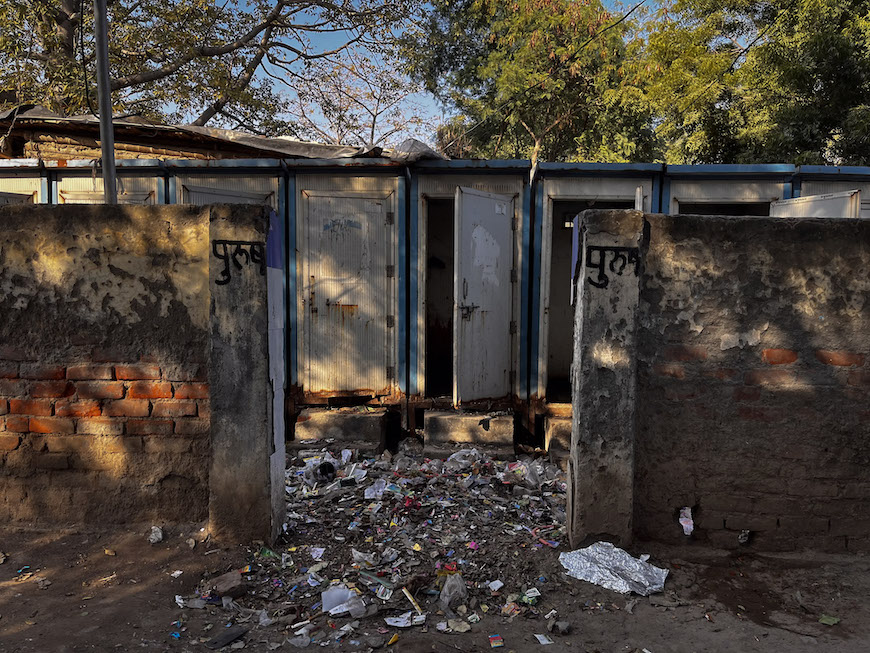
Many are still waiting. Under New Delhi’s Signature Bridge, spanning India’s sacred river Yamuna, an informal settlement has become home to Pakistani Hindus since 2014. They’re still waiting for citizenship. Not only are they excluded from voting rights but also welfare schemes. In Delhi’s harsh weather conditions, the refugees face everything from dangerous levels of air pollution to flooding.
READ: Kashmir’s First Election in a Decade Shows the Changing Face of Political Participation
A 50-year-old woman, who requested anonymity, says they have to be alert all the time. “We are surrounded by a jungle here. There are snakes and wild animals. Then, during floods every monsoon, our tents get submerged, forcing us to move to higher ground for safety. We don’t need money or food ration. All we want is a decent place to live.”
Hindu Singh Sodha, the founder and president of Seemant Lok Sangathan, emphasised that the real challenge goes beyond just granting citizenship.
“Under the CAA, citizenship is only granted to those who arrived before December 31, 2014. So what about those arriving today? Has the persecution and discrimination against them stopped?” Sodha told Asian Dispatch. “I believe having a cut-off date for CAA eligibility is not justified. This is one area where the government needs to reflect and reform the law.”
Sodha also highlighted the complex and lengthy process to gain citizenship in India, which sidelines the real issue of rehabilitation. “[The citizenship process] can take 20 to 25 years but that alone does not solve their problems if [refugees] continue living in deplorable conditions,” he said. “The government must go beyond legal recognition and focus on structured resettlement, which includes access to housing, healthcare, and opportunities for livelihoods. Currently, there are no proper rehabilitation measures in place.”
As the fate of refugees and newly-minted citizens remains uncertain, Sodha says the government’s duties are far from over. “If refugees are left stranded, it will damage the government’s credibility and the trust of those who believed in India’s commitment to them.”